|
Links to Other Pages
|
| ||||||||||||||||||||
|
|
|
|
History of Photography Photographic Processes |
|
|
300BC - 1839 |
Pre-history of Photography |
|
The Pre-history of photography page, gives brief comments on: - Aristotle - Thomas Wedgwood and Sir Humphry Davy. - Joseph Nicéphore Niépce and Sir John Herschel - and the early work of Talbot and Daguerre. |
|
|
from 1839 |
Daguerreotype and Calotype and Salted Paper Prints |
|
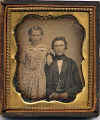
Daguerreotype Daguerre announced his discovery of the Daguerreotype process in January 1839.
|
|
|
Calotype Talbot, also in January 1839, announced the discovery of his photogenic drawing. A couple of years later, he announced and patented his calotype process. |
|
|
1850s |
Collodion on Glass and Albumen Prints |
|
During the 1850s, many photographers began to use glass negatives coated with collodion. There were two varieties: |
|
|
Wet Collodion Negatives Wet Collodion Negatives began to be used around 1851. Photographers coated their plates immediately before taking their photogrpahs, and processed the negatives immediately afterwards. |
|
|
Dry Collodion Negatives Dry Collodion Negatives became available around 1857. Some photographers continued to use the wet collodion process. Others moved to dry plates. These required longer exposures but were far more convenient, particularly for landscape photographers. |
|
|
'Wet' v. 'Dry' The debate between 'wet' and 'dry' workers continued for many years, and was the subject of many debates at Edinburgh Photographic Society. |
|
|
Prints Both wet and dry collodion negatives were usually printed onto albumenised paper. |
|
|
Other processes around 1850 Looking back on the history of photography now, the choice of process appears fairly straightforward. i.e. When should the photogrpaher decide to move from Daguerreotype or Calotype photography to collodion plates? However, looking back at the contemporary literature, such as the book Photogenic Manipulation by RJ Bingham, published in 1852, many more choices were offered. |
|
|
|
TO BE CONTINUED |
|
Links to Other Pages
|
|
Early Photography - More pages |
|
All Pages Processes Types of Photograph Prices charged Sizes |
|
Links to Other Pages
|
Let the cursor hover over any of the buttons above and it will display further details.
LINKS: All underlined words and pictures on this site are links. Please click on any of them..
|
Links to Other Pages
|
Let the cursor hover over any of the buttons above and it will display further details.
LINKS: All underlined words and pictures on this site are links. Please click on any of them..
| ||||||||||||||||||||