|
Sizes of Photographs Enlargements were not a feature of early photographic processes. The size of the final photo was the same as that of the negative or photographic plate. |
|||||||||||||||||
|
Ambrotypes and Tintypes |
Ambrotypes and Tintypes would usually be a fraction of a whole-plate glass size. Tintype sizes (inches):
NOTE: The sizes quoted above for half-plate and quarter-plate are a little different from 'normal' glass plate sizes. I don't know why. Half-plate and whole plate sizes for glass plates are the appropriate proportions of whole-plate. i.e. - 6.5 ins x 4.25 ins (half-plate) - 4.25 ins x 3.25 ins (quarter-plate) |
from 1850s |
|||||||||||||||
|
Small The smaller tintype photos that I have seen are 1 ½" x 2 ½" and ½" x 1" In both cases, they have been mounted on trade cards 4 x 2 ½ ins. |
|||||||||||||||||
|
Large I have also received an email from a collector in London who has a photograph of a young girl with dress, ear rings and rings painted over the original photo. It is a tintype measuring 13 ins x 10 ins. |
|||||||||||||||||
|
Boudoir Prints |
8.5 ins x 5.25 ins |
from when? |
|||||||||||||||
|
Portraits In the 19th century, studio portraits were usually produced as either cartes de visite (the smaller size) or cabinet prints (the larger size). Prices for multiple copies were affordable and 19th century photograph albums were usually designed so that these sizes of photo could be slotted into them. Size Cabinet prints were 5.5 ins x 4 ins photos mounted on cards 6.5 x 4.25 ins. with the photographer's name and address on the back of the card (or occasionally below the photo on the front of the card. Here are some examples of cabinet print portraits |
from 1866 |
||||||||||||||||
|
Views Cabinet size views were 8ins x 6 ins. They were collected and mounted in albums in the 19th century. Albums can still be found, often containing views by Valentine of Dundee and George Washington Wilson of Aberdeen. Valentine sold their cabinet size views for a shilling (£0.05) each. [Roddy Simpson] From the start of the 20th century, views were normally sold as postcards by Valentine and others. |
from mid- 1860s |
||||||||||||||||
|
Small Portraits In the 19th century, studio portraits were usually produced as either cartes de visite (the smaller size) or cabinet prints (the larger size). Photograph albums were usually designed so that these sizes of photo could be slotted into them. Size Cartes de visite 3.5 ins x 2.25 ins photos mounted on trade cards 4.125 ins x 2.5 ins. Cartes de visite were: - invented by Count Olympe Aguado - patented by AAE Disderi, France, 1854. They enabled 4, 6 or 10 different image to be exposed on a single glass plate. Most cartes de visites were used for portraits |
from 1853 See Dates |
||||||||||||||||
|
The Price of Cartes de Visite A photographer of high standing might have charged 10s 6d (£0.525) for a dozen for cartes de visite. But some photographers charged only 6d (£0.025) per dozen, so bringing photographs within the reach of a far wider audience. [Ref: Dr Ralph W Rimmer FRPS in an article entitled Poverty: A Subject for Photography: The PhotoHistorian, Sep 2003, pp.5-7] |
|||||||||||||||||
An advert was placed in the British Journal of Photography Almanac in the early 1860s by The London Stereoscopic Co, 55 Cheapside, London. It offered: - Highly albumenised paper (the same as used by the artists of the company): 12s per quire - Cards, plain white best quality: 10s per 1,000 - Ditto with address lithographed on the back: 21s per 1,000 (first 1,000) then 17s per 1,000. |
|||||||||||||||||
|
A Set of Uncut Cartes de Visite I was interested to see a set of 8 uncut cartes de visite on this Luminous Lint web site. |
|||||||||||||||||
|
Coupon Prints |
3.5
ins x 1.5 ins |
Edwardian |
|||||||||||||||
|
for wet collodion |
Large Plates Ken Watson, USA, a practitioner of the wet collodion process, wrote: "The largest plate made in America was 18 x 22 ins, derived from the largest size of Albumen paper that could be bought from France. In the 1860s, there were no enlargers, so all prints were contact prints. Carleton Watkins had a camera specially made to take 18 x 22 ins plates. His views of Yosemite are recommended." However, Christopher A Wright, a calotype and wet and dry collodion photographer, and consultant to the Getty Museum provided details of several enlargers from the 1860s and earlier. |
1850s onwards |
|||||||||||||||
|
Sizes in USA, UK, Europe I have not investigated the range of sizes of glass plate that were made, and how these differed between USA, UK and Europe. There seems to be scope for a lot of research. Perhaps somebody will provide a link to a site that gives this information. Meanwhile, here is a comment that I received recently from Bill Hibbert: "Typically plate sizes are 9 x 12, 13 x 18, 18 x 24 cm etc. I have only half plates, one set of which date from the USA in 1906 and another set from France around 1910-20. These are all close to 13x18 (or 5" x 7" in imperial) - within 2 or 3 mm in every case. I presume there was considerable variation in practice, particularly in the 19th century when standards were still being established." My own interest is in stereo/3D photography, for which the standard glass plate sizes are 45 x 107mm and 6 x 13 cm. You will note the 6x13 looks like a 13x18 half plate cut into three I haven't checked the 45x107mm size, but no doubt it can be made economically from one of the larger formats." Bill Hibbert, Suffolk, England: May 8, 2012 |
|||||||||||||||||
|
Whole Plate, Half Plate, Quarter Plate See also (below) - Glass Plate and Paper Sizes |
|||||||||||||||||
|
Imperial Prints IMP |
9.875 ins x 6.875 ins |
from when? |
|||||||||||||||
|
Photographs
measuring 12ins x 8ins, sold by Valentine for two shillings (£0.10) each. |
from mid- 1860s |
||||||||||||||||
|
This size was referred to as 'very long cabinet style photographs' in Marcel Safier's comments about photograph albums |
from 1890s |
||||||||||||||||
|
Minettes were photos about 1.5 ins x 2.5 ins mounted on cards 1.625 ins x 3 ins. Minettes are mentioned Marcel Safier's comments about photograph albums |
from 1870s |
||||||||||||||||
|
Panel Prints |
5.25
ins x 1.75 ins
OR |
early 1900s |
|||||||||||||||
|
Paris Panels |
This size was referred to as 'very long cabinet style photographs' in Marcel Safier's comments about photograph albums Marcel says that they were more suited to framing than photograph albums. |
from 1890s |
|||||||||||||||
|
Photograph Albums |
Here are some observations on photograph albums and the size of prints they were designed to hold in the late-Victorian era. |
1860s to 1900 |
|||||||||||||||
|
Glass
Plate |
8.5
ins x 6.5 ins (whole plate) OR 4.25 ins x 3.25 ins (quarter-plate) NOTE: The sizes quoted above are the sizes of half-plate photographic papers that I used to buy. In particular, this half-plate size is a little longer than half of a whole plate. I presume that paper was sold in this size (rather than 6.5 ins x 4.25 ins) to keep the paper approximately in the same proportions as for whole-plate and quarter plate photos. i.e. with the long side about 1.3 x the short side. However, half-plate glass plates would have been cut by cutting a whole-plate sheet of glass into two, so I expect that these would have been 6.5 ins x 4.25 ins. Half-plate negatives were presumably made to fit into cameras designed for half-plate glass slides so I these may well have also been 6.5 ins x 4.25 ins. Whole-plate sheets of glass were also cut into smaller sizes including 1/6th plate, 1/9th-plate, 1/12th plate. |
Victorian, Edwardian and later |
|||||||||||||||
|
Polyfotos |
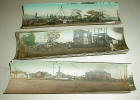
Polyfotos were popular in the 1950s - 48 different small photos, often of children, were contact printed onto a single sheet, then the best would be chosen to be enlarged. This Science & Society web site has examples of Polyfotos. |
c.1950s |
|||||||||||||||
|
Post Cards |
An international postcard craze developed following the Paris Exhibition in 1889.
Court
Cards: 4.5 ins x 3.5
ins |
from
1894 |
|||||||||||||||
|
Promenade Prints |
7 ins x 4 ins |
from 1875 |
|||||||||||||||
|
Early roll film: 2.5 ins Eastman circular negatives (1888) Popular roll film from the early 1900s onwards. 2 ins x 1 ins (120) for Kodak Brownie 1900 3.25 ins x 2.25 ins (120) for Brownie2 - 1901/2 120 film is still sold today and used to expose 8 negatives 3.25 ins x 2.25 ins or 12 negatives 2.25 ins x 2.25 ins. 220 film is also sold. It is similar to 120 but twice as long. 2.5 ins x
1.625 ins
(8 exposures)
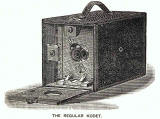
OR Larger film for early folding cameras from 1890s included: 4.25 ins x 3.25 ins (quarter plate) 5.5 ins x 3.25 ins (post card) Some smaller negative sizes were introduced in the 1930s, once enlarging had become more widespread. These included: 2.25 ins x 1.25 ins and 1.5 ins x 1.25 ins Here is a camera introduced in 1895 that was designed to work with either film or slide. |
1888 |
||||||||||||||||
|
Pairs
of photos, each 3
ins x 3 ins
OR mounted on card 7 ins x 3.25 ins |
from 1854
from c.1859 IMP |
||||||||||||||||
|
IMP |
Photos 3.5 ins x 5 ins |
from 1870s |
|||||||||||||||
|
IMP |
Browsing through the
internet tells me that 'wallet size' is a term used for photos
between about |
current |
|||||||||||||||
|
Coloured Prints 7 ins long |
Please click
this link to see these |
early 1900s |
|||||||||||||||
|
ACKNOWLEDGEMENTS: 1. Much of the detail above has been taken from Dating Old Photographs.- a very useful booklet which also looks at fashion and other means of dating early photos. 2. IMP: Details were originally Published By George Eastman House, Rochester, New York (Now: International Museum Of Photography) |
|||||||||||||||||
|
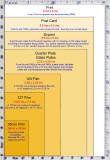
Chart of Sizes |
|
A few examples of |
|
Links to Other Pages
|