|
Recollections - South Edinburgh Gilmerton |
||
| 1. |
Maureen Mitchell
|
- By tram in 1950s |
| 2. |
Lilian Young
|
- Children's Home |
| 3. |
with replies from
Archie Young
and |
- School in 1950s - Convalescent Home - Dr Guthrie's Home |
| 4. |
Forbes Wilson
|
- Hyvots Bank - 143rd Scouts - Fish & Chips |
| 5 A . |
Jimmy White
|
- School - Play - Homes - Happy Days |
| 5 B . |
- Dr Guthrie's School |
|
| 6. |
Jimmy White
|
- Village - Gilmerton Homing Club - Gilmerton Halls - Supporting Charities - Pigeons Today |
|
7
A
.
7 B . 7 C . 7 D. |
Jimmy White
with reply from
Forbes Wilson
and answers from Loanhead, Midlothian , Scotland
Carol Bell (
née
Welsh)
|
- Prefab Housing - New Street - Burdiehouse Burn - Anderson Shelter |
|
- Prefab Housing - Shops - Chips and Pickle - Two questions |
||
|
- Prefab Housing - Quarries |
||
|
- Neighbours |
||
|
More of Forbes Wilson 's recollections of Gilmerton , together with a reply from Jacqui Anderson , Camberley, Surrey can be found on this page: |
||
| 8. |
Tom Nimmo
with replies from
Bob Henderson
Scotty Henderson
Jimmy White
Peter Stubbs
and again
Jimmy White
and
Ann Valentine
|
- Sanitarium - Children's Home - Industrial School - Dr Guthrie's School - Boys' Home - Name of the Big House - Houses in New Street |
| 9. |
George Field
|
- Gilmerton Road - Travelling Shops - School and Scouts - Employment |
|
More of George Field 's recollections of Gilmerton can be found here: |
||
| 10. |
Sheena Wheeler
with replies from
Peter Stubbs
Jenny Parkerson
Archie
Young
and
Edward McMillan
|
- Police Station |
| 11. |
Archie
Young
|
- 16th Century - Robin's Nest Inn |
|
Here are some comments from John Hadden and Archie Young on the area near Gilmerton Crossroads |
||
| 11 A . |
Archie
Young
|
- 16th Century - Robin's Nest Inn |
| 12. |
Archie
Young
|
- Gilmerton Coal Pit |
| 13. |
Archie
Young
|
- Police House and Police Station |
| 14. |
Andrew Muir
|
- The Pin Society |
| 15. |
Archie
Young
|
- The Pin Society |
| 16. |
Archie
Young
|
- Procession - Clydesdale Cart Horse - Pins - Carter Play Days |
| 17. |
James W
Turner
|
- Gilmerton Convalescent Home |
| 18. |
Brian
Cameron
|
- Police Station - Post Office - Shops |
| 19. |
Ron Ross
|
- Home - Exploring - Shops - Society Hall - Co-op |
| 20. |
Ron Ross
|
- Quarries and Cave |
| 21. |
Roddy Young
|
- John Young, Hazeldean |
| 22. |
Norma Coutts
|
- Gilmerton Police Station |
| 23. |
Brian
Cameron
|
- Baker and Bank - Prefab Houses - Glenesk Laundry - School - Friends - Sunday Schools - Petrol Stations |
| 24. |
Brian
Cameron
|
- Houses hit by Subsidence - Subsidence - Mining - Ferniehill Drive - Damage - The Roads - Evacuation - Earlier Incidents - Survey |
| 25. |
Liz Smith (
née
Mackay)
|
- Liz Mackay - Chrissie Wallace |
| 26. |
- Bakery |
|
|
Reply 1 to 26. |
- Bakery |
|
|
Reply 2 to 26. |
- Williams, the Bakers - Other Bakers - Grocer's Van - Toni's Café - Newsagent - Sweets and Groceries - Supermarket - Memories |
|
|
Reply 3 to 26. |
Jim Smith
|
Williams, the Bakers - Van Boy - The Bakery - The Shop - Bread Deliveries |
|
Reply 4 to 26. |
Williams, the Bakers - The Williams Family |
|
| 27. |
Ann
Valentine
|
- Hyvot's Bank Avenue - Bakers |
| 28. |
Ann
Valentine
|
- Drum Street - Market Garden and Shops - Farm - Teacher |
| 29. |
David Bain
|
- Parochialism |
| 30. |
John Kay
|
- House named 'Venturefair' |
| 31. |
Forbes Wilson
with reply from
Peter Stubbs
|
- 1940 Map question |
| 32. |
Mary Notman
|
- Hudson Cottage |
| 33. |
Pat Bremner
|
- Williams the Bakers - Schools - Police Box - Toilets |
| 34. |
Ann
Valentine
|
- House named 'Venturefair' |
| 35. |
John Kay
|
- 'Venturefair' |
| 36. |
David Bain
|
- 'Venturefair' |
| 37. |
Jimmy White
|
- Ravenscroft Annexe |
| 38. |
Ann
Valentine
|
- Rubble - 'Venturefair' - Jock Adams |
| 39. |
David McGow
|
- 'Venturefair' |
| 40. |
Mary Guler
|
- Early History |
| 41. |
David Bain
|
- Mechanic Arms |
| 42. |
Tammy Mitchell
|
- The Mitchell Family - Gilmerton Pubs |
| 43. |
Eric Gold
|
- Mitchell's Pub - The Cabin |
| 44. |
David Bain
|
- 1881 Census - Early Deaths |
| 45. |
Archie
Young
|
- The Mechanic Arms - 1890 - Local Pubs - Early History |
| 46. |
Tammy Mitchell
|
- 1873 |
| 47. |
Tammy Mitchell
|
- Early Deaths |
| 48. |
Tammy Mitchell
|
- Early History - Today |
| 49. |
David Bain
|
- Café and Chip Shop - Barber - Bakers - Garage |
| 50. |
Archie
Young
|
- The Mechanic Arms |
| 51. |
Archie
Young
|
- Teapot Close - The Mechanic Arms |
| 52. |
- Blair's Chip Shop - Innes Building |
|
| 53. |
David Bain
|
- Store Fleshing Dept Van |
| 54. |
Ron Steel
|
- Drum Street |
| 55. |
David Bain
|
- Drum Street |
| 56. |
Ron Steel
|
- St Cuthbert's Cobblers - The Quarries |
| 57. |
Dorothy
Quevert
|
- Westland Cottages - Toft Cottages - Venture Fair - Gilmerton House |
| 58. |
Garry
Macdonald
|
- The Mechanic Arms |
| 59. |
' Mapman ' |
- Gilmerton House |
| 60. |
Pam
Blackmore
|
- Gilmerton Buildings |
| 61. |
Gerry Smith
|
- Bank House Buildings |
| 62. |
Cherie Somerville
|
- Drum House |
| 63. |
David Bain
|
- The Vennel - Bookies |
| 64. |
- Venture Fair - Venture Fair (2) - Williams the Baker - Heniker's General Store - Café, Shops and Farms - Mechanic Arms - The Bee Hive - Barber - Fishmonger - Grocer - Garage |
|
| 65. |
Gerry Smith
|
- School Uniforms - Hairdresser and Photographer - Post Office |
| 66. |
- Hyvot's Bank School - 1960s |
|
| 67. |
- Dirty Dick's - Dean Woods |
|
| 68. |
Forbes
Wilson
|
- Dirty Dick's |
| 69. |
- Dirty Dick's |
|
| 70. |
- Shops - Coutts - Hairdresser - Postmistress |
|
| 71. |
- Grandmother's Roots |
|
| 72. |
- Return to Gilmerton - Questions |
|
| 73. |
- Gilmerton Church Ministers |
|
| 74. |
- My Family - Friends |
|
| 75. |
Tammy Mitchell
|
- Mechanic Arms - Mitchell's Pub |
| 76. |
- Hudson's Cottage - Robin's Nest Inn |
|
|
77. |
John Williams
|
- Wallace's Cottage |
|
78. |
James McKenzie
|
- Forbes Wilson - Gracemount School - Memories of Gilmerton. |
|
79. |
Sandy Alexander
|
Questions - Cameron Buildings |
| 80. |
Forbes Wilson
|
- Gracemount High School |
| 81. |
Carol Sutherland
|
Question
|
|
81. Reply 1 |
A H Derek
Kellachan
|
Information about Helen Clarkson |
| 82. |
Agnes May Wilson ( née Marr) |
|
| 83. |
David
Bain
|
Agnes May Wilson ( née Marr) |
| 84. |
Dr Guthrie's Girls' School |
|
| 85. |
Stephen
Ward
|
Home Guard: Sunken Cottages |
| 86. |
Alan
Dunnett
|
Dunnett Brothers' Garage |
| 87. |
Scott
Birrel
|
Prefabs Gilmerton |
| 88. |
Bill Whitson
|
My School Pitch & Toss Football Team Work Activities Gilmerton Cove |
| 89. |
Annette McDonald
|
Margaret (Miggett) Gallagher |
| 90. |
John
Waddell
|
Gilmerton Primary School Our Home Hyvot's Bank School My Work |
| 91. |
David Bain
|
Hyvot's Bank School |
| 92. |
Grandmother's Roots |
|
| 93. |
David Frost
|
Children's Home at Gilmerton - My Mother - My Mother's Schooldays - Visit to Edinburgh |
| 94. |
Meg Gurney
|
My Grandfather - Isaiah |
| 95. |
George
McBean
|
Old Police Station |
| 96. |
George
McBean
|
Old Police Station |
| 97. |
Dave
Henniker
|
The Henniker Family Shop |
| 98. |
Caroline Irvine
|
Prefabs The Farmer Shops More Memories The Village |
| 99. |
Emigration to Australia Gilmerton Gala My Parents |
|
| 100. |
June Phillips
|
Old Map Early Life Gilmerton Memories Emigration Thank You |
| 101. |
Ian Anderson
|
Dr Guthrie's School |
| 102. |
Stevie Riley
|
Dr Guthrie's School |
| 103. |
Stevie Riley
|
Around Fernieside Dr Guthrie's School |
| 104. |
Dave Thomson
|
1950s - Mobile Shops - The Blair Family - Campbell, The Butcher - Bladlock The Greengrose r - Joe the Pole, Scrap Merchant - Greyhounds |
| 105. |
The Hutchison Family Alexander Hutchison |
|
|
Recollections 1. Maureen Mitchell Gilmerton, Edinburgh |
|
Thank you to Maureen Mitchell for sending this note about her parents in law, George and Anderina (Rina) Mitchell. Maureen says they were well known in Leith then in Gilmerton. Maureen wrote: |
|
By tram in 1950s "George Mitchell from F ort Street attended North Fort School. Rina from Newhaven and attended David Kirkpatrick School. T hey married in 1947, lived in Leith for six years then were al located a new house at Gilmerton Dykes. To reach their new home they would catch the tram: - No 7 to Liberton Brae terminus, then walk through the field, or - No 11 to the Robin's Nest Pub, then cut through Ellen's Glen T here was no bridge across the burn that separates Gilmerton from Gracemount. That wasn't built until the 60's . I n the Gilmerton area , George is recognised as one of the best , if not the best , welders of his time ." |
|
Maureen Mitchell , Gilmerton, Edinburgh: January 20, 2007 |
|
Recollections 2 . Lilian Young USA |
|
Lilian Young, who left Edinburgh for the USA in 1966, sent me some sad recollections of of time she spent at Gilmerton during World War 2. |
|
Question |
|
Lilian wrote: Children's Home "I have a questions for you. I have attempted to secure the answer from the Sick Children's Hospital, but they have been unable to assist me. During the war, my Grandmother took me to the hospital (why, I don't know) but from there I was taken to a children's home in Gilmerton where I was left for approximately 2 months until my Uncle came home on leave from the war and found me there. He brought me home to my Mother. I only know that it was a large building, with both boys and girls of various ages. Some children went to school, but others, including myself, were kept in the house. It was off of the main road, but the school was on the corner. I don't recall nurses being there, but there was a blonde lady who sent me to purchase cigarettes for her and I had to cross a busy main street. Would you by any chance have any knowledge of this home?" Lilian Young: January 16, 2007 |
|
Answer |
|
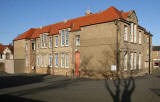
New Street, Gilmerton I've had a look at some old maps of Gilmerton, and I've been to Gilmerton and taken a few photos. Gilmerton Primary School There was a house, just up the road from the crossroads beside the Gilmerton Primary School that used to be a children's convalescent home. Perhaps this might have been where you stayed for the two months. The street used to be called New Street and is now called Newtoft Street. The house is about 300 yards from the crossroads, on the right-hand side of the road going up the hill out of Gilmerton. Children's Convalescent Home N ow 18-26 New Toft Street. It is marked on the old maps as a Convalescent Home, and the old Post Office Directories say that it was a children's convalescent home. I wonder if you had some sort of infectious disease and that might be why the hospital decided to send you to the children's convalescent home. The old convalescent home has now been divided into a number of private homes. Its address is 18-26 New Toft Street. Peter Stubbs: February 15, 2007 |
|
Reply from Lilian |
|
Lilian wrote: Children's Home "Many, many thanks for solving the puzzle of the home in Gilmerton for me. I was beginning to think that I would never solve it, but you have definitely hit the nail on the head. I definitely recall the school, because I used to walk down there to meet some of the other children and walk home with them. I remember the cupola on top of the top of the house where I stayed. I like cupolas and widow watches on top of houses to this day." Lilian Young: February 16, 2007 |
|
It's not surprising that Lilian has had some difficulty tracing her early years. Lilian explains: Name and Age "My wonderful Mother had been widowed when I was 11 months old, when my father died as the result of an accident. My Mom, my brother and I went to stay with my Grandmother who enrolled me in school with an incorrect date of birth which wasn't discovered until I was 12 years old. My actual name was Lilian May Howden Raeburn, but my Mom shortened this to Lilma and in fact I didn't even know my name was Lilian until I went to school. At some point, my grandmother registered me under Lilma and used her name, Howden as my last name, so many of my school and medical records were really messed up" Lilian Young: February 16, 2007 |
|
Any Other Recollections? |
|
If you have any other recollections Gilmerton, particularly of the Children's Convalescent Home, please e-mail me and I'll pass on your message to Lilian. Thank you. - Peter Stubbs: March 3, 2007 |
|
Thank you to Archie Young who replied: "The original Convalescent Home was in New Street, now Ravenscroft Street, Gilmerton. It was built in 1879. I have still to find this building. H owever, the duration at this site was short. It moved to Newtoft Street in 1886, costing £2000.00. It had room for 38 residents. It seems that this home was for children. W hen I come across the original home, I'll take a photo of it and send it in." Archie Young, Moredun, Edinburgh: April 8, 2008 |
|
Update |
|
Here is a postcard, posted in the 1920s. It shows the original convalescent homes in New Street, now Newtoft Street. Here is a photograph of the same building taken in 2007 Peter Stubbs: April 20, 2008 |
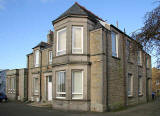
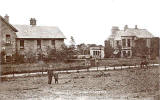
|
Recollections 3 . Ann Valentine |
|
Thank you to Ann Valentine for sending me her recollections below. Ann wrote: |
|
"I was brought up in Gilmerton as were several generations of my mums family before me." Schools in 1950s "In the early 1950's the convalescent home was the annexe of Gilmerton Primary school. Some pupils were sent there, others bussed to Prestonfield, and depending on which part of the village you lived in walked to buildings down near St. Barnabus Church in Moredun." The rooms all had coal fires in them. The girls got sewing lessons and the boys did gardening. Eventually, Hyvots Bank Primary School was built and the pupils in that area were transferred there." Convalescent Home "I remember my gran referring to the school as a convalescent home for children . Next door , the now social work department was known as the 'Mothers Rest'." Dr Guthrie's Home "My grandparents lived in Ravenscroft Place and moved to Hyvots Bank Avenue in 1939, over the wall from Dr. Guthrie's which in the 50's was a home for girls. I recall there was a 'bell' of sorts rang and that was the signal that some girls had tried to escape." |
|
Ann Valentine: March 10, 2007 |
|
Recollections 4 . Forbes Wilson near Guildford, Surrey, England |
|
Thank you to Forbes Wilson for his recollections below recollections below. Forbes wrote: |
|
Hyvots Bank "Thanks for posting the photograph of the Hyvots Bank terminus - route 11. When I lived at number 12 Gilmerton Dykes Street (1957 - 1977) this was the terminus for the number 31 bus (to the Maybury roundabout) and the number 20 bus (to Barnton). 143rd Scouts Every Thursday evening I would walk past this terminus en route to the 143rd scouts located in the Gilmerton church hall, Ravenscroft Street. Fish & Chips On the way back we'd stop off in a fish and chip shop in Newtoft Street named Willie Blair's. (He also had a training hall for boxers in Ravenscroft Street.) - warm chips, salt, vinegar and brown sauce all wrapped in a sheet from the Edinburgh Evening News - great memories!" Forbes Wilson, near Guildford, Surrey, England |
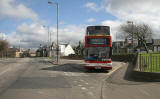
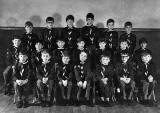
|
Recollections 5 A . Jimmy White Loanhead, Midlothian |
|
Jimmy White wrote: School "R eading through the Gilmerton recollections (above) brought back the happiest days of my life. I went to: - Ravenscroft School, annex of Gilmerton Primary School, in the early '50s. It was situated next door to the 'Convalescence School' and had about 7 classrooms. - Green Halls School, the other annexe. It's now the church hall." I remember Bunny Mason, one of the most famous teachers at Gilmerton Primary School." Play "My parents moved to the newly built prefabs at Hyvots in the late '40s. I have happy memories of: - playing in the 'quarry' between the prefabs and Gilmerton Dykes houses that were built later. - running from the prefabs through the long grass, now Gilmerton Dykes houses, with only grey flannel shorts and braces, nothing else - building a dam, and swimming in the burn - later, Wullie Blair's hall, opposite the church, for the boxing club - tuppence that cost. - threepence for a great big bag of chips out of Wullie Blair's chip shop, after boxing lessons - penny ice lollies - that's if you could manage to get a tanner (a sixpenny piece)" Homes "T he 'bad boys home ' used to be the Convalencent Home and the 'bad girls home' was on the Gilmerton Road, now the faith centre. I often wondered what became of Annie from the 'bad girls home' I knew her well. I used to help her to walk the home's boxer dog, Rufus'. Is she still living and can she remember me? Happy Days "Y es, when you think back, you could write a book on those days - all the characters etc etc. Happy happy days indeed, and stranger still, all the summers seemed sunny and all the folks freindly - great days! " Jimmy White, Loanhead, Midlothian: August 31, 2007 |
|
Annie? If anybody knows what became of Annie from the 'bad girls home' please e-mail me and I'll pass on the news to Jimmy. Thank you: - Peter Stubbs, August 31, 2007. |
|
Recollections 5 B . Jackie Coupe |
|
I've not yet heard any news of Annie (above) but I have just received this message from Jackie Coupe. Jackie wrote: Dr Guthrie's School "I've just read Lilma's note about Gilmerton (2 above: Answer) . The place she was talking about was Dr Guthrie's girls school. I have a lot of stuff about the place as I was a bad girl and got put there for not going to school. T he girls' school was in Gilmerton and the boys school was Liberton. I was there for a year from May 1972. I have a lot of good memories of the school and the girls. Why is there no web site for Dr Guthrie's? He was a famous man in Edinburgh he did a lot for the children on the streets of Edinburgh. I was always going to go back to see the place, but my family was upside down and never got around to doing it . My dream, if won the lottery, was to open up the school for the kids again, but not to be run like a army camp." Jackie Coupe: December 6, 2007 |
|
Recollections 6 . Jimmy White Loanhead, Midlothian |
|
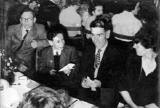
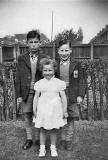
Jimmy White wrote again in September 2007 with more recollections of Gilmerton. Jimmy wrote: Village "I would like to explain how old Gilmerton was really a small mining village, with most of the population miners of coalmen. e.g. the Inneses and the Erskines." Gilmerton Homing Club "Most of these families, like myself were pigeon fanciers. This was the ultimate hobby in Gilmerton at this time. In 1956, when the Gilmerton Homing Club was founded, it had 42 members, winning races from 60 miles to 600 miles. 1954 Presentation of Prizes Sadly, this hobby has drastically dropped. The club now, in 2007, has only about a dozen members. Gilmerton was noted in the racing pigeon circles as "the place where the best fliers came from. Through the years, 5 Gilmerton members individually won the 'Grand National of Pigeon Racing - against the whole of Scotland, from France, flying to their small back garden lofts. My father and I were, in fact, founder members and helped to start the club." Gilmerton Halls "The photograph above was taken at the very first presentation of the Gilmerton Homing Club, held in the "Society Hall" in 1956. This hall was built in the 1870s and at that time was called the ' Pin Hall '. The ' Society Hall ' is opposite the Community Centre, which used to be Gilmerton Primary School. The ' Society Hall ' was used as the school Dinner Hall, and also as the Sunday School hall, which i attended, run by a Mr and Mrs Kerr. It acted as the Gospel Mission Hall for the services of a Sunday evening." Supporting Charities "The Gilmerton Homing Club has aided many charities. Myself and a few others organised a sale and night-out in aid of the Anthony Nolan Bone Marrow Trust and realised nearly £4,000, after my sister sadly passed away at the age of 44. It was all I could do to help! David, Jimmy and Irene With the old Gilmerton being a big name in the pigeon world, many came and donated from all over the UK, in the hope of buying a champion pigeon. Pigeons Today "I, myself, have been and still am a keen pigeon fancier. Pigeon racing became the miner's lives since the early 1900s when it began. Nowadays, pigeons are racing for thousands of pounds, and obviously very valuable, thanks to the miners of Gilmerton." Jimmy White, Loanhead, Midlothian: September 20 + October 1, 2007 |
|
One of Jimmy White's pigeons, 'Sir Colin' , won Open SNFC Open Races in 1991, 1992 and 1993 and appeared on the cover of The British Homing World's magazine, 'Pigeon Racing Gazette'. |
|
Recollections 7 A . Jimmy White Loanhead, Midlothian |
|
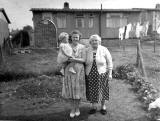
Thank you to Jimmy White for sending me these two photos of Gilmerton. Jimmy wrote: Prefab Housing "This photo is my grandmother, mother and youngest sister, June. T hese are the prefabs houses that occupied the area in Gilmerton, now Hyvots, where the flats are now. (Some have been knocked down due to subsidence, no wonder as they were built on a filled-in quarry.) New Street " Through the gap in the prefabs, you can just see the two chimneys and the tops of the houses in New Street (now Newtoft Street) opposite Wullie Blair's chip shop. R avenscroft school, annexe of the old Gilmerton Primary School, was next door to these houses . " Burdiehouse Burn "The photo was taken around 1950, about the time that they built the houses at Gilmerton Dykes and the bridge over Burdiehouse Burn. Before, then, the only bridge over the burn was the one at the Lasswade Road. F rom these prefabs down to the burn was just quarry and long grass." |
|
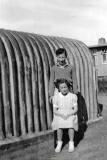
Anderson Shelter "This photo is myself and my deceased sister, Irene, with the old Anderson Shelter at the back of us, used as the 'coal house'." "At this time, around 1950, the small village of Gilmerton started to expand. Prefabs were built at Ferniehill, Moredun and Craigour. Then, the council houses were built at Gilmerton Dykes ,Moredun etc." |
|
Jimmy White, Loanhead, Midlothian: December 10, 2007 |
|
Recollections 7 B . Forbes Wilson near Guildford, Surrey, England |
|
Forbes Wilson, now living near Guildford, Surrey, England replied: Prefab Housing "Many thanks to your reader Jimmy White for posting the photograph of the prefab housing in Gilmerton. Shops From 1957 until 1977 I lived at 12 Gilmerton Dykes Street, above what used to be at that time, Millers chemist shop. There was also: - Millar’s the butchers - McLeod’s the grocer - McKay’s the bakers - Burns fruit and veg and - Mayer’s the newsagent. The rear of our house looked down onto Burdiehouse Burn. Across the burn, and at the top of the slope was the rear of the houses in Gilmerton Dykes Avenue. To our right was the old bridge that Jimmy refers to on Lasswade Road and to the left was the, then, new bridge taking Gilmerton Dykes Street up to Newtoft Street. Chips and Pickle After Thursday night scouts in Ravenscroft Street we used to get a 6d bag of chips from Wullie Blair’s and if you were feeling rich, a 1d large pickle! Forbes Wilson, near Guildford, Surrey, England: December 18, 2007 |
|
Questions |
|
Forbes Wilson has asked these two questions. Question 1: Where were the prefab houses? "I am curious to know where the picture beside the prefab houses was taken from. Judging by Jimmy’s description of the two chimney tops, they are on the top of houses in New Street (now Newtoft Street) opposite Wullie Blair’s’. I have been looking at the 1955 map of the Gilmerton area on the EdinPhoto web site. Were the prefab houses in Moredun Dykes Road or in what appears to be Hyvots Crescent? Question 2: Does anybody have pre-1950s photos? Do any of your readers have any photos from the pre-1950’s where Burdiehouse burn was bordered by the quarries and long grass? When I was a young lad, some of the older residents of the Gilmerton area would often talk about ‘the quarries’" Forbes Wilson, near Guildford, Surrey, England: December 18, 2007 |
|
Recollections 7 C . Jimmy White Loanhead, Midlothian |
|
Thank you to Jimmy White who wrote: Prefab Housing "Forbes is near enough right about the location of the prefabs in the photo. Coming down Moredun Dykes Road, from the old phone box, there were prefabs on both sides. - On the right off Moredun Dykes Road was Hyvot Crescent, which bordered the 'swing park' in the shape of an arc. - On the left were Hyvot Avenue leading to Hyvot Terrace, then Hyvot Gardens, then Hyvot Loan, which ran down to Inches farm then Ellen's Glen. There were also some small streets. Quarries Right at the bottom of the prefabs there were quarries, then just long grass down to the burn, now Gilmerton Dykes. The quarries were of course a haven for us young lads, even although we were told to keep away from them, as they were too dangerous - but as boys will be boys. I slid down one of the caves at the bottom of the quarry, and my brother and his mates took hand in hand, (about 4 of them) and pulled me out. Of course, to this day he says he saved my life. Maybe a slight exageration, but they were pretty dangerous. If you threw a stone down, it was a good few seconds before you heard the splash of water at the bottom. Photos Like Forbes, I would love to see any photos of these quarries. They seem to be very rare , but I am still hunting, myself. Through the years, I have lost a few old photos, but I may find some with my family. Jimmy White, Loanhead, Midlothian: December 26, 2007 |
|
Recollections 7 D . Carol Bell ( née Welsh) Melbourne, Victoria, Australia |
|
Thank you to Carol Bell who wrote: Neighbours "My family lived next door to you and your family in Hyvots Gardens. I married Fred Bell. My sisters , Pat and Moira, have great memories of you and your family . My sister , Pat lives in Dalkeith, Moira is in Edinburgh, and Fred and I live in Melbourne, Australia. Gilmerton has always held a special place in our hearts . Happy times. I could not believe it when I saw the photo of you and your family standing at the prefab in Hyvots. Carol Bell (née Welsh), Melbourne, Victoria, Australia: February 20, 2011 |
|
Recollections 8 . Tom Nimmo Canada |
|
Question |
|
Tom Nimmo, Canada, wrote: Sanitarium "When I was approximately ten years old, in 1950, I was sent to a sanitarium-like facility in Gilmerton. I was wondering if you have anyone who would recall the name of the institution?" Tom Nimmo: Canada, December 21, 2007 |
|
If you can help to answer Tom's question, please e-mail me , then I'll pass on your message to him. Thank you. - Peter Stubbs. |
|
Recollections 8 . Answer 1 Bob Henderson Edinburgh |
|
Bob Henderson, Burdiehouse, Edinburgh replied: Sanitarium "The only sanitarium I know in the Gilmerton area is the old tuberculosis hospital 'Southfield Hospital'. The main entrance to its grounds is in Lasswade Road. It is now an up-market housing estate with an old peoples home on the site." Children's Home "If, however, Tom Nimmo was in a children's home, it might have been Dr Guthrie's ,also entered from Lasswade Road and now an old people's home." Industrial School "At Gilmerton, there was, of course, the Industrial School - but I have always understood that in the fifties it was a girls' establishment." Bob Henderson, Burdiehouse, Edinburgh: December 23, 2007. |
|
Recollections 8 . Answer 2 Scotty Henderson Canada |
|
Scotty Henderson replied: Sanitarium "I think the Sanitarium was between Gilmerton Road and the Old Dalkeith Road, and that the entrance was on, I think, Kingston Rd. This is from long-time memory as my sister was in there with meningitis in 1951, plus the fact that as a telegram messenger I cycled past it many times." Scotty Henderson, Canada: December 25, 2007. |
|
Recollections 8 . Answer 3 Jimmy White Loanhead, Midlothian |
|
Jimmy White replied: Dr Guthrie's Schools "There were the famous Doctor Guthrie's schools: The girls' school was in the, now, Faith Mission, Gilmerton Rd The boys' school was at Liberton, not far from the Liberton Inn, a very old inn which was actually a fair distance from the village of Gilmerton." Boys' Home "I recall a big house, still there, next to Gilmerton Primary School's Ravenscroft Annexe which I attended. I'm quite sure this would be the Boys' Home that Tom is asking about. This big house eventually became the Social Work Centre on New Street, and the school has now been converted into flats. I cant remember the name of the big house, but would assume it would come under 'Ravenscroft something'. The new Social Work Dept now is in fact the old Gilmerton Primary School, on the corner of New Street and Gilmerton Road." Name of the Big House? "I hope this helps Tom. Maybe it will prompt someone's mind as to the name of it. Maybe Tom remembers how many rooms were in the place that he attended. I should guess there would only be approx a dozen in the 'big house' as opposed to Dr Guthrie's at Liberton, which was very much bigger and would have held over a hundred lads." Jimmy White, Loanhead, Midlothian: December 27, 2007 |
|
Recollections 8 . Answer 4 Peter Stubbs Edinburgh |
||||||||
|
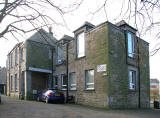
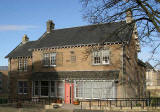
Houses in New Street Here are some photos that I took in February 2007 of large houses in Newtoft Street (formerly New Street) Gilmerton. I think these may be the buildings that Jimmy White refers to above:
Peter Stubbs, Edinburgh, December 28, 2007 |
||||||||
|
Recollections 8 . Answer 5 Jimmy White |
|
Houses in New Street Jimmy White replied: "You are bang on with your photos. In fact, if you look back to this pic of the bus terminus, you can just barely see this building in the distance. Jimmy White, Loanhead, Midlothian: December 29, 2007 |
|
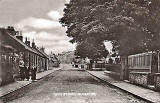
Yes, Jimmy. This view of the bus terminus looks to the east along Gilmerton Dykes Road, towards Newtoft Street at the top of the hill in the background. The photos that I included in 'Answer 4' above are of buildings that you would on your left-hand side if you walked straight forward in this photo and over the hill into Newtoft Street. Peter Stubbs, Edinburgh, December 29, 2007 |
|
Recollections 8 . Answer 6 Ann Valentine East Lothian, Scotland |
|
The Remand Home Ann Valentine replied: " What is now a Social Work Office was actually known as 'The Remand Home'. It was for boys only, and they were brought out to it in what we used to call 'The Black Maria', a police van." Ann Valentine, East Lothian, Scotland: November 8, 2009 |
|
Recollections 9 . George Field Melbourne, Victoria, Australia |
|
George Field wrote: Gilmerton Road "I was brought up in Gilmerton from age 9 to 16 and lived at 493, Gilmerton Road , right next to the number 3 Corporation bus terminus. " |
|
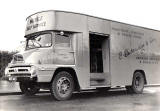
Travelling Shops " I lived with my grandparents, Cecil and Daisy Beveridge. They kept a licensed grocers business in New Street for many years and also had two mobile travelling van/shops which served Gracemount, Hyvot's Bank and several other areas. They were the first mobile ' supermarkets ' in the UK and featured heavily in Ford's publicity, as they were built on Thames Trader chassis. " |
|
School and Scouts " I attended Liberton High School and I was among the intake when it first opened it's doors. I was a Boy Scout and we met in a Hall in the Inch, near the Robin's Nest. Church Parades were held in the Church just up the road from the Robin's Nest. " |
|
Employment After leaving school, became a projectionist and drove buses . |
|
George Field, Melbourne, Victoria, Australia: February 2, 2008 |
|
Recollections 9 . Sheena Wheeler Australia |
|
Question 1 |
|
Sheena Wheeler wrote from Australia: Police Station "My Grandfather was a policeman at Gilmerton, just outside Edinburgh, in 1904 or up to 1918. I am looking for an old photo of the Police Station at Gilmerton. I hope someone can help me. " Sheena Wheeler, Australia: March 29, 2008 Sheena added "I would truly appreciate if someone could produce an address and photo of the Police Station Gilmerton circa 1916-1918. My Grandfather was in residence there as a Police Constable. That was his given address when my father enrolled into Heriot's School in 1918." Sheena Wheeler, Australia: Message in EdinPhoto guest book. March 30, 2008 |
|
I already have a few photos of Gilmerton on the EdinPhoto web site. I don't know whether or not any of these might include the old Police Station. Perhaps somebody can tell me. If you have any information about the old Police Station, or photos of it, please email me , then I'll pass on your message to Sheena. Thank you. - Peter Stubbs: March 29, 2008 |
|
Answer 2 |
|
In the 1930s, the Gilmerton Police Station was in Drum Street, the main street leading to the south from Gilmerton. I'll check to see if it was there in 1918. - Peter Stubbs: March 30, 2008 |
|
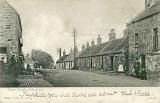
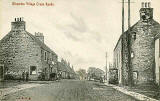
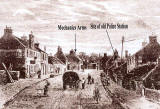
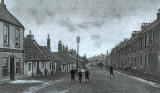
Drum Street Thank you to Jenny Parkerson for providing a 1916 map of Gilmerton, showing the Police Station to have been on the NE side of Drum Street, about 200 yards SE of the junction of Drum Street and New Street (now Newtoft Street), just about opposite the Post Office. There are no house numbers on this 1914 map, but Jenny also provided a 1949 map showing the houses then to be numbered 77 + 79. This old postcard view from the early 1900s looks NW up Drum Street towards New Street. This photo would have been taken from approximately outside the old Police Station. The Police Station is just out of this picture on the right-hand-side. Here is another view taken from a few yards further forwards. The same shop can be seen on the left-hand side of both views. - Peter Stubbs: April 1, 2008 |
|
Answer 4 |
|
Drum Street I went to Gilmerton on April 3, to see if the old Police Station was still standing. I found that Numbers 73 and 83 Drum Street still existed, but unfortunately the houses in between including the old Police Station (Nos 77 + 79) had been demolished to make way for a road that leads into a new estate of houses. The road is named East Farm of Gilmerton. - Peter Stubbs: April 5, 2008 |
|
Thank you to Archie Young for sending me an old photograph and an old engraving, showing the location of the old Police Station. Please click on the thumbnail images below to enlarge them and to read more about them: Archie Young, Moredun, Edinburgh: April 8, 2008 |
|
Edward McMillan tells me that he came across the EdinPhoto web site while trying to establish the locations of old police stations. Edward wrote: 1840 to 1920 "Gilmerton was a county police station from about 1840 until 1920. The Edinburgh Extension and Tramways Act 1920 came into force on 2nd November 1920 when 13 county police stations (including Gilmerton) and 22 Midlothian police officers where transferred to the City Police. By that time Gilmerton had been made up to a two-man beat and the officers stationed there, PCs Mackenzie and Aitchison, were transferred to Edinburgh City Police. I think only one of the officers resided in the police station while the other occupied a "police house" either adjoining or nearby." 1933 "Gilmerton continued to operate as an Edinburgh City police station until 29th May 1933 when the "police box system" was introduced and 25 city police stations (including Gilmerton) were closed. Some stations were sold off but others continued to be occupied solely as police houses. I don't know when the police finally gave up the old station. I don't know what Sheena Wheeler's grandfather's name was. I can't locate a PC Wheeler, but I assume that Wheeler is her married name. If I had his name I might be able to trace him. In any event, if he was at Gilmerton at any time up to 2/11/1920 he would have been an officer in the county force, Midlothian Constabulary." PC Mackenzie "PC Mackenzie who was at Gilmerton and transferred to Edinburgh City Police transferred back to Midlothian Constabulary in 1922 and was posted to Bonnyrigg." PC John MacKay "Further, for your information, PC John MacKay was stationed at Liberton Police Station (24 The Kirkgate) and was transferred to Edinburgh City Police in 1920. He later served at Gilmerton Police station and continued to live in the village after the station closed. He had joined Midlothian Constabulary on 9th February 1914, then served in the Great War with Military Service from 5/6/1915 until 20/1/1919 when he was reappointed to the police. He must have retired in the late 1940's and in the early 1970's he was living in Melville Grange Cottages between Gilmerton and Eskbank. His son Eoin was was born at Liberton Police Station and thereafter lived in Gilmerton. In 1947, after serving in the war, Eoin joined Edinburgh City Police. Then in 1950 he transferred to the county force (Lothians and Peebles Constabulary) in 1950. Eoin retired from the police as a Sergeant at Dalkeith in 1972. After a period as a lighthouse keeper in the north of Scotland, Eoin finally retired and is back living out his old age in the Gilmerton area." Police History
"I grew up in Moredun having moved to the
prefabs in Moredun Park Way in 1953, then to Moredun Park Street in 1960.
I retired in 1999 after 30 years service and now work part time in the Police Information Centre in the High Street. I am continually interested in local police history a lot of which is being lost as it "fades" from memory." Edward McMillan, Edinburgh: April 13, 2008 |
|
Answer 7 |
|
Thank you to Archie Young for sending me this photograph of Claudia's Café, now demolished, in Drum Street. When this photo was added to the web site, it was thought that this might have been where the Police Station once stood in Drum Street, but this turns out not to be the case. |
|
Police House Archie Young tells me that he has been informed by an elderly Gilmerton resident that there used to be a Police House as well as a Police Station at Gilmerton, and that both were in Drum Street. Archie also sent me a copy of the note below, sent to him on April 13, 2008 by the researcher, Edward McMillan. The third paragraph of Edward's note below also refers to a police house at Gilmerton. Archie Young: May 4, 2008 Edward McMillan wrote (to Archie Young): "Gilmerton was a county police station from about 1840 until 1920. The Edinburgh Extension and Tramways Act 1920 came into force on 2nd November 1920 when 13 county police stations (including Gilmerton) and 22 Midlothian police officers where transferred to the City Police. By that time, Gilmerton had been made up to a two-man beat and the officers stationed there, PCs Mackenzie and Aitchison, were transferred to Edinburgh City Police. I think only one of the officers resided in the police station while the other occupied a 'police house' either adjoining or nearby. Gilmerton continued to operate as an Edinburgh City police station until 29th May 1933." Edward McMillan, Edinburgh: April 13, 2008 |
|
Recollections 11 . Archie Young Moredun, Edinburgh |
|
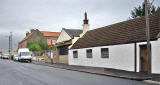
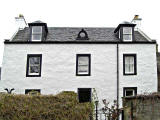
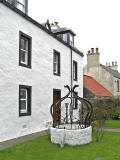
Robin's Nest Inn "Here are two recent photos of the original Robin's Nest Inn.
|
|
Stenhouse "The inn was situated in Ellen's Glen Road. This was in days gone by, when the area was called Stenhouse, otherwise known as Stennis. At one time, Stenhouse was a Hamlet with a mill, a church, two piggeries and a farm. There must have quite a population at one time." |
|
Poll Tax "If you look at the well you'll see little rose bushes growing. We think of the Poll Tax as being a new thing but it was around at the time the inn was built. The story is that, providing the rose bushes flowered, the Inn would be free from paying the Poll Tax. This would not happen today with the existing Council." |
|
Closed and Re-Opened W hen? "I've spoken to the new owner. He thinks the inn was built around the mid-1700s. It was still operating as an inn back in 1922. When it closed, I've no idea. One man I spoke to told me his father drank in it when as a young man. This would, at a guess, be the mid-1930s. T he new Robins Nest on Gilmerton Road opened around the mid - 1950s." Please also see Recollections 76 below for further details |
|
Window "There is a strange looking round window on top of the old inn, perhaps someone may recognise it and know what it's called. The name Robin's Nest, it seems, does not refer to the little bird but to Robin Hood. Why, I'm uncertain. Perhaps, originally, the inn was owned by someone who had lived in Nottingham. The original sign outside the inn had the figure of Robin Hood painted on it. This is just speculation from my point but, there again, it may be true." |
|
Archie Young, Moredun, Edinburgh, April 27, 2008. |
|
If you know anything else about the original Robin's Nest Inn, please email me, then I'll pass on your message to Archie Young who provided the photos above. Thank you. - Peter Stubbs: April 27, 2008 |
|
Recollections 11 A . Archie Young Moredun, Edinburgh |
|
Archie Young subsequently wrote: |
|
16th Century "After digging up the old records, it seems that in the early days Gilmerton had what they called a 'Play Day'. It started around the 16th century, it was still going in the 17th century. It was a favourite for the people of Edinburgh and Leith who travelled to see it. When it was over, there was merry making all night, and a fight or two. Eventually, the 'Play Day' was stopped because it was thought to be lewd and licentious." |
|
Robin's Nest Inn "I think, on looking back, that this is probably where the Robin's Nest Inn got its name. D uring the 'Play Day', the carters would race their horses through the street, possibly Main Street or Drum Street. There were two banners used, then bid for at an auction, the 'Gilmerton Banner' and the 'Stennis Best'. The 'Stennis Best' seems to have been more popular." |
|
Archie Young, Moredun, Edinburgh, May 7, 2008. |
|
Recollections 12 . Archie Young Moredun, Edinburgh |
|
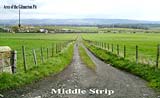
Archie Young provided the photograph below and wrote: Gilmerton Coal Pit "The Coal Pit was called the 'Brozie' or 'Brosie' . I've checked the dictionary and found nothing, but obviously it meant something to the miners. In those days there were no baths or showers at the pit, so when the miners finished their shift, instead of walking up through the Village as black as the coal they had dug, they walked up what they called 'The Middle Strip', shown as Middle Walk on the photograph above. This strip was a cart track that divided the two fields. It would bring them out at the top of New Street or Ravenscroft Street." Archie Young, Moredun, Edinburgh, May 1, 2008. |
|
Recollections 13 . Archie Young Moredun, Edinburgh |
|
Archie Young spoke to more people at Gilmerton, then wrote: Police House and Police Station "Success at last. I spoke to the lady who has lived in the village all her days. She told me that the Police House was No. 77 and the jail or cells were No. 79. She went on to explain that, as a little girl, she used to play with her friend who lived there. She said the cells, as far as she can recall, were downstairs and she found it very creepy. She gave me the names of the Police Officers: - Sandy Aitchison - Bob Murray - Frank Coutts." Archie Young, Moredun, Edinburgh, May 7, 2008. |
|
Recollections 14 . Andrew Muir Gilmerton, Edinburgh |
|
|
Andrew Muir noticed that the 'Pin Hall' at Gilmerton was mentioned in 6 above, and asked some questions. |
|
|
Andrew wrote: The PIN Society "I saw , the other day , a silver snuff box with this inscription. "
Andrew added: Questions "Can you tell me what the Society did and do you have any suggestion who James Anderson was and what he did?" Andrew Muir, Gilmerton, Edinburgh: August 12, 2008. |
|
Recollections 15 . Archie Young Moredun, Edinburgh |
|
Thank you to Archie Young who made more enquiries about ... then wrote: |
|
Pins " I spoke to a lady who was born and bred in Gilmerton . She she is in her mid eighties, she told me that the ' Pins ' were elaborately made flags, and they were sold off to help the poor unfortunates in Gilmerton . This would be during the ' Carter Play D ay ' as well, bearing in mind there was no Social Security , no accident insurance and no pensions in those days. Carter Play Days " Carters Play Day s' originated with the Gilmerton Play D ay . From around the 1500s onwards, they used to put on a play about Robin Hood . It is from this I think that the o riginal Robin's Nest Pub or Inn at Stenhouse ( Stennis ) up Ellen's Glen Road got its name . The actors probably went there afterwards for an Ale or two to relax and rest. Archie provided more information about the carters |
|
Moredun House "W here Morrison's Store is now, was once the site of a large estate and house known originally as ' Gutteries '. It then became ' Good Trees ' and finally ' Moredun House ' . When the house was known by the latter name it was in the po s session of a David Anderson . I think that he may have had a son . He definitely had two daughters . They were the final owners of the house. . The fact that this James Anderson has ' Esq ' ( short for Esquire) after his name means that in those days he would have been a man of prominence. This is what makes me think that he was may have been a sibling of David Anderson. It would seem that the Anderson family was very generous to the villagers and to the upkeep of Gilmerton church. |
|
PIN Society " The PIN Society was , I think, connected to the ' Carter Play Day s'. There were a few of these societies in the Gilmerton area . Th e Friendly Society and the Junior Society are two that come to mind . I have a feeling that the local people used to make fancy pi ns for the Play Days and sold them off . What kind of pins they were I do n' t know . They , they may have been for lapels or dresses, or they could have been hat pins . The money taken for these pins went to the local poor, unemployed, sick and elderly funds . In those days , there were no proper pensions or unemployed benefits. " |
|
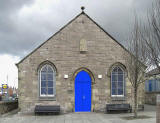
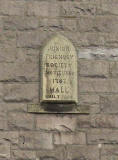
PIN Hall " Here is a photo of mine of the Friendly Society Hall ' PIN Hall ' in Gilmerton. " Here is a close up of the plaque on the wall of this building. " |
|
Archie Young, Moredun, Edinburgh : August 29, 2008 |
|
Recollections 16 . Archie Young Moredun, Edinburgh |
|
Thank you to Archie Young who made more enquiries about the history of Gilmerton and discovered: 1. Processions: The carters' Friendly Societies supported carters in old age and in ill-health, and provided a day's recreation, when there was an annual procession of cart horses, decorated with flowers and ribbons. The procession was accompanied through neighbouring parishes by a band. [ The New Statistical Account Of Liberton , 1845] 2. Clydesdale Cart Horse: There was a Gilmerton Carter who had a beautiful cart horse a Clydesdale . Th is horse was massive . In a Horse Show , it was stated that it must have been the tallest horse on earth . There is a photo of it in the Gardner's Arms Pub Archie added: |
|
Pins " I spoke to a lady who was born and bred in Gilmerton . She she is now in her mid - eighties . She told me that the 'pins' were elaborately made flags, and they were sold off to help the poor unfortunates in Gilmerton . This would be during the ' Carter Play D ay ' as well, bearing in mind there was no Social Security or accident insurance and there were no pensions in those days. " |
|
Carter Play Days " Carters Play Day s' originated with the Gilmerton Play D ay . From around the 1500s onwards. The actors used to put on a play about Robin Hood . It' s from this , I think , that the original ' Robin's Nest Inn ' at Stenhouse (Stennis) would have got its name . The actors probably went to the 'Robin's Nest Inn' after the play for an Ale or two , to relax." |
|
Archie Young, Moredun, Edinburgh : August 29, 2008 |
|
Recollections 17 . James W Turner Israel |
|
Thank you to James W Turner who wrote: |
|
Gilmerton Convalescent Home "My late grandmother was brought up in the Gilmerton Convalescent Home. She was born 6 weeks after her father 5087 L/CPL James Wallace was killed on the Somme. She spent ten years at the home and had a good childhood with lots of toys and plenty of food etc ." |
|
Keighren Family " My other gran , Sara Maie Turner , was a cousin to the Keighrens mentioned on the web site" |
|
James W Turner, Israel: Message posted in EdinPhoto Guest Book: December 17, 2008 |
|
Recollections 18 . Brian Cameron Dalkeith, Midlothian, Scotland |
|
Thank you to Brian Cameron who wrote: |
|
Police Station "The old police station in Gilmerton was demolished to make way for an entrance to the East Farm housing development. It was for many years used as a general store run by Frank Coutts, and later as a plumbers. it was next door to the joiner's yard. Across the road in Innes Buildings. " |
|
Post Office " Almost directly opposite, was the original Post Office before it moved to Ravenscroft Street (formerly Main Street), it can still be identified by remains of the red paint around the door and window. " |
|
Shops " Gilmerton was very well served for shops, with several bakers, a dairy and several newsagents. I'll try to list them, others can fill in the gaps and names as I don't recall them all. Starting at the south travelling north towards Edinburgh: - A Plenderleith ( o n right ) - opposite, Drum Cottages, Gardeners Arms ( o n left ) - Coutts General Store ( o n right ) - Post Office ( o n left ) - Joiners ( o n right ) - Café Marandola (spelling?) ( o n right ) - Bakers ( o n right ) I can't remember the name of this baker, but he lived in Ferniehill Road, the last house before the area which suffered subsidence, opposite the Dell . Unfortunately, his house suffered in that event and he had to be moved out on his birthday . I think he was in his 90s. His house had to be demolished , and he died not long after, - Beehive Wool shop ( o n left ) - Newsagents on corner with Main Street - Royal Bank ( o n right ) - Henniker Newsagent ( o n right ) - May Tait Greengrocer ( o n right ) - Mechanic Arms ( o n left ) - A H Thomes TV Store ( o n right ) - AH Cumberland Fishmonger ( o n right ) - AH Thomes TV Shop ( o n right ) Opposite, where the Vet is now, there used to be a barber, possibly called Bain. The ESSO garage where the bingo hall now stands. This was built on an old quarry, which I think had a blacksmith on the site previously. At the corner of the crossroads, stood the CO-OP general store and next to that the CO-OP butchers. Further down at the junction with Ferniehill Road was Goodfellows Chemist and further down at the junction with Moredun Dykes Road was the Regent, later Texaco petrol station with a wooden-built CO-OP behind. In Main Street there was Blacklock's market garden and just before the vennel a couple of shops including a butchers (Campbell's?) and general store. At the other side of the vennel, another shop latterly a bookmakers, I can't remember what it was in the late -1950s. Further up there was a newsagents and a baker's (Guilder) and dairy opposite. At the top of Main Street there was 'The Corner Shop' which was another general store. In Newtoft Street was: - Willie Blair's shop which was split in 2 to form a sweetie shop on the left and a chip shop on the right. - The Ravenscroft Convalescent home, which became an annex of Gilmerton Primary School for a while. It was popular for its big open fires. - Next to it was the Boys' Remand Home (I think under the name of Guthrie's) later to become the Social work office. In the late 1950s, most of the vacant halls in Gilmerton were used as annexes, Society Hall, Greenhalls , the Guildry Hall and also the old Moredun Primary School. Jimmy White will recall most of these as we seemed to travel around them together. |
|
Brian Cameron, Dalkeith, Midlothian, Scotland: December 29, 2008 |
|
Recollections 18 . Ron Ross Brampton, Ontario, Canada |
|
Thank you to Ron Ross who wrote: |
|
Home "I stumbled across the pages about Gilmerton on your website . It has been an incredible walk down memory lane for me. I lived in a prefab at 4 Hyvot Terrace from 1949 until 1958 . The prefabs were demolished in 1962." |
|
Exploring " I share many of the memories recalled by Jimmy White (in 5A to 8 above) especially about exploring the limestone caves. He and I must have crossed paths countless times in those days. " |
|
Shops " Brian Cameron's list of the shops in the main part of Gilmerton (in 18 above ) is excellent. - The baker on Drum Street was Williams . His shop was right next door to Henniker the newsagent. - Henniker's shop is now the RBS bank. - The barber shop on Drum Street was Bain. - The Mechanic's Arms pub was called Mitchell's in 1950. - The butcher on Main Street was indeed Campbell. - The general store on the other side of the vennel from the butcher was Meiklejohn. - The newsagent , further up Main Street, opposite Guilder the baker , was Runciman. |
|
Society Hall " When I attended Gilmerton Primary School, we had our school dinners in the Society Hall , across the street. I also went to the Society Hall every Sunday to attend the Sunday School run by the Kerrs who lived on Gilmerton Road, just a few doors down from Goodfellows the chemist . I still have the bible that was awarded to me there in 1951 for perfect attendance for a year. The Kerrs . |
|
CO-OP " The wooden CO-OP building at the corner of Gilmerton Dykes Road was originally called Halliday's . It was a self-service shop in 1949, the first self-service shop in the area. " |
|
Ron Ross, Brampton, Ontario, Canada: February 3, 2009 |
|
Recollections 20 . Ron Ross Brampton, Ontario, Canada |
|
Thank you to Ron Ross who wrote: |
|
Quarries and Cave Holes in the Ground "I lived in a prefab at 4 Hyvot Terrace from 1949 until 1958. There were three large holes in the ground , just a few yards from our front door. We called them quarries. Much later, I learned that Gilmerton had once been a centre for limestone quarrying . So these holes must have been the remnants of that work. " Cowboys and Indians " The quarries themselves provided a good play area as they were completely overgrown with small bushes, so were perfect for games of ‘cowboys and Indians’. " Gambling " Men from the village also used to come to the quarries on a Sunday afternoon, and gamble at ‘pitch and toss’. I’ve never played the game, but it seemed to be simple enough. The men would take turns at tossing two coins into the air, and there would be bets placed as to the combination of heads or tails that would be showing when the coins landed on the ground. It doesn’t sound like there was much room for skill, but it seemed to fascinate the players. We used to watch them from hiding places. Once or twice, when one of us was feeling really bold, we would yell “The police are coming!” then we would watch the gamblers scatter and run. If they had caught us, we would have received a good hammering. But they never did. " Cave Entrances " Within one of the quarries there was an entrance to the ‘cave’. This was even more fascinating than the quarries themselves. In hindsight, it was also downright perilous. But we didn’t think of that at the time. The way into the cave (there was actually only one cave, but it had two entrances) was through a very narrow opening in the rock, close to the ground. To get in, you had to slither on your belly. However, once inside, it opened up enormously and there was plenty of headroom. The only light, of course, came through the narrow entrances. Only a few feet inside the cave, it was inky black. " Inside the Cave " The floor of the cave was on a fairly steep incline, and it fell away sharply into the darkness. Mining had stopped in the mid - 19 th century, so the quarries and the cave must have been disused for about a hundred years when we ‘discovered’ them. Any time we went into the cave, we always had plenty of company. It was far too scary a place to ever go in there alone, or even with only one other pal. If there was a group of six or seven boys and the weather was fair, we would explore the cave. We wouldn’t go in if it was wet, because slithering in through the narrow entrance would have been a very muddy experience. " Torches " We had to use a bit of boyish ingenuity to solve the problem of darkness inside the cave. We made torches by cutting up old automobile tires, fastened the pieces of tire tread to long sticks with wire, then set fire to the rubber. Several of these would give off sufficient light and would also last for a fairly long time, so they proved to be ideal for the job. Nevertheless, we always carried spares with us, just in case the first set of torches burned themselves out. We were reckless, but not stupid! " Health & Safety? " When the torches were lit the biggest hazard was the dripping, burning rubber. We had to hold the torches out sideways, but even then most of us got nasty burns at one time or another. With flaming, dripping torches, we would set off down the slope of the cave. After a few feet, the soil disappeared and only rock remained. Despite the steep slope, the footing was OK because the floor of the cave was just broken rock.
After a while, we would come to a massive rock
fall. At some time in the past, part of the ceiling had collapsed, and
the pile of rubble rose several feet high. We assumed that the rock fall
had happened long ago. Why we assumed that I don’t know.
To the End of the Cave " Undaunted, we would scramble over the pile of rock and continue on our way. The ceiling of the cave gradually got lower until, after about 100 yards, it met the floor. We had reached the end. There was nothing at the end except a muddy pool, where rain water collected after running down the slope from the entrance. I don’t know what we expected to find at the end of the cave. Ancient wall paintings, perhaps! But there was nothing of interest, so we simply retraced our steps. And that was the end of the cave exploration, until the next time, when we would do it all over again. All in all, we must have done it dozens of times. What we had done was very dangerous, although we didn’t realize it at the time. " 1950s "T he whole area had been extensively mined, for both coal and limestone , and subsidences were quite common. In the early 1950s the quarries were filled in, the ground leveled off and turned into parkland. Some multi-floor apartment buildings were built over the site of the buried cave, and a school and other houses were built in the general area. Eventually, the school was abandoned then demolished as it experienced severe structural damage from the ground subsiding. " 1990s " In the 1990s, scores of houses, and the multi-floor apartment blocks, were razed for the same reason. The local newspaper carried maps showing the locations of the ancient mines, and described how the long - buried galleries of the mines were finally collapsing. Not surprisingly, the area around our house was in the middle of the limestone mines. These collapses resulted in the ground above sinking also, rendering the buildings on them useless. Most people thought it all very unfortunate, but those people who had lived in the area 50 years earlier could have told them. As I read the newspaper stories about the collapses, I thought back to our days of exploring the cave. No doubt about it ; we had been fortunate. " |
|
Ron Ross, Brampton, Ontario, Canada: February 3, 2009 |
|
Recollections 21 . Roddy Young Ellon, Aberdeenshire, Scotland |
|
Thank you to Roddy Young who wrote: |
|
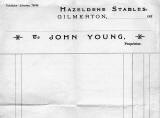
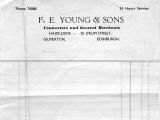
John Young - Hazeldean "I wonder if anyone could help me to trace any information about my father, John Y oung. He ran a riding stables at 'Hazeldean' , 76 Drum Street , Gilmerton from the 1930s until he died in 1953 when I was a baby. My mother ran a haulage business from the same premises after he died. She was left to bring up 3 boys and a girl, Charlie, Freddie, Roddy and Maria. We moved to Balgreen Road in about 1957. Charlie now lives in Gorebridge and Freddie is in New Zealand. My sister Maria, sadly, died aged 55 a couple of years ago from cancer My mother never talked about my father , so I never found out how he died, before she passed away in 2001. I'd like to know how he died and where , even where he is buried. Without the date of his death, I find it difficult to trace him in the Register House records o r from cemeteries. There are rumours in the family that he died in Du blin, or on a ferry to Ireland. " Roddy Young, Ellon, Aberdeenshire, Scotland: February 7+20, 2009 |
|
Question * Do you remember John Young or know of anybody who might have any information about him? If so, please email me, then I'll pass on the details to Ron. Thank you. - Peter Stubbs: February 20, 2009 * Now answered: see 'Replies' below |
|
Replies Roddy Young (who incidentally now lives in Ayton in the Scottish Borders) contacted me again today, about five years after I added his question above to the EdinPhoto web site. Roddy told me that: (a) he has now been contacted by a lady who turned out to be the daughter of his father's cousin. (b) after some further work, he has discovered that his late father died in Belfast on January 20, 1953. Peter Stubbs, Edinburgh: March 5, 2014 |
|
Recollections 22 . Norma Coutts Gilmerton, Edinburgh |
|
Thank you to Norma Coutts who wrote: |
|
The former Gilmerton Police Station "I was brought up in Gilmerton and lived at 77 Drum Street. No 79 was my father ' s shop . It was a drysalters , but prior to that it was the old police station, built in 1910 . My family moved there in 1946 from Leith and lived there til 1981 when they moved to Colinton . Both my parents are now deceased but we all loved living there . My father used to deliver the paraffin round the houses while my mother worked in the shop. There was a door leading from the house through to the shop (police station) and two large cells at the back where all the goods were kept . After my parents gave up the shop they rented it out to a Mr. George McBean who sold pictures and metal work . Then, it was a plumbers ' merchants . After that , John Webb took it over as a watchmakers . My father eventually sold the house and shop to the More-Nisbets from the Drum House who in turn sold it to contractors and is now East Farm housing estate . I still live in Gilmerton but boy how it has changed . Norma Coutts, Gilmerton, Edinburgh: February 28, 2009 |
|
Recollections 23 . Brian Cameron Dalkeith, Midlothian, Scotland |
|
After reading the reply about Gilmerton shops from Ron Ross (19+20 above) Brian Cameron wrote: |
|
Baker and Bank "Williams was the name of the baker, but it was next to the bank. The bank extended into Henniker's shop when he gave up the business. My brother's company Moran has recently filled the gap site which existed between the bakers and the café We used to take short cuts across the football pitch and through the window spaces to get to the shops. " |
|
Prefab Houses " There were many prefabs in Drum Crescent and Ferniehill . They were replaced by more permanent houses in the late -19 60s. Ferniehill Drive did not become a through road to Dalkeith Road until the prefabs were demolished. We lived in Drum Crescent. Our houses were a different design to the ones at Hyvots and Moredun . Ours were flat - roofed and were constructed with asbestos panels. Hyvots and Moredun had two designs. both similar in appearance with pent roofs, but were constructed with harled concrete panels or corrugated aluminium panels. Due to the extensive limestone workings which were thought to be under the prefabs at Gilmerton, extensive drilling and geological surveying was done, and only low rise housing was allowed on the area. " |
|
Glenesk Laundry "I forgot to mention the Glenesk Laundry which stood beside the Co-op at the crossroads. Its square chimney was a landmark which could be seen from some distance. It was painted white with a black top. The site later was occupied by a bakery and then it was cleared and Lidl and Iceland built on the site. My grandfather worked at the laundry before moving to Craigmillar Laundry which was in West Saville Terrace at Newington. " |
|
School " I also remember school dinners in the Society Hall , and school assemblies taken by Mr Anderson , the head teacher. My first teacher was Miss Tweedie who I met many years later, she was married to John Cameron (no relation) of Liberton Kirk. One of my favourite teachers was Mr Dryborough at Gilmerton Primary School, and the one I feared most was Mr Schipell * at Ravenscroft Annexe. " * See, also, the final paragraph of ' Recollections 28 ' below |
|
Friends "I remember: - The Kerr family - Their house on the Gilmerton Road was called ' Beulah .' They moved to Orchardhead Road , off Liberton Brae. Their daughter Betty was a teacher and their son Andrew was a Professor of Anatomy (I think) at Edinburgh University. - Andrew and May McRae, finer people you could not meet. They lived in a prefab on Ferniehill Drive, and originally used to take me and my brothers and sister to a Baptist - run Sunday School in Fernieside Primary School. - Ian and Mary Campbell - Jean and Jim Knowles. Sadly, Jim died a few years ago. - Mrs Marshall (Hyvots Bank) and Mrs Davie (Craigour) were two favourites of mine. They were sisters and Sunday School teachers. Mrs Davies ' son Jim used to have an Ice Cream van which did the rounds in Gilmerton. " |
|
Sunday Schools " I attended the Sunday School in the Society Hall at Gilmerton. I also remember the people who ran the Sunday School built Ferniehill Evangelical Church in Ferniehill Road . It was opened in 1972. My brother's company (Moran) also renovated the Society Hall and the Cove, and the relocated Library, he felt proud to have done something for the community he grew up in. " |
|
Petrol Stations " There were 3 petrol stations in Gilmerton until the late 1960s: - one beside the Gardener's Arms, which is still operating as a garage - the Esso Garage, now the bingo hall . Jimmy Turner used to own this garage and , I think , Mary Ann's newsagent opposite . He lived on Gilmerton Road. - one where the Toothbox dentists is now. This one sold Regent, then Texaco petrol. I think the 2 brothers who ran this garage bought the one beside the Gardeners Arms. " |
|
Brian Cameron, Dalkeith, Midlothian, Scotland: March 30, 2009 |
|
Recollections 24 . Brian Cameron Dalkeith, Midlothian, Scotland |
|
Thank you to Brian for sending me his recollections and photogrpahs of the housing hit by subsidence in Gilmerton in 2000. Brian wrote: |
|
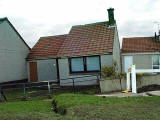
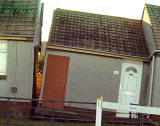
Houses hit by Subsidence " Here are some photos of the subsidence at Gilmerton in mid - November to mid - December 2000. This was one of the biggest events of its kind to occur in Britain. " Brian tells me that he took the photos with his 1 megapixel Minolta Dimage V camera. |
|
Brian added: |
|
Subsidence " Th is collapse of underground workings beneath the houses took place after a period of pr o longed , heavy rainfall , between mid-November and mid-December 2000. The Gilmerton area had been quarried and mined for limestone until the mid - 19th century and , apart from local knowledge, little was known of the extent of the underground workings as proper mapping was never carried out or recorded. Initially the limestone was worked, by quarrying but as the strata of limestone dipped into the ground at an angle of about 25 degrees, the workers followed it using a method called 'room and stoop'. This involved mining out an area called a 'room' . Pillars of limestone , 'stoops' , were then left . These held up the roof. The height of the workings w as up to 3 meters and the mined area represented, in this case, about 95% of the area worked. " |
|
Mining " The pillars left to support the roof were about 1.5 meters in diameter. The erosion of some of these pillars caused the collapse of part of the area which continued due to a domino - type effect. The groundwater was probably kept in check while Gilmerton Pit was operational, but the closing of the pit and the subsequent decision to stop pumping water from the pit probably altered the water levels and flow. " |
|
Ferniehill Houses " The main area of collapse , in the incident in 2000, was in the Ferniehill Terrace and Ferniehill Street area adjacent to Ferniehill Road. The potential issues in the area had been understood for some years , and when the area was being redeveloped in the 1960s extensive boring was done to ascertain the area most affected. The decision was made to replaced the immediate post - war prefab development with low - rise housing , rather than the more densely packed high rise housing normally being built at that time. " |
|
Damage " As can be seen from the photos most of the houses affected were small bungalows which had been built specifically for pensioners. It may also be apparent, from the photos, that these houses were built on concrete rafts to spread the load on potentially unstable ground. The houses themselves, in most cases, survived remarkably well, and it was suggested that if they had been built with a greater separation, most of them would have hardly been damaged at all, as most of the damage was caused initially by the houses coming into contact with each other, as can be seen in the photos. " |
|
The Roads " Large cracks appeared in the roads and areas of subsidence appeared in the adjacent children's play park. It must be said that the streets, as built, were relatively flat . The slopes in the photos were caused by the ground collapsing up to 2 meters in places. The pipework that can be seen in the photos was installed at the time to bypass broken water and gas supplies. " |
|
Evacuation " In the early part of the event, it appeared that no-one realised the potential danger and I managed to get the photos without hindrance. I remember walking along Ferniehill Street on the second night when a woman came out and called to one of the workers and said that she thought a crack had appeared above her door. He was rather dismissive, saying it was just a plaster crack. She asked me for a second opinion, I got on a chair and I could see a street light outside through the crack, which had widened in the few minutes since the contractor had looked at it. She went to stay with her sister that night, by next morning the whole street had been evacuated. " |
|
Earlier Incidents "At Hyvot's Bank, about 500 meters to the SW of where the houses later collapsed, the playground of the primary school collapsed in the early 1970s. After a delay of a few years , the primary school was demolished. I started a campaign , then ran Gilmerton Community Centre in my spare time . In the early days of the campaign , in the 1980s, a collapse took place in a car park , about 100 met er s to the east of where the houses later collapsed. The car park collapse caused much concern for the local people who were more aware of the extent of the underground workings than the Council appeared to. " |
|
Survey " After the subsidence n 2000, a major survey was carried out in the wider Gilmerton area . This was done by boring to find the voids. Several major voids were found and many houses were demolished as the conditions underground were considered to be too dangerous. In some areas people were decanted from their hoses for over a year while grouting was carried out to stabilize the ground. " |
|
Brian Cameron, Dalkeith, Midlothian, Scotland: April 1, 2009 |
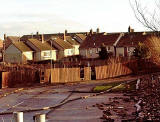
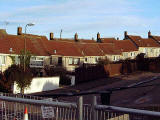
|
Recollections 25 . Liz Smith ( née Mackay) Glenrothes, Fife |
|
Thank you to Liz Smith for leaving a message in the EdinPhoto guest book. Liz wrote: |
|
Liz Mackay " I was Liz Mackay. I lived in Cramond up until 1976. I went to Cramond Primary and then Bellevue Secondary. Mum , Chris , died a few years ago . Dad, Robert still lives there. Chrissie Wallace Mum , Chrissie Wallace, was born and brought up in Gilmerton . S he talked about living in Drum Cottages, then at Hyvots Bank Avenue. I remember we always used to go to visit every Tuesday. The mention of Willie Blair ' s chip shop (4, 5A, 7A, 7B above) brought back fond memories of either buying a sweetie when we got there or going for chips later on. My mums family all lived around about the Gilmerton , Dalkeith , Bonnyrigg area when they got married , but my mum was the outsider having moved to Cramond. I passed through Gilmerton recently. It has changed such a lot. Does anyone remember me or my mum and dad? I'd love to hear from anyone .
Liz Smith (née Mackay), Glenrothes,
Fife, Scotland:
|
|
Messages to Liz If you'd like to contact Liz, please email me , then I'll pass your message on to her (if I can discover her email address!). Thank you. - Peter Stubbs: August 10, 2009. |
|
Recollections 26 . Megan Williams
Newcastle-upon-Tyne,
|
|
Thank you to Megan Williams who wrote |
|
Bakery "My mum was born and raised in Gilmerton and it was her grandfather who owned the Williams Bakery . I was even christened in the church at the end of Ravenscroft Street. My Auntie still lives there. If anyone remembers the William s family and/or the bakery (and van!) I would love to hear from them ." Megan Williams, Newcastle-upon-Tyne, Northumberland, England: Message and email address posted in EdinPhoto guest book: October 20, 2009 |
|
Messages to Megan If you'd like to contact Megan, please email me , then I'll pass your message on to her. Thank you. Peter Stubbs: October 20, 2009. |
|
Recollections 26 . Reply 1 Shirley Coffey |
|
Bakery I received an email today from Shirley Coffey. Shirley tells me that she was born in the attic room in Viewfield Place where Jim and Isa Williams lived. Shirley's family rented this attic room and lived there until she was three, with her mum, dad, brother and baby sister, then the family moved to a brand new house at the Inch. Other members of Shirley's family also lived at Gilmerton, at Drum Street, then at Drum Cottages. I have passed on Meggan Williams' contact details on to Shirley. I hope she will be able to get in touch with Meggan. Peter Stubbs: August 7, 2011 |
|
Recollections 26 . Reply 2 Helen Kerr Gilmerton, Edinburgh |
|
Thank you to Helen Kerr who wrote: |
|
Williams, the Bakers "I have lived in Gilmerton all my life and recall many of the Gilmerton shops mentioned, including Williams the bakers. They used to have a little green van that went round the local area. My mother used to order birthday cakes for us when we were little. I recall the chocolate cup-cakes filled with cream with a mandarin on top - my favourite. The shop had quite a large window , almost down to street level . One day I recall the van came to the house , and when my mother went to get her purse she closed the door of the house and we were shut out! Luckily a window was open and the driver was able to help get us back inside. " Other Bakers " I recall was Guilders in Ravenscroft. The smell & taste of fresh Scotch pies .... hmmmmm. The other large bakery was situated when Iceland / Lidl now are. There used to be a bungalow fronting Gilmerton Road and the bakery could be accessed via a wide driveway next to the house. We used to go in for freshly baked rolls. When the bakery closed the bungalow was demolished and the whole area was redeveloped. " Grocer's Van "Another van that I remember was the very large grey ' Jones ' grocer's van. It used to stop just outside the (new) Gilmerton primary school and the van had steps up into it. Occasionally we were allowed to go & buy sweets. " Tony's Café " There was also Tony's café where the Supperbowl is now. Tony's had the fish & chip counter with an ice cream & confectionery counter to the right. Towards the left and to the rear was the café . I remember being asked by my dad to take a pudding basin up to get some scoops of ice cream in the summer , before we had a fridge! Of course we always got raspberry sauce or chocolate sprinkles over the top too. Occasionally we'd buy red cola and make ice cream floats, watching the ice cream froth up and spill out over our glasses. " Newsagent " There used to be a new s agent ' s shop opposite the Manse on Ravenscroft Street , opposite Guilders the bakers. It's long since been converted into a house. " Sweets and Groceries " So many wonderful memories. Taits had a sweetie counter on the left and then a grocery shop at the back and to the right. I r e member watching the staff using the cold meat - slicing machine. Taits was great as they had various 'trays' for their sweeties. A penny tray, a ha'penny tray etc., with blackjacks, dainty toffees, Mojos and Fruit Salads, to name a few. There were also the sour plums, kola cubes & toffee doddles. " Supermarket " Where the library is now , on Newtoft Street, there used to be large house. This was demolished after a fire and a supermarket was built - Kibbys. This became Laws then Wm Lows. Memories "So many memories. Reading other people's contributions just brings the memories flooding back." Helen Kerr, Gilmerton, Edinburgh: February 18, 2010 |
|
Recollections 26 . Reply 3 Jim Smith Kirkliston, Edinburgh |
|
Thank you to Jim Smith who wrote: |
|
Williams, the Bakers Van Boy "When I left school at the age of 14 in 1946, my first job was with Williams the Baker. I remember it well. I was employed as the Van Boy to old Jimmy Williams. When we went out with the van I used to knock on the doors of the customers and help old Jimmy with the collection of the bread coupons. " The Bakery " I also used to help out in the bakery, especially on Tuesday and Thursday mornings. That was when the pies were made. In those days, pies were made in pie tins and my job was to remove the pies from the tins (without breaking them) Dave Williams ran the bakehouse along with wee Joe Blanch and Big Jock (who walked to work every night from Dalkeith). " The Shop " My mother, Nan Smith did the cleaning for Mrs Williams and my cousin, Betty Whitson, served in the shop. " Bread Deliveries " The bread was delivered daily by Scott Lyons from Edinburgh. The driver of the van was Wullie Rae, who eventually married my cousin Betty." Jim Smith, Kirkliston, Edinburgh, March 20, 2012 |
|
Recollections 26 . Reply 4 John Williams |
|
Thank you to John Williams who replied: |
|
Williams, the Bakers The Williams Family "Megan Williams above asks for contact with anyone who has information on the Williams family, their bakery etc. I think I can help. - I am John Williams, son of John and Eileen Williams ( née Teuton). - My father was born in a room above the shop in 1920. - He had a sister, Jean. - His father, Charles, ran the bakery until his death in 1934 , having taken it over from my great grandfather, also John Williams, who died in 1928. I still have postcard of this John standing outside the shop doorway in the late 19th/early 20th century. John Williams, June 11, 2012 |
|
Recollections 27 . Ann Valentine East Lothian, Scotland |
|
Thank you to Ann Valentine who wrote with a reply to Liz Smith's message (Recollections 25 above). Unfortunately, I did not have an email address for Liz when I received this message, so I just added it below in the hope that she might find it there. She did! I now have the email address for Liz, so if anybody else wishes to contact her, I should be able to provide the email address. Peter Stubbs, Edinburgh: January 2, 2010 |
|
Message for Liz Smith Ann wrote to Liz Smith: Hyvots Bank Avenue "I have just read you r piece on Gilmerton (Recollections 25 above) and was wondering if your granny Wallace stayed in the square in Hyvots Bank Avenue . Mrs. Slight stayed in the house underneath her . Her other neighbours were Mrs. Wright and the Grandison family. My grandparents stayed there from when the houses were built in 1938 until my gran died in 1980. It ' s a very changed street nowadays . I drove down it a while back in Edinburgh. I, like you , st ill have very happy memories of the place . I used to take my sister to Willie Blair's after Sunday School with the ration books and we got 2 x 2ozs. of sweets . Ann also mentioned other members of Liz Smith's family, who lived in Drum Street and Ferniehill Road. |
|
Message for Megan Williams Ann wrote to Megan Williams : Bakers "I remember Williams the Bakers, well. They had what we used to call vanilla cakes , lovely crispy pastry with custard and topped with icing At one time , I think it would be your great grandfather who lived in Ferniehill Road . His son , Jim , stayed up Viewfield place with Isa who used to drive the van as well. If memory serves me right I think your gran used to serve in the shop. |
|
Ann Valentine, East Lothian, Scotland: November 7, 2009 |
|
Recollections 28 . Ann Valentine East Lothian, Scotland |
|
Ann Valentine added: |
|
Drum Street "The Gilmerton recollections brought memories flooding back to me. Drum Street, seen in the photos below is where Heniker had his shop. It is now the Manger's Office of the Royal Bank of Scotland. This was known as 'The Teapot Close. Just along from there, where May Tait had a shop, was the Doctor's surgery , before it moved to Ferniehill Road. " Market Garden and Shops " Crossing over to where Mary Ann ' s is , there was a big market garden . The girls from Dr. Guthrie ' s Industrial School worked there . Next came - Watts, the electricians, then - John Herkes, a cobbler (were my gran was born) then - along t o the Mechanic Arms . Across the road, next to the phone box , was - McDonald and McAulay , another grocer ' s shop Carrying on up past the church , past what was known as Smilies' Cottages, was : - Campbell the butcher, and next to him was - Mr. Brown, another cobbler, then - McPhail's a greengrocer , who also had a van going round the streets. " Farm " The farm at the top of Main Street was owned by the Adams family . They used a horse and cart on their rounds. Many a Gilmertonian followed Jock Adams and his horse with a shovel . They always said it was good for their roses. Teacher " The teacher that Brian Cameron referred to as Mr Schipell (Recollections 23, above) was, I think , Mr. Chappell . He ended up being Headmaster at Longstone Primary School. |
|
Ann Valentine, East Lothian, Scotland: November 7, 2009 |
|
Recollections 2 9 . David Bain Rotherham, South Yorkshire, England |
|
Thank you to David Bain who wrote: |
|
Parochialism "Mention of Willie Blair's fish & chip shop (Recollections 4, above) reminds me of a fine example of Gilmerton parochialism. Someone mentioned that Willie's wife had offered an opinion on something to do with Gilmerton. My grandmother, with great disdain said : ' What does she ken? She's fae Roslin. ' The irony was that at the time it was about forty years since ' she ' had arrived ' fae Roslin ' ! " |
|
David Bain, Rotherham, South Yorkshire, England November 8, 2009 |
|
Recollections 30. John Kay Gilmerton, Edinburgh |
|
John Kay, Gilmerton, Edinbrugh wrote: |
|
Question 'Venturefair' "Have you any information about a house at Gilmerton, named 'Venturefair' ? * I am doing family research on Elizabeth Hitchison Kay who was born the re on February 8, 1889. John Kay, Gilmerton, Edinburgh: May 27, 2010 |
|
* NOTE: John originally sent me a request for details about this house on January 31, 2010 . At that time, he thought that it was a girls' home named Quarterfaire. However, he has now studied the Register Book for the Parish of Gilmerton and birth records, and has concluded that the name of the house was 'Venturefair' . |
|
Send a Reply If you know where 'Venturefair' was at Gilmerton , or know anything else about the house , please email me , then I'll pass on your message to John. Thank you. Peter Stubbs: May 29 , 2010 |
|
Recollections 31 Forbes Wilson near Guildford, Surrey, England |
|
Forbes Wilson wrote Gilmerton " Having lived at 12 Gilmerton Dykes Street from 1957 to 1977 , and knowing the area very well, I was wondering if any of your readers could assist me with the following question. " 1940 Map - Question " In your 1940 map of the Gilmerton area, I was curious to know what are the markings outlined in the red box. They appear to be roads.
Please
click on the thumbnail
Today this area is formed by Gilmerton Dykes Crescent with the Gardens, Grove and Place in the centre with the Street to the south although the aforementioned roads do not follow the same layout. " Forbes Wilson, near Guildford, Surrey, England: February 17, 2010 |
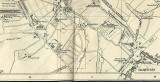
|
Answer 1. to Recollections 31 Peter Stubbs Edinburgh |
|
1950s It looks to me as if what is shown in the red box on the 1940 map would be the original plan for housing on the west side of Burdiehouse Burn. But this scheme seems to have been postponed, probably due to the outbreak of the war in 1939. In fact, the housing appears not to have been built until around 1952. When it was built, the layout of the streets on the west side of Burdiehouse Burn was modified a little and streets were also built on the east side of the burn. Gilmerton Dykes Crescent was named in 1936, but it does not exactly follow the line shown on the 1940 map, so perhaps it was named then but not built until the 1950s. All other streets in this area were all named in 1952. They are: - on the west side of Burdiehouse Burn: - Gilmerton Dykes Crescent - Gilmerton Dykes Gardens - Gilmerton Dykes Grove - Gilmerton Dykes Place - on the west side of Burdiehouse Burn: - Gilmerton Dykes Avenue - Gilmerton Dykes Drive - Gilmerton Dykes Loan - Gilmerton Dykes Road - Gilmerton Dykes Terrace - Gilmerton Dykes View - on both sides of Burdiehouse Burn: - Gilmerton Dykes Street Peter Stubbs, Edinburgh: March 10, 2010 |
|
Recollections 32 Mary Notman Gilmerton, Edinburgh |
|
Mary Notman wrote Question Hudson Cottage "Can anyone tell me the history of Hudson Cottage, 389 Gilmerton Road?" Mary Notman, Gilmerton, Edinburgh: March 31, 2010 |
|
Send a Reply If you'd like to send a reply to Mary, please email me , then I'll pass on your message to her . Thank you. Peter Stubbs: April 5, 2010 |
|
Recollections 33 Pat Bremner (née Collier) South Edinburgh |
|
Pat Bremner followed up Ann Valentine's comments (Recollections 27) and wrote: Williams the Bakers " Williams the Bakers was between the Bank and the Miranda Café . My Mum worked with Dave Williams the bakehouse in the later part of the 1950s. Dave's brother drove the van. School and Society Halls " I went to Gilmerton Primary in the second half of the 1950s , as did my Dad before me . The Society Halls were/are diagonally opposite the school. We had school diners in the Halls then sometimes I visited my mum in the bakehouse at the back of the shop About once a month , if they could get a teacher , we went for Gym. " Police Box " The police box in the corner of the front playground had a siren on top of it and was regularly tested. We were always warned but what an awful din it made. " Toilets " The stink of the toilets in a separate block out the back was the reason to avoid using them unless you were very desperate. " Roaming " I have good memories of the freedom we had to roam nearly anywhere as long as we got home for tea or before it got dark. " Pat Bremner (née Collier), South Edinburgh: April 19+21, 2010 |
|
Recollections 34 . Ann Valentine East Lothian, Scotland |
|
Thank you to Ann Valentine who replied to John Kay's question in Recollections 30 above Ann wrote: |
|
'Venturefair' " Venturefair was a bungalow in Gilmerton in the early 1950s. It was past Adams farm cottages , on the road to the ' middle strip ', the right of way leading to the pit. Could it have been built on the site of the original house ?" Ann Valentine, East Lothian, Scotland: May 31, 2010 |
|
Recollections 35. John Kay Gilmerton, Edinburgh |
|
Thank you to John Kay for following up hie earlier comments (30 above). |
|
John wrote: 'Venturefair' "Last night , I looked up OLD MAPS on the Internet and found the cottage name Venturefair on a map of Gilmerton dated 1919. I'll take a trip through the village on Friday , if its not raining , to see if the cottage still stands. It is to the extreme South West of the old village , near to Gilmerton Gardens and an old quarry and across the field from the old Gilmerton Station . I am really quite pleased to have found it." John Kay, Gilmerton, Edinburgh: June 1, 2010 |
|
John subsequently wrote: " The house Venturefair , show n on a map of Gilmerton dated 1932 , has sadly since been demolished. " John Kay, Gilmerton, Edinburgh: June 6, 2010 |
|
Recollections 36 . David Bain Rotherham, South Yorkshire, England |
|
Thank you to David Bain who wrote: |
|
'Venturefair' "I knew I'd seen the name 'Venturefair' somewhere, but couldn't place where. Thank you to Ann Valentine for confirming that I'm not a total loss yet! Venturefair Cottage appears on the old maps between 1854 and 1894 , as Ann wrote, at the top of the Middle Strip : - In 1854 the first corner going into the village is labelled ' refuse heap '. - By 1894 it's labelled ' Venturefair Cottage ' . - The latest map I've seen is dated 1932 . It still shows ' Venturefair Cottage ' . " Puzzle " The hiccup is that the map shows a building to the west of strip, where I remember a field entrance built up with rubble. I'm sure I remember the cottage as being a 1940s/50s style building and on the north side of the dogleg. Wasn't it rendered and painted white? " |
|
David Bain, Rotherham, South Yorkshire, England June 1, 2010 |
|
Recollections 37 . Jimmy White Loanhead, Midlothian |
|
Thank you to Jimmy White for sending me these two photos of Gilmerton. |
|
James wrote: " I've just looked through the website again, at the many photos and writings about Gilmerton. Happy memories came flooding back to me. I note that Brian Cameron (Recollections 18 , 23 , 24 above) has contributed to the site . He was in my class and is in this photograph of our school, which, unfortunately , is a little worse for wear ." Acknowledgement: James White, Loanhead, Midlothian, Scotland: June 2, 2010 |
|
Please click on the thumbnail image of the photo above to enlarge the photo and to read the names of many of the pupils in the photo, provided by James White. James added: " It would be nice to read feedback from any of these pupils ." |
|
Reply to James White? If you'd like to send a message to James, please email me , then I'll pass it on to him. Thank you. Peter Stubbs: June 9, 201 |
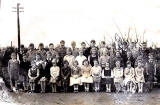
|
Recollections 38 . Ann Valentine East Lothian, Scotland |
|
Ann Valentine added: |
|
Rubble "I think the rubble that David refers to (i36 above) is just outbuildings that were left to get into a state of disrepair and then knocked down . 'Venturefair' " Yes , Venturefair was painted white . It was very grand compared to our council house . I went to both primary and secondary school with the girl who lived in it in the 1950's. I am going to Gilmerton in the next few days to take photos of where my mum and her folks were born in the village for my family tree . I'll have anothe r look at it then." Jock Adam " Talking about the farm , do you remember Jock Adam from the farm going round Gilmerton delivering milk. I'm sure he was still using the horse and cart in the late -1960s and early -19 70s." Ann Valentine, East Lothian, Scotland: May 31, 2010 |
|
Recollections 39 . David McGow Newtongrange, Midlothian, Scotland |
|
Thank you to David McGow, formerly of Gilmerton, who wrote: |
|
'Venturefair' "Venturefair was at the south-east end of the lane at South Gilmerton Farm (Jock Adam's p lace), where the road takes a right-angle turn to the right, before it leads to the track which leads down to Station Road." David McGow, Newtongrange, Midlothian, Scotland : June 23, 2010 |
|
Recollections 40. Mary Mitchell Guler Canada |
|
Thank you to Mary Mitchell Guler who wrote |
|
Gilmerton - Early 1800s "We are researching Gilmerton in the early 1800s. The more we research our family in Gilmerton, the more details we seek, to help clarify things. We are hoping that someone who looks at this page has also done early research in the area and is familiar enough to help us out with details about the area." Mary Mitchell Guler, Canada: June 28, 2010 |
|
Question Mary's research to date includes : - Robert Mitchell, cattle dealer, Gilmerton, married Elizabeth Weir in 1808 - Family and business records for the above family, 1808-23 - Reports of a shooting outside the family's house, 1821 Mary asks the question: "Which pub in Gilmerton might Robert Mitchell have been running in 1821?" Mary Mitchell Guler, Canada: June 28, 2010 |
|
Replies to Mary Guler If you 'd like to send a reply to Mary, please email me , then I'll pass it on to her. Thank you. Peter Stubbs, Edinburgh: June 28, 2010 |
|
Recollections 41 . David Bain Rotherham, South Yorkshire, England |
|
In 'Recollections 40' above, Mary Mitchell Guler asked: "Which pub in Gilmerton might Robert Mitchell have been running in 1821?" Thank you to David Bain for giving a quick reply to this question. David wrote: |
|
Mechanic Arms " Even in my day, late-1950s to late-1970s, the pub on the corner of Main Street and Drum Street was called 'Mitchell's', although its official name was Mechanic Arms." |
|
David Bain, Rotherham, South Yorkshire, England June 29, 2010 |
|
Recollections 42 . Tammy Mitchell British Columbia, Canada |
|
Tammy Mitchell is continuing research into the Mechanic Arms at Gilmerton. Tammy wrote: The Mitchell Family " Some of the documents that I'm finding on t he Mitchell family are pointing to a long history of residence at either the Gilmerton Inn, or Mechanic Arms in Gilmerton. 1. Hugh Mitchell, father of Helen Hall Mitchell, died in 1888. Upon his death, he was listed as an ' Inn Keeper ' at the Gilmerton Inn. 2. There was also a Hugh Mitchell, who died in 1924. He was listed as being 'Publican ', residence ' Inn at Gilmerton '. 3. Helen Hall Mitchell, sister of Hugh Mitchell (2 above) , died in 1903 at the ' Mechanic Arms ', Gilmerton. There is an obituary for her in 'T he Scotsman ' newspaper, Dec 1903. " Gilmerton Pubs "Would any of your contributors know if the Mechanic Arms at Gilmerton is/was the same pub at the Gilmerton Inn? " Tammy Mitchell, British Columbia, Canada: July 19, 2010 |
|
Reply to Tammy Mitchell If you would like to reply to the comments above, please email me , then I'll pass on your message to Tammy Thank you. Peter Stubbs, Edinburgh: July 19, 2010 |
|
Recollections 43. Eric Gold East London |
|
Eric Gold wrote Mitchell's Pub " W hen I drank at The Mechanic Arms in Gilmerton. with my two cousins from Gilmerton, they used to call it Mitchell's. So I have a wee suspicion that it used to be called Mitchell's then it became The Mechanic Arms. Eric Gold, East London: July 20, 2010 |
|
I checked the current telephone directory and some of the old 'Edinburgh & Leith Trade Directories'. - The telephone directory lists 'The Mechanic Arms' is now at 36 Drum Street, Gilmerton - The old trade directories give the following as occupants of 36 Drum Street: - 1940: H Mitchell - 1950: H Mitchell - 1961: H Mitchell. - 1970: Mitchell's Bar. Peter Stubbs, Edinburgh: July 20, 2010 |
|
Recollections 44. David Bain Rotherham, South Yorkshire, England |
|
1881 Census Thank you to David Bain for telling me that he has now had the chance to look at the 1881 census and has found several Mitchell family members all at Dalkeith Road, which he assumes was later re-named Drum Street. Early Deaths David Bain Subsequently wrote: "Gilmerton must have been an unhealthy place 120 - ish years ago. From the census and Tammy's notes , I've worked out that : - Hugh , the father , died at age 35 - Hugh, the son, and Helen must have been twins. - He died at age 45. - She died at just age 24." |
|
David Bain, Rotherham, South Yorkshire, England July 20, 2010 (2 emails) |
|
Recollections 45 . Archie Young Moredun, Edinburgh |
|
Thank you to Archie Young for writing again. Archie wrote The Mechanic Arms "The 'Mechanic Arms' was originally known as 'Mitchells '. I think the name changed was due to there being a garage, a cross the road from it . The Mitchell family also owned the large field across from the pub, behind the ' Cottage Shops '. There is now a football pitch there. I think the pub was established in 1890 . At that time , it was the only proper public house in the area, though many drank in the cottages. There were more drinking dens than pubs! 1890 When the pub opened in 1890 , it may well have been named the ' Gilmerton Inn ', but people may have just called it 'Mitchells' when the Mitchell family took residence. At one time ' Mitchells ' was a stop off for the stage coaches on their way to Edinburgh . I've been told that they could change the horses there as well . I've also been told that the Mitchell family still own it today. Local Pubs "In 1891, the ' Gardeners Arms ' opened further down the road , heading towards Dalkeith. The three main Pubs within the Gilmerton/Liberton area were ' Mitchells ', ' Gardeners Arms ' and ' Robins Nest ' , the latter being situated in what is now Ellen ' s Glen Road , formally known as Stennis / Stenhouse. Early History I know that Tammy has stated that the pub b was going in 1888 . I wonder if Tammy is positive about the date . Certainly, the present building has been there since the 1850's. Archie Young, Moredun, Edinburgh, July 26, 2010 |
|
Recollections 46 . Tammy Mitchell British Columbia, Canada |
|
Thank you to Tammy Mitchell for sending me an extract from a will in which Gilmerton Inn was left to Alexander Cockburn Mitchell and Hugh Mitchell. Tammy wrote: 1873 "We've just found the will of Christian Jack (née Goodfellow) who left the Gilmerton Inn to Alexander Cockburn Mitchell and his brother Hugh Mitchell when she died in 1873 . Is there anything you can tell us, can you confirm this is the Mechanic Arms, in Gilmerton" Tammy Mitchell, British Columbia, Canada: July 19, 2010 |
|
Recollections 47 . Tammy Mitchell British Columbia, Canada |
||||||||||||||||||
|
Tammy Mitchell has replied to David Bain's 'Recollections 44' above, confirming that there had indeed been a number of early deaths amongst the inhabitants of Gilmerton. |
||||||||||||||||||
|
Tammy wrote Early Deaths " David Bain wonders about the survival rate for those living in Gilmerton in the late 19th century. I can tell him this, as far as the Mitchell family goes: "
Life was probably hard there! " |
||||||||||||||||||
|
Tammy Mitchell, British Columbia, Canada: July 27, 2010 |
|
Recollections 48 . Tammy Mitchell British Columbia, Canada |
|
Tammy Mitchell has replied to the final paragraph in Archie Young's 'Recollections 45' above. |
|
Tammy wrote: Early History "I can trace the Mitchell family 's pub connections back to 1821 (t o a shooting in front of Mrs. Elizabeth Mitchell and Robert Mitchell when h e was a Publican, and she was a Grocer). I 've read that the Pub had opened in the early - 1800's, and was a place people could tie their horses too. I don't know when the building was built that is there now." |
|
Tammy added: Today "I 'd like to ask Archie Young if he thinks that the Mitchells still own the pub today. I wonder how I'd get contact information for them. Does he think they run it too, or just own it in the background? " |
|
Tammy Mitchell, British Columbia, Canada: July 27, 2010 |
|
Recollections 49 . David Bain Rotherham, South Yorkshire, England |
|
Thank you to David Bain who added: |
|
Café and Chip Shop "The café and chip shop by the former Police Station was called the Café Maranda. The owner was of Italian descent and his surname was Marandola. About 1970 , it was bought by Dominic Cedrone who continued the business. " |
|
Barber "The barber on Drum Street was Charlie Bain - no relation to me that I know of. " |
|
Bakers " I remember two bakers : - Gilders in Main Street. - Williams in Drum Street . Janice Williams was in the same class as me at Liberton . Her brother , Jim , was a year older. " |
|
Garage " The garage next to the Gardeners Arms was owned by brothers named Dunnett , then later by the Valentine brothers, David and his older brother whose name escapes me. " |
|
David Bain, Rotherham, South Yorkshire, England July 27, 2010 |
|
Recollections 50 . Archie Young Moredun, Edinburgh |
|
The Mechanic Arms Thank you to to Archie Young for sending me these two photos that he took at the Mechanic Arms, |Gilmerton, in July 2010: The Back of the Pub
This
is supposed to be where the
Archie Young, Moredun, Edinburgh: July 27, 2010 |
|
Archie added: The Family " I ' ve been in touch with a descendant of the Mitchell family . She is the last one , so I ' ve been told . I await her answers to the questions that I have asked her. The Building "According to local that I spoke to by phone this morning , the building has been a Coaching Inn since the 1700's. Archie Young, Moredun, Edinburgh: July 28, 2010 |
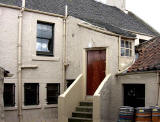
|
Recollections 51 . Archie Young Moredun, Edinburgh |
|
Thank you to to Archie Young for sending more details about Gilmerton. Archie wrote: |
|
'Teapot Close' "I have been told by a friend that Henniker's old newsagents shop in Drum Street, Gilmerton, lay empty for years and was ready to fall down. I assume that Henniker built the shop, and that the bank took it over later, altering the inside, but leaving the outside unchanged." The Mechanic Arms " ' The Mechanic Arm s' (Mitchells) in Drum Street was originally 'T he Gilmerton Inn '. It it is known by this name in 1821 , and was in the Telephone Directory under this name in 1960. " Archie Young, Moredun, Edinburgh: September 14, 2010 |
|
Recollections 52 . Peter Glasgow Penicuik, Midlothian, Scotland |
|
Thank you to to Peter Glasgow who wrote |
|
Blair's Chip Shop "I was interested to read about old Gilmerton and mention of my great uncle, Willie Blair , who owned the chip shop . It crops up in various places * . Peter Glasgow, Penicuik, Midlothian, Scotland: November 13, 2010 * Yes, William Blair's chip shop is mentioned in paragraphs 4, 5A, 7A, 7B, 18, 25, 27 and 29 above - Peter Stubbs. |
|
Peter added: |
|
Innes Building I was trying to find out details of the Innes Building which was in Drum Street where my mother Clemetina Bee Blair was born , in 1917, when I came across the EdinPhoto site. Peter Glasgow, Penicuik, Midlothian, Scotland: November 13, 2010 |
|
Recollections 53. David Bain Rotherham, South Yorkshire, England |
|
Thank you to David Bain for sending me this photo of a St Cuthbert's horse-drawn van. David wrote: |
|
St Cuthbert's Fleshing Dept Van " Here is a photo of the store Fleshing Dept van outside ' The Tofts ' in Gilmerton. This is near the junction where Gilmerton Dykes Street, Gilmerton Dykes Road and New Street meet. I've no idea when it was taken. All I would guess would be pre-WW2. There's nothing written on the original. By their look, the butchers may be brothers. Are they members of the Hush family? The photo came from my brother-in-law, who is a Hush." David Bain, Rotherham, South Yorkshire, England: February 16, 2011 |
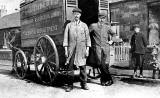
|
Recollections 54. Ron Steel Blairgowrie, Melbourne, Victoria, Australia |
|
Thank you to Ron Steel who wrote: |
|
Drum Street " We were the Steel family. We lived at 11 Drum Street in the ‘flat’ at the back, behind the butchers shop . Above us were the Urquharts , Wrights, Robertsons and the ‘Stashas’ (Stirlings) ." |
|
The Steel Family In our family, there were: - Jimmy (Dad) who was a cobbler working for St Cuthberts in Nicholson Street initially , and set up a repair service in an ' after five ' shop up near the Cove. - Ivy - Douglas, who worked in the ’ store’ next door - David who was an electrician and moved to England then Poland - Ron (myself ) , born 1938." |
|
Work and Play "I was in the 5th Edinburgh Boys ' Brigade run by Captain Bill Lorimer who worked at the Empire Theatre, and in the 5th BB Football Team . I worked in Thistle Pottery at Portobello, then National Service and off to Melbourne Australia. I went dancing to Cam Robbie at Dalkeith on Sunday nights – wow ! It was better than the Palais at Fountainbridge , even with Mr Connery on the milk run. " |
|
Memories "I remember: - ice slides, down passed the Cove or down Hyvot's Bank on the sledge – marvelous - gymnastic displays at the home at the foot of Gilmerton Brae. - delivering papers from Runciman ' s in Main Street at 5 . 30 a m when it was wet, cold, freezing, half a gale and pitch black. - the Bluebirds football team , before the prefabs - the concerts in the hall opposite the store with catering by our Mum’s – superb. - the laundry with delivery trucks that were old ambulances. - the Humber Snipe taxi cars. Who was that ? I'll be back there again July / August this year . " |
|
Ron Steel, Blairgowrie, Melbourne, Victoria, Australia: March 11, 2011 |
|
Recollections 55. David Bain Rotherham, South Yorkshire, England |
|
David Bain responded to Ron Steel's comments above. David wrote: |
|
Drum Street " Ron's first paragraph in 54 above is getting soooo close to our home!" Liberton School " Ron must be related to Ann who was in the same class as me at Liberton school. Janice Robertson was too. She was one of three Janices in the class. There were three Davids, too - David Danskin, David Thomson and me." David Bain, Rotherham, South Yorkshire, England: February 16, 2011 |
|
Recollections 56. Ron Steel Blairgowrie, Melbourne, Victoria, Australia |
|
Thank you to Ron Steel who wrote: |
|
St Cuthbert's Cobblers " My Dad worked for St Cuthberts as cobbler/shoemaker . He always went to Williams , the Baker, first thing in the morning for fresh hot rolls - magnificent. He also worked after hours in the shop run by Jim Harkness near Gilmerton Cove . The shoe repairs were delivered round the village by my brother David and myself. I went to school with Jim Williams. " |
|
The Quarries "The quarries are mentioned in 'Recollections 7' and 'Recollections 20' above. I remember the quarry at the 'Dell' in Ferniehill Road. It was just so good. This was part of an old estate , possibly the Inch . It had an old two - story stone house and various weird statue - like little towers round the edge of the glen that led into the caves or quarry. You could enter from the other side ( south of Ferniehill Road and go into the cave on that side, go down and under the road then come out in the 'Dell'. It was scary, but exciting. The Dell was subsequently filled in ." |
|
Norman Pettigrew "Does anyone know how to contact Norman 'Puskas' Pettigrew? He lived in Moredun, went to New Zealand " |
|
Ron Steel, Blairgowrie, Melbourne, Victoria, Australia: March 11, 2011 |
|
Reply to Ron If you can suggest how Ron might be able to make contact with Norman Pettigrew, please email me , then I'll pass on your message to him. Thank you. Peter Stubbs, Edinburgh: March 18, 2011 |
|
Recollections 57. Dorothy Quevert ( née Hush) Thollet, Vienne, France |
|
Thank you to Dorothy Quevert who wrote: |
|
Westland Cottages "The photos of Westland Cottages added to the web site recently raised a few memories for me. I was born and lived further up at Westland House in the 1950s and 1960s. My and my grandmother in fact occupied the cottage with window in view in th is photo " |
|
Toft Cottages "I also viewed with interest the input of David Bain (in 'Recollections 53') and his photo of St Cuthbert's horse-drawn Flesh Dept Van taken at Tofts Cottages. My grandfather was William Hush who lived at Westland House but I don't know if he is one of the men in this photo. He had a Grain Merchant business in Gilmerton with horse-drawn help in the 1920s and 1930s. " |
|
Venture Fair " Several contributors ('Recollections 34' onwards) wrote about the ho use called Venture Fair. I, too, remember this house. It was situated next to a piggery that was run by a family called Borthwick, if I remember correctly. But I cannot remember the name of the family who lived in Venture Fair. " |
|
Gilmerton House " An interesting and much earlier house in the area is a very old house called Gilmerton House . I can find little information about it on the web. *** It was situated in land approx 600 yds west of Westland Cottages. It has now completely disappeared but archives still hold a brief description. Old tales in Gilmerton talked of a sunken bathing area in the grounds which Mary Queen of Scots might have frequented. In the 1950s and 1960s, land around the ruins of Gilmerton House was occupied by a Mr Ritchie who ran a market garden. The stones to the gate of the old Gilmerton House were still evident when I was a child, and were situated on the Gilmerton Dykes Road. " *** Thank you to 'Mapman' for sending me the reply in Recollections 59 below. |
|
Dorothy Quevert (née Hush), Thollet, Vienne, France: March 18, 2011 |
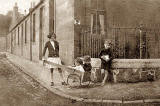
|
Recollections 58. Gary Macdonald Lasswade, Midlothian, Scotland |
|
Thank you to Gary Macdonald who wrote: |
|
Mechanic Arms "My family have owned the Mechanic Arms in Gilmerton for a long long time. My cousin is the current owner and landlady. My grandmother was Violet Mitchell and her son David (Mac) was my dad. It has been fascinating reading the recollections of people . I would be delighted to be contacted by anyone who can tell me more about my family. " Garry Macdonald, Lasswade, Midlothian, Scotland: April 20, 2011 |
|
Reply to Gary Macdonald ? If you 'd like to send a reply to Gary, please email me , then I'll pass it on to him. Thank you. Peter Stubbs, Edinburgh: April 21, 2011 |
|
Recollections 59 'Mapman' |
|
Thank you to 'Mapman' for replying to Dorothy Quevert's comments about Gilmerton House in Recollectons 57 above: 'Mapman' wrote enclosing two maps. Please click on the maps below to enlarge them.: |
|
Gilmerton House "Please find attached two maps in response to Dorothy Quevert (née Hush) recollections on Gilmerton House. This map is from the 1843-1893 County Series maps. It depicts Gilmerton House in position off Gilmerton Dykes Road ." Gilmerton
"This map is from the 1891-1912 County Series maps. It shows that in the intervening period, the name of the house changed from Gilmerton House to Gilmore House ." Gilmerton
I've asked 'Mapman' if he can tell me the years that these two maps were surveyed, rather than just the series that they come from. |
|
'Venturefair' "Both maps show the much talked - about 'Venturefair' , located at the top of what Gilmertonians now call the 'Middle Strip' ', which no longer exists. " |
|
South Farm " South Farm , locally known as Adams Farm , is the common reference point for both maps , and remains the common reference point to modern day. " |
|
Edgehead Quarry "The fairly large quarrying operation , called Edgehead Quarry , became disused during the dates that these two maps were surveyed." |
|
Mapman, April 24, 2011 |
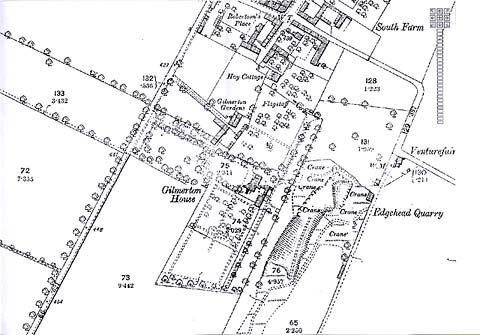
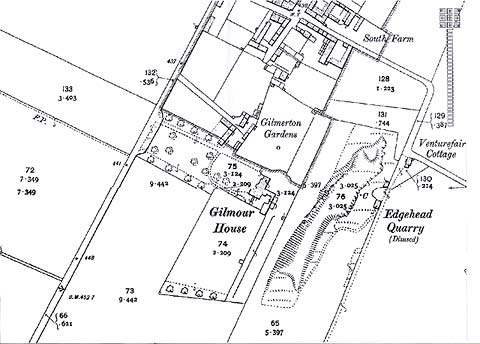
|
Recollections 60. Pam Blackmore ( née Collier) Jersey, Channel Islands |
|
Thank you to Gary Macdonald who wrote: |
|
Gilmerton Buildings "I was brought up in Gilmerton and am now doing my family history . I have a couple of questions. I have records of family living in : - Inness Buildings - Bank House - Wrights Buildings in Gilmerton in the late 1800s. " |
|
Questions "Can anybody tell me: 1. W here , exactly , were/are Bank House and Wrights Buildings ? 2. Inness Buildings are at the bottom of Drum Street , next to the Gardeners Arms pub . Both were built in 1881. Presumably the same person (Inness ? ) was responsible for building both. Can anybody give me any more information on this ?" |
|
Pam Blackmore (née Collier), Jersey, Channel Islands: July 17, 2011 |
|
Reply to Pam If you 'd like to send a reply to Pam , please email me , then I'll pass your message on to her . Thank you. Peter Stubbs, Edinburgh: July 21, 2011 |
|
Recollections 61. Gerry Smith Saughton, Edinburgh |
|
Thank you to Gerry Smith who wrote: |
|
Bank House Buildings "Bank House Buildings were in New Street, or Newtoft Street as it is now called. They were on the right-hand side going down towards Gilmerton Road just past Willie Blairs chip shop." Gerry Smith, Saughton, Edinburgh: July 25, 2011 |
|
Recollections 62. Cherie Somerville Hamilton, Ontario, Canada |
|
Cherrie Somerville wrote |
|
Drum House Question "My father, brother and I are planning our trip this September to Scotland to visit our ' roots ' . I ' ve loved reading the stories and memories on this site. I wonder if anyone can tell me how best to get in touch with the current residents of Drum House, Gilmerton. We would love to visit , as we've seen photos of our family crest carved inside and above the front door. I'd love to have a friendly connection with someone prior to our visit !" Message and email address posted in EdinPhoto guest book: August 7, 2011 |
|
Reply to Cherie If you'd like to send a reply to Cherie, please email me , then I'll pass on her email address to you. Thank you. Peter Stubbs, Edinburgh: August 8, 2011 |
|
Update 1 Thank you to Simon Capaldi , Sheriffhall, Midlothian, Scotland, for your reply. I have passed on your message to Cherie Peter Stubbs, Edinburgh: August 10, 2011 |
|
Update 2 Thank you to Gerry Smith who was born in Gilmerton almost 70 years ago for your reply. I've passed your message on to Cherie. Peter Stubbs, Edinburgh: August 10, 2011 |
|
Recollections 63. David Bain Rotherham, South Yorkshire, England |
|
David Bain wrote |
|
The Vennel " Mention of the Vennel by Jimmy White, on the ' Where Is It? - Westland Cottages' p age sparked another clash of the grey matter |
|
Bookies Before betting shops were legalised , the end of the vennel , behind Willie Blair's chip shop , was one of the busiest places in the village; that was where the bookies plied their trade. The men of the village could be seen huddled over the racing papers , while lookouts kept a watch for the polis. " |
|
David Bain, Rotherham, South Yorkshire, England: August 9, 2011 |
|
Recollections 64. Jean Hush ( née Redpath) |
|
Thank you to David Bain and to brother in law, Bill Hush, for passing to me these recollections from Bill's Mum, Jean Hush (née Redpath). Jean is now in her 80s. Jean wrote: |
|
Venture Fair " John Kay (Recollections 30 above) asks about the house, 'Venture Fair'. Others have also commented (34, 35, 36, 38, 39, 57 above) . T he pile of rubble at the top of the middle strip, is the original house. It was actually two houses, one over the other . The ground floor house was lived in by John Redpath and his wife, Agnes Ferguson, while upstairs was occupied by various family members but was finally taken over by John's son, Joseph, after John died in 1928. Joseph lived there with his wife Jean Hamilton and their 3 children, Jean, Nancy and John (who was born there) until Joseph's ill-health forced them to move in 1937. The land was sold to Adam's farm and the house neglected . Hence, the pile of rubble. " |
|
Venture Fair (2) "The white house farther along, on the corner, was the second to bear the name and was built by the Borthwick family, who kept pigs at the rear, after the original Venture Fair fell down. The Redpath family ran a smallholding from the field behind (known latterly as Ritchie's Field) and half the field in front, running down the strip. " |
|
Williams the Baker " Williams the Baker's (18, 23, 26, 33, 49, 56 above) was, originally, Gilmerton Barracks and Jim Williams (Sen) was, originally, the baker. His oldest son, Dave , eventually took over and, like his parents, he lived above the shop with his family. The bakery was on the ground floor at the back and to the left as you entered (between the shop and the Bank). Jim Williams (Dave's youngest brother) drove the bakers van and lived along Ferniehill Road. He was, latterly, evacuated from his house when the end fell off during the subsidence. Incidentally, he was a leading light in the pigeon world, having bred and owned a (world?) champion bird. " |
|
Heniker's General Store " Next to the bakers came the bank , then Heniker's, a general store, which although open - plan (of sorts), actually had a glass display island in the middle of the floor which meant that you had to queue , single file, to get served at the counter, which was diagonally opposite the entrance. Everything reachable from the queue was under glass to prevent theft. He allowed the locals to run a ' slate ' but if you didn't pay regularly, your name and the amount you owed was posted in the side - entrance window for all to see. - f or the adults, the shame of it . - for the kids, a great sport to see who was now owing how much. Old man Heniker was of German descent . He travelled everywhere, and in all weathers, on his Lambretta scooter or in his Heinkel bubble - car. He always wore sandals without socks. He ran the ' Heart of Midlothian ' Swimming Club from Warrender Baths. " |
|
Café, Shops and Farm " The Café Miranda was, originally, a second - hand shop . Next to it was the original Willie Blair's chip shop. This became the storage and preparation area for the Café Miranda. On the other side of the Café , were: - 'Duncan the Joiner' - Behind the joiner ' s was a yard where Mr Duncan had his work shops , storage , etc. - Coutts' shop then - Stewart's farm entrance. |
|
Mechanic Arms "The Mechanic Arms (18, 23, 26, 33, 49, 56 above) was al so known as McDonald's because, in the 19 40s and 19 50s, it was owned by Violet McDonald. She was a Mitchell who married Jim McDonald. They had a son and two daughters, Molly and Patsy . Molly married Bill McAuley who owned the grocer's shop (previously owned by the Chalmers family) on the opposite corner ." |
|
The Bee Hive " T he Bee Hive (wool and haberdashers) was owned by the Misses Marr, two spinster sisters who lived together in Gilmerton Road, opposite the Moredun Institute. The houses beyond the Bee Hive, down as far as Marshall's pub, were known as the Innes Buildings . They were owned by the Misses Innes, who lived in Lady Road at Newington, and who called, personally, to collect the rent , once a year. " |
|
Barber " Charlie Bain ran the old-fashioned barber ' s shop (not a hairdresser - he only did men) with the traditional chair etc and the red and white pole outside the door. Every boy knew that he supplied ' something for the weekend ', but never had the courage to find out what it was, exactly. Before Charlie Bain, Tony DeCarlo was the hairdresser . He did run a ladies salon, of sorts; men to the left and ladies to the right as you entered the shop. " |
|
Fishmonger " Opposite the barber's, was Alan Cumberland, the fishmonger, who sold the best fish ever. He went to the market every morning and gutted his own fish. " |
|
Grocer " Mae Tait owned the grocer/sweet shop between the fish shop and Heniker ' s . Her halfpenny, penny, tupney and thrupney trays were legend. Before being a grocer/sweet shop , it was the doctor's and dentist's surgery ." |
|
Garage " Dunnett's garage is at the bottom of Drum Street . This was once a riding school owned by John Young. |
|
Message written by Jean Hush (née Redpath). Message received from David Bain, August 9, 2011 |
|
Recollections 65. Gerry Smith Saughton, Edinburgh |
|
Thank you to Gerry Smith who wrote again in response to Pam Blackmore's question about Gilmerton buildings (60 above) and Jean Hush's recollections of Gilmerton (64 above) . Gerry wrote: |
|
School Uniforms "Jean( Redpath) Hush at one point worked in the Beehive Stores at Gilmerton . When Gilmerton School first got school colours it was the Beehive who supplied the blazers and a local woman stitched the blue braid round them. I remember meeting an old ' Gilmertonian ' while wearing the blazer in Edinburgh . He thought my folks were sending me to a fee - paying school. I can still see his face when he was told it was ' Gilmerton College '." |
|
Hairdresser and Photographer " Hairdresser, Tony De Carlo , eventually became a photographer with Photo Illustrations in Cockburn Street . A t our wedding in the early -1960s, he recognised my folks right away , and on the following Monday , much to my dismay , our photo was in the ' Evening News ' . " |
|
Post Office " I wonder if anyone can remember the name s of the two ladies who ran the Post Office when it was down at Innes Buildings. " |
|
Gerry Smith, Saughton, Edinburgh: August 12, 2011 |
|
Recollections 66. Christine Lenton |
|
Thank you to Christine Lenton who wrote: |
|
Hyvot's Bank School - 1960s " I went to Hyvot's Bank Primary School from 1960 onwards. My mum was a cleaner at the school and sometimes a dinner lady Gilmerton was a great place back then. We always had lots to do. Nae of this xbox for us. Does anyone mind of Dirty Dick's or Dean Woods? " Christine Lenton. August 10, 2011 |
|
Recollections 67. Bob Henderson Burdiehouse, Edinburgh |
|
At least one person remembers the places that Christine Lenton mentions above! |
|
Bob Henderson wrote: Dirty Dick's " W hen I was a boy in the late -1940s and early-1950s, Dirty Dick's was a working sandpit. It's now a pond in a Local Nature Reserve. Here is a sign on Straiton Road, just south of the Edinburgh By-Pass. Follow the path from this sign and it takes you to the pond. Dirty Dick's had very steep high sides with a steep sloping mass of loose sand at the bottom of the sheer drop. We used to jump from the top down into the slopes. I sometimes wonder how we survived to tell these tales!" |
|
Dean Woods "The Dean Woods were on the west side of Lang Loan Road (the road from Straiton Roundabout to Lasswade Road) at the point where there is a deep dip in the road . The woods ran westwards down the slope towards the Burdiehouse B urn. The Dean Woods later became a site for clay pigeon shooting with several hides etc. to fire the clays from. It is no longer accessible from the road a large bank has been thrown up across the area which used to be the entrance. |
|
Bob Henderson, Burdiehouse, Edinburgh: August 12, 2011 (3 emails) |
|
Recollections 68. Forbes Wilson Guildford, Surrey, England |
|
Forbes Wilson wrote: |
|
Dirty Dick's " I, too, remember Dirty Dick's po nd. We used to walk up Lasswade Road, then along the Lang Loan to get there. As young lads , back in the mid 19 60s , we used to take the customary jam jar and net at the end of a bamboo cane , and fish for tadpoles – great days ! Forbes Wilson, Guildford, Surrey, England: August 14, 2011 |
|
Recollections 69. Bob Henderson Burdiehouse, Edinburgh |
|
Thank you to Bob Henderson for writing again and sending a recent photograph of Dirty Dick's. Bob wrote: |
|
Dirty Dick's " This is Straiton Wildlife Pond, better known as Dirty Dick's Bob Henderson, Burdiehouse, Edinburgh: August 16, 2011 |
|
Recollections 70. Jean Hush ( née Redpath) |
|
Thank you to David Bain and to brother in law, Bill Hush, for passing to me these recollections from Bill's Mum, Jean Hush (née Redpath). Jean is now in her 80s. Jean wrote: |
|
Shops Coutts' Shop "Before it was Coutts' shop, it was the original local police station, manned by PC Murray and PC Aitchison . Both lived in the village. Hairdresser " Tony de Carlo was not the photographer after he was a hairdresser; it was his son, Charlie. " Postmistress " The postmistress was Miss Thompson . H er assistant's name was Belle Williams. Harry Duff took over as postmaster from Miss Thompson. " |
|
Message written by Jean Hush (née Redpath). Message received from David Bain, August 21, 2011 |
|
Recollections 71. Rachael Parsons Portsmouth, Hampshire, England |
|
Thank you to Rachael who wrote: |
|
Grandmother's Roots " My grandmother, originally known as Yvonne Dunnett-Adams was born in Edinburgh in 1929 to Phyllis Dunnett-Adams. She remembers visiting her family a couple of times. They lived at Gilmerton and owned some kind of transport company. She was adopted at around the age of five, and sent to live in Bromley, England. She is getting elderly now and would really like to know more about her roots." Rachael Parsons, Portsmouth, Hampshire, England: August 21, 2011 |
|
Reply to Rachael or Yvonne? If you ' d like to send a message to Rachael or to Yvonne, please email me , then I'll pass it on to them. Thank you. Peter Stubbs, Edinburgh: August 25, 2011 |
|
Recollections 72. Helen Gray ( née Curtis) Gilmerton, Edinburgh |
|
Thank you to Helen Gray (née Curtis) who wrote: |
|
Return to Gilmerton "I have many fond memories of Gilmerton as a bairn , and recognise a lot of the names on this site . I started Gilmerton Primary around 1954 , and lived in Hyvot Walk until around 1962 when I moved to the ' new hooses ' in Gracemount , but have now returned to Gilmerton. Questions 1. My brother Billy Curtis was friends with Jimmy White ' s brother , David. Billy has passed on now. Is David is still well? 2. Do you have any idea who the minister of the church was in the 1050s and earlyy-1960s ? I 've spoken to Cammy Mckenzie , the present minister , but there are no records of the church around now. |
|
Reply to Rachael or Yvonne? If you ' d like to send a message to Helen , please email me , then I'll pass on your message to her . Thank you. Peter Stubbs, Edinburgh: November 5, 2011 |
|
Update Thank you to : - Gerry Smith for sending Reply 73 below, and to - Jacqueline Buckham (née Blacklaw) for sending and Reply 92 below Peter Stubbs, Edinburgh: August 22, 2014 |
|
Recollections 73. Gerry Smith Saughton, Edinburgh |
|
Thank you to Gerry Smith for replying: |
|
Gilmerton Church Ministers Reply "Helen Gray asked about the Ministers at Gilmerton Church: - I was born in 1948 and was christened by Rev. McCrae. - My sister was born in 1950 and christened by Rev. Moffat. - Then there was Rev. Keith, around 1958. - I'm sure Rev. Donald Skinner was there in 1964 when I attended my great aunt's funeral. May I suggest that Gerry contacts the Church of Scotland Offices at 121 George Street? Perhaps someone there would be able to confirm this." Helen Gray (née Curtis), Gilmerton, Edinburgh: November 6, 2011 |
|
Recollections 7 4. Fiona Palmer ( née Jack) |
|
Thank you to Fiona Palmer who wrote about her family's connections with Gilmerton. Fiona wrote : |
|
My Family "My grandparents (family name Jack) who raised me lived in Hyvots Bank Avenue . Their house backed onto the Bowling green . My grandmother used to work at the pub . My grandfather worked at the pit as did my grandmother ' s family . Her brother was killed when he fell down a shaft at the age of nine. All of the A venue housed old miners : Kerrs, Campbells, Trench My father left school at 15 and worked in the Bakers opposite the pub in Newtoft Street . He then worked on the trams as a driver and that was where he met my mother , on the No. 27 from Bruntsfield to The Mound . After that, he worked through the City Chambers . When he retired in the 1980s, he was the Chief City Officer for Edinburgh Friends My friend ' s house backed onto Dr Guthrie’s and we used to climb the wall and talk to the kids in there through the fence! Willie Blair’s was at the top of the road and chips were 5d a packet , and a large pickled onion cost 1d! " Fiona Palmer (née Jack): November 19, 2011 |
|
Recollections 75 . Tammy Mitchell British Columbia, Canada |
|
Thank you to Tammy Mitchell who wrote : |
|
Mechanic Arms "The building on the left, the Mechanic Arms, was run by: - Robert Mitchell (cattle dealer/merchant and publican) and - his wife Elizabeth Weir. I don't know who owned it at that time. It might have been Robert and Elizabeth, but all I know so far is that they ran it." |
|
Mitchell's Pub "In 1821, there was a shooting outside the Pub. At that time, and at various other times, it was called Mitchell's Elizabeth Weir Mitchell was a witness to the shooting. The transcript of her court testimony and a petition with residents' names on it can be found in this page of my web site . The pub was put into a Mitchell family name when given to them in a will from Christian (née Goodfellow) Jack, wife of John Jack, when she died in 1873. Today a female descendant of the Mitchell's still owns that Pub!" |
|
Tammy Mitchell, British Columbia, Canada: emails, January 16, 2012 |
|
Recollections 76 . Nick Shelley |
|
T he Robin's Nest Inn has been mentioned several times on the EdinPhoto web site. In Recollections 11 above, Archie Young wrote: "I've spoken to the new owner. He thinks the inn was built around the mid-1700s. It was still operating as an inn back in 1922. When it closed, I've no idea. One man I spoke to told me his father drank in it when as a young man. This would, at a guess, be the mid-1930s. T he new Robins Nest on Gilmerton Road opened around the mid - 1950s." However, here Nick Shelley provides more information.. Nick wrote: |
|
Hudson's Cottage beside Robin's Nest Inn "My family lived at Hudson Cottage from 1948 till 1971 . The Robins Nest roadhouse was next door to us already when we arrived . The skittle alley of the Robins Nest closed off our front garden. Hudson Cottage was end - on to the road, and the front gate had a sundial above it. The house and garden backed on to Liberton Golf Club, and from there we had a view of Liberton Clubhouse and Craigmillar Castle . When we arrived in 1948, I remember that the golf club regularly grazed sheep over winter Hudson Cottage was a 3-bay property built in the 1760s, I think, but it was attached to a pair of earlier cottages which fronted Gilmerton Road. " Hudson's Cottage Any further information? " I'd be very interested to know more about the house before and after our time Incidentally, the postal address was always Hudson Cottage, Greenend, and I recall how offended my parents were when the local authorities gave the house a number which was pretty random since there were few other properties on that side of Gilmerton Road. " Nick Shelley: March 11, 2013 |
|
Reply to Tammy If you'd like to send a reply to Tammy, please email me , than I'll pass it on to him. Thank you. Peter Stubbs, Edinburgh: March 20, 2012 |
|
Recollections 77 John Williams Edinburgh |
|
John Williams asks: |
|
Question Wallace's Cottage "Can anyone tell me the position of Wallace's Cottage, near Broken Brigs, mentioned as a caption to a photograph in the Gilmerton chapter of ' Villages of Edinburgh, Vol. 2 ' by Malcolm Cant ? " John Williams, Edinburgh, June 18, 2012 |
|
Reply to John? If you can help to answer John's question, please email me , then I'll pass your message on to him. Thank you. Peter Stubbs: June 21, 2012. |
|
Recollections 78 James McKenzie Ayrshire, Scotland and Bahrain/Saudi Arabia |
|
Thank you to James McKenzie, who read the messages from Forbes Wilson above and replied: |
|
Forbes Wilson " Special thanks to Forbes Wilson. I lived at Gilmerton Dykes Crescent from 1957 until 1973 when my family moved to Ayrshire." Gracemount School "I was at Gracemount School with Forbes. We went on the school holiday together to Germany where we became friends with Isobel Cummins, I think, and Christine - I cannot remember her surname. " Memories of Gilmerton "I have great memories of Gilmerton: - the dip - the good football players who came out of there - and, of course, the rugby legend, Andy Irvine." James McKenzie: June 23, 2012 |
|
Recollections 79 Sandy Alexander Bendigo, Victoria, Australia |
|
Sandy Alexander wrote: |
|
Questions Cameron Buildings "I 've read with great interest all the stories of Gilmerton and Liberton as I sought info on my family history. My grandfather was born and lived for some years in that area. One of his daughters was born at Camerons Buildings in 1907. Does anybody know: - What kind of building was it? - Was it residential? - Does it still exist today? - Would there possibly be any pictures or photos of it? Any information would be appreciated . " Sandy Alexander, Bendigo, Victoria, Australia: June 27, 2012 (2 emails) |
|
Recollections 80 . Forbes Wilson near Guildford, Surrey, England |
|
Forbes Wilson read Recollections 78 above from James McKenzie and replied: |
|
Gracemount High School "I was staggered to read the 23rd June posting made by James McKenzie. I remember him extremely well from my days at Gilmerton and our time at Gracemount High school. Here is a photo provided by another good friend , Graham McGrath . He is in the back row, extreme right. The boys would have all been aged about 13 when this photo was taken. Gracemount High school Football Team - 1969-70
© Norman Fisher, Saratoga, New South Wales, Australia, son of the photographer, Jack Fisher, Portobello, Edinburgh. Reproduced with acknowledgement to Alastair McBeath James is in the front row, second from the left. The name James was struggling with was Christine McCarthur. " Forbes Wilson, near Guildford, Surrey, England : July 18+19, 2012 |
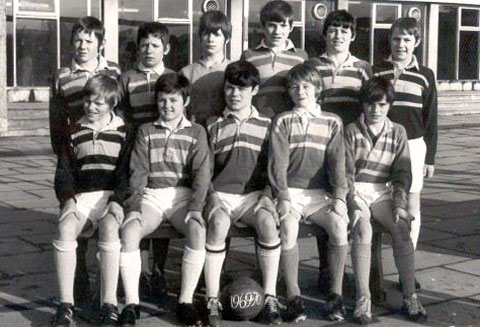
|
Recollections 81 . Carol Sutherland Edinburgh |
|
Here is a message that Carol Sutherland posted in the EdinPhoto guestbook. Carol wrote: |
|
Question The Innes Building Helen Clarkson "I'm interested in the Innes building at Gilmerton. Does anybody know of Helen Clarkson? She she lived there in 1909. She was the mother of my dad who was born in 1909. I would be grateful to hear of any recollections any recollection would be grateful." Carol Sutherland, Edinburgh: message posted in EdinPhoto guestbook, 19 January 2013 |
|
Recollections 81 Reply 1. Derek Kellachan Bracknell, Berkshire, England |
|
Than k you to Derek Kellachan who wrote: |
|
Information about Helen Clarkson "I came across Recollections 81 above, a posting made by Carol Sutherland of Ottawa, Canada . She asked for any information concerning her grandmother, Helen Clarkson, and her place of residence in Gilmerton, Innes Buildings . If Carol is still seeking information, particularly of her grand-mother, I believe I can provide her with detailed information. Family History Research " Work conducted on my maternal family tree (going back to the mid-eighteenth century) shows Helen Clarkson to be a sibling of my grand-father, Henry Clarkson. In short, we are related. Alexander Henry Derek Kellachan, Bracknell, Berkshire, England: 30 August, 2015 |
|
Message for Carol Sutherland I've sent an email to Carol Sutherland who wrote 'Recollections 81' above, to let her know about the message above from Derek Kellachan, and how to contact him. Peter Stubbs, Edinburgh: 1 November 2015 |
|
Recollections 82 . Graeme Baxter Edinburgh |
|
Thank you to Graeme Baxter who wrote: |
|
Question Agnes May Wilson ( née Marr) Drum Cottages 1935-36 " Does anybody know anything about my partner's mum, Agnes May Wilson (née Barr) or her family? Agnes was born at Drum Cottages, Gilmerton in 1935 or 1936. Her mother was Agnes Marr. Graeme Baxter: February 25, 2013 |
|
Reply to Graeme If you'd like to send a reply to Graeme, please email me to let me know, then I'll pass to you the latest email address that I have for him, and you can try sending a message to him. |
|
Recollections 83. David Bain Rotherham, South Yorkshire, England |
|
Sadly, David Bain has written to tell me of the recent death of Jean Hush (née Redpath) of Gilmerton. Jean has been one of the contributors to the EdinPhoto web site. David wrote: |
|
Jean Hush "Jean Hush (née Redpath) who was our family's last link to an old Gilmerton that she knew so well, died recently at the age of 86. Those who knew her won't be surprised that she was on form until the end. When telling a relative that she'd been told that she'd had a mild heart attack, she nodded her head in the doctors' direction and added 'S o THEY say ' . " David Bain, Rotherham, South Yorkshire, England: August 9, 2011 |
|
Recollections 84. Ann Clark |
|
Thank you to Ann Clark who wrote: |
|
Dr Guthrie's Girls' School " Do you have any information on Dr Guthrie's Girls' School in Gilmerton Road. I know that it has now closed. I attended the school in 1975 and have been trying to find information about it, or to contact anyone else who was there at that time. I'm just interested to find out more. " Ann Clark: June 6, 2013 |
|
Ann: You might be interested to read some of the other recollections above. Dr Guthrie's Girls' School is mentioned in Recollections 3, 5b, 8. 28 and 74. Peter Stubbs, Edinburgh: June 13, 2013 |
|
Recollections 85. Stephen Ward Edinburgh |
|
Stephen Ward wrote: |
|
Home Guard Sunken Cottages "I recently came across the EdinPhoto web site whilst trying to solve a puzzle for my elderly neighbour . He was telling me that there once was a group of sunken cottages situated where the Robin ' s Nest car park on Gilmerton road now stands. He seems to recollect that the houses were used by the Home Guard during WW2. However, I cannot find any info on this. Would you know of anyone , or maybe any sites , that may help ? We would be forever grateful . " Stephen Ward, Edinburgh: July 8, 2013 |
|
Reply to Stephen? I don't know the answer to the question that Stephen asks. If you think you might be able to help him to answer it, and would like to send a message to him, please email me, than I'll pass on his email address to you. Peter Stubbs, Edinburgh: July 8, 2013 |
|
Recollections 86 . Alan Dunnett Berwick on Tweed, Berwickshire, England |
|
Dunnett Brothers' Garage at Gilmerton has already been mentioned in Recollections 49 and 64 above. Here, Alan Dunnett also mentions the garage. Alan wrote: |
|
Dunnett Brothers ' Garage "R elatives, on my father ' s side had a garage and car hire business at the foot of Drum Street. Their house was called ' Bessieville ' ( or something like that) . The Garage was Dunnett Brothers ." Scott Birrell |
|
Recollections 87 . Scott Birrell Fall City, Washington, USA |
|||||||||||||
|
Thank you to Scott Birrell for sending me further information about Edinburgh prefabs, after reading the message posted in Recollections 23 above by Brian Cameron. Scott wrote: |
|||||||||||||
|
Prefabs "Brian Cameron mentioned prefabs at Hyvots and Moredun
Here is some additional information, from memory."
Gilmerton School I attended Gilmerton school from 1955 until 1962. In the Infants, the Headmistress was Miss Innes , and m y teachers were : - Miss Dick (who married and became Mrs Evans ) - Ms Camero n . In Primary , the Headmaster was , and my teachers were : - another Ms Cameron - Mr Shaw - Miss Cruickshanks ( who married becoming Mrs Reynolds ) - Miss Yule - Mr. Dryborough . I did not have Mr. Chappell as a teacher but I can remember when he would be taking the lines in he would say to latecomers ' You know where to go! '." Scott Birrell, Fall City, Washington, USA: December 19, 2013 (2 emails) |
|||||||||||||
|
Recollections 88 . Bill Whitson Dalkeith, Mid Lothian, Scotland |
|
Thank you to Bill Whitson who wrote about growing up at Gilmerton, until 1959. Bill wrote: |
|
My School " I stayed in 2 Ferniehill street (prefab) and started school in 1950 at Gilmerton Primary School. These are now the only friends that I can remember from school: - Oliver Taylor - John Wilson - Jake the Snake - Wullie Baxter - Annie Ross - Diana Ross - Margaret Duncan ." Pitch & Toss ** "I remember the air aid shelters behind the Society Hall, and up above that the wall where miners used to play 'Pitch & Toss', while peering through a hole in the wall for the Polis, and then the scarper."
**
'Pitch
& Toss' was a game in which coins were pitched at a mark, the player
getting nearest having the right to toss all the others' coins into
the air and take those that come down w
ith
'Heads Up'
Football Team "My Dad, Dick Whitson, along with a Mister Mackay who stayed at No 3 Ferniehill Street, used to run the football team from the Society Halls . It was called the Gilmerton Drumbirds, but it had to be abandoned because there was a mass fight between teams and the Referee " Work "My D ad worked in Glenesk Laundry which was behind the S tore ( C o-operative) on the front street , across from the school Activities "I went to: - Cubs then e Scouts at Society Halls . - Lifebuoys and the BB ( B oys' Brigade) at the Church Halls . - Hyvots School, and also went to Band o ' Hope there ." Gilmerton Cove "I als o remember going down Gilmerton Cove with a guy called Jimmy Blair , but there was just a gate over the entrance then . I left Gilmerton in 1959 to go and stay in new Gracemount ." Bill Whitson, Dalkeith, Mid Lothian, Scotland |
|
Recollections 89 . Annette McDonald Montana, USA |
|
Annette McDonald wrote: |
|
Margaret (Miggett) Gallagher " I would be grateful if anyone can tell me the whereabouts of Margaret (Miggett) Gallagher from Gilmerton. Miggett married an American from Kirknewton (Bill Hickcox). She had a sister named Violet, and a young son named Michael. " Annette McDonald, Montana, USA: July 3+6, 014 |
|
Reply to Annette? If you think you might be able to help Annette to find Miggett, please email me to let me know, then I'll pass on Annette's email address to you. Peter Stubbs, Edinburgh: July 6, 2014 |
|
Recollections 90. John Waddell Langbank, Renfrewshire, Scotland |
|
Thank you to John Waddell who wrote: |
|
"I 've just had a good old browse through the comments above. Here are some further memories came back to me ." Gilmerton Primary School " I moved, as a 30 month old, from Mardale Crescent, Merchiston, to 9 Hyvot Drive , Gilmerton in the summer of 1948 , and went to Gilmerton Primary School in 1949 or 1950. - I still l remember that first day , being dragged up the splendid wrought iron staircase, clutching at the railings, the seemingly long way up to the first floor! - I s pent some time in the annex and remember a teacher, whose name was pronounced Shappell (stress on the ell) but I don’t remember the spelling. He was a bit of a terror. I vividly remember him balancing a thick and rigid tawse on the end of his index finger. - At one of these school buildings, I remember there being double bench desks. I shared one with a girl, first name Jean (I think). - My first girl friend at the main school was ‘Sheena’. We went our separate ways when she threw a bible at me - and she did not miss !" Our Home " Our house at No.9 Hyvot Drive is, of course, no longer there. Th is photograph shows the 1 1 bus terminus stop , almost exactly located in front of what was our garden. We were on the end of the row of 2 prefabs. I ' m afraid I cannot remember the name of the family, round the corner from us, whose black and white new television we watched in 1953 to see the Coronation . " "I moved to Hyvot ' s Bank School . I believe that would have been when we moved to Gilmerton Dykes Crescent , around 1955. I was at Hyvot ' s Bank for only a couple of years . I don't remember a lot about the school, but ... - I vividly remember standing on the school stage as Head Boy of Melville House to receive the shield for best House. Great days! - Was the Head Mr Pierce? There was a Mr Campbell and a Mr McDonald. I recall that Mr McDonald was led a merry dance by some in the class. - I always wondered what happened to the school, but I see now that it fell victim to the local subsidence. " My Work " I got my first job as errand boy, delivering newspapers for the newsagents on Gilmerton Dykes Street. There is still a newsagent at one end of the parade of shops but the butcher at the other end has been replaced by a Chinese Takeaway. The newsagent’s entrance was open, not blocked as now. The rolls and papers would be delivered very early in the morning . When I turned up early for paper runs before school, I remember selling rolls and papers before the owner turned up, to the delight/relief of early workers heading for the bus. " John Waddell, Langbank, Renfrewshire, Scotland: July 7, 2014 |
|
Recollections 91. David Bain Rotherham, South Yorkshire, England |
|
Thank you to David Bain for replying to John Waddell's Recollections 90 above about the teachers at Hyvot's Bank school. David wrote: |
|
Hyvot's Bank School Teachers "John Waddell is right. Mr Pierce (the Head), Mr Campbell and Mr McDonald were all still at Hyvot's Bank Primary School when I joined in 1958. J A Pearce was the head and had been my father's teacher at the Peffermill Road 'tin school'. " " Mr Campbell was my class teacher; Mr McDonald was younger and was notorious for his very flexible belt. It not only slapped your palm but wrapped round and slapped the back of your hand, too!" David Bain, Rotherham, South Yorkshire, England |
|
Recollections 92
Jacqueline Buckham
|
|
Thank you to Jacqueline Buckham (née Blacklaw) for replying to one of the questions asked by Helen Gray (née Curtis) in her Recollections 72 above. Jacqueline wrote: |
|
Grandmother's Roots " We lived in Ferniehill Drive. I think the Minister that Helen asks about was called Rev. Skinner. I always found him quite scary." Jacqueline Buckham (née Blacklaw) |
|
Recollections 93 David Frost Sydney, New South Wales, Australia |
|
|
Thank you to David Frost who wrote telling me about her mother's early life, growing up in a Children's Home in the early-1900s in the village of Gilmerton, now a suburb in South Edinburgh. David wrote: |
|
|
Children's Home
© Reproduced with acknowledgement to David Frost, Sydney, New South Wales, Australia
My Mother " I wonder if anyone recognises anybody in this photo. My mother who died in 1988 left it to me. It was taken at a Gilmerton children's home in the early 1900s. My mother is the girl half hidden in-between the teacher in the middle at the back and the teacher sitting in the front. She was sent there after her mother died shortly after she was born. I have no record of who her mother and father were and I've always assumed , therefore, that it was some sort of orphanage. She was there until she was approximately 14 and then put into ’service’ as a scullery/kitchen maid before moving to London. My Mother's Account of her School Days I had no idea where this photograph was taken until I recently discovered her hand written account of her school days written in 1984. She wrote this when she was aged 84-85, living at the Kingsgate Community Centre, North London . It should be read with a strong Scots accent (something she never lost of course, despite living in London most of her life!) Here is Robina story. S he has signed it ‘Robina Stewart Love ' and not ' Robina Stewart Wills ' because she re-married in her 70 ' s to a man called Love who was in his 80’s! But that’s another story ."
Visit to Edinburgh "I'll be coming to Edinburgh and plan on going to Gilmerton in the hope of finding out more about my mother's childhood and ultimately who her parents were. Any information would be most appreciated." David Frost, Sydney, New South Wales, Australia: August 25 +26, 2014 |
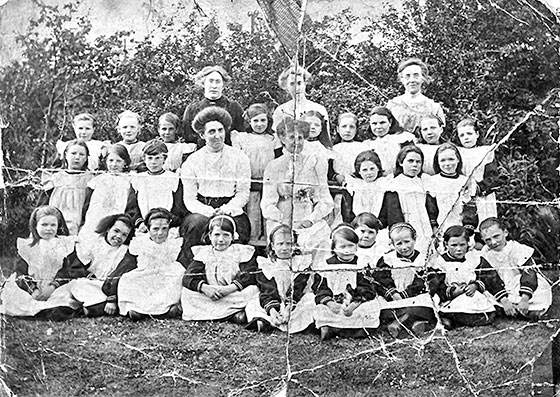
|
Recollections 94 Meg Gurney Pontypool, Torfaen, South Wales |
|
Thank you to Meg who wrote: |
|
My Grandfather Isaiah Gllbert "My Grandfather, Isaiah Gilbert was born in West Bromwich, near Birmingham, around 1884. He served in the Durham Light Infantry and according to his National Identity Card, lived at Murray Home, Gilmerton, Edinburgh. Can anybody tell me anything about this home? Meg Gurney, Pontypool, Torfaen, South Wales 12 February 2015 |
|
Reply to Meg? If you'd like to send a reply to Meg, please email me to let me know, then I'll pass on her email address to you. Peter Stubbs, Edinburgh: |
|
Recollections 95 George McBean New Town, Edinburgh |
|
Thank you to George McBean who wrote: |
|
Old Police Station "I have photos of the old police station in Gilmerton, taken in the 1960s. The police station was converted into a shop, but still retained its old jail cells in the back. I rented the shop in the late-1960s, to sell art work. George McBean, New Town, Edinburgh: April 15 + 16, 2015 |
|
Photo This is one of the photos that George sent to me of the former police station in Gilmerton Road, after it had been converted in the late-1960s to become his shop. Old Police Station and Jail, converted to a shop, late-1960s
© George McBean, New Town, Edinburgh |
|
Evening News Article George also sent a copy of a short article from the Edinburgh Evening News. The details below have been taken from this article: "George McBean and his old school pal, Stewart Mitchell have rented the old jail on Gilmerton Road and converted it into a little bric-a-brac and art shop, 'Mingbag Enterprises. Some of the paintings on sale in the shop were painted by George." "The old cells, still complete with solid wood doors and iron grills, house their tools and paints. "We are only open on Saturdays although during the Edinburgh Festival we hope to open for the full three weeks. We're not in this to make a lot of money. We're happy if we get enough to pay the rent." |
|
George McBean, New Town, Edinburgh: April 15 + 16, 2015 Please also s ee 'Recollections 96' below |
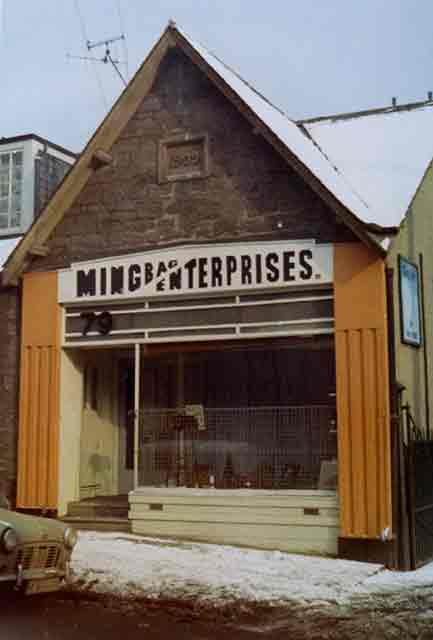
|
Recollections 96 George McBean New Town, Edinburgh |
|
|
Thank you to George McBean for writing again, telling me: |
|
|
Old Police Station "The Old Police station at Gilmerton was not converted into a shop specifically for me. It was converted into a shop long before I took over the rental. In her ' Recollections 22 ' above, Norma Coutts (daughter of the shop owner ) wrote the comments below."
George McBean, New Town, Edinburgh: April 17, 2015 |
|
Recollections 97 Dave Henniker Edinburgh |
|
The Henniker family shop at Gilmerton has been mentioned in Recollections 18 , Recollections 23 and Recollections 51 above. I've now received the message below from Dave Henniker, who wrote |
|
The Henniker Family Shop 49 Drum Street, Gilmerton "My father, Alan Henniker (pictured on the right in this photo) had the newsagent / general store at 49 Drum Street, Gilmerton. I'm the young lad in the picture holding the dog. " 1. Three of the Henniker Family and their Dog
© Reproduced with acknowledgement to Dave Henniker, Edinburgh Shop for the Miners " My father opened the shop after World War 2. Gilmerton Pit was in business in the early years and the shop opened early in the mornings to get the miners' custom. My brother Harry and I both worked there as boys. 2. The Shop at 49 Drum Street
© Reproduced with acknowledgement to Dave Henniker, Edinburgh My dad gave credit for a while , until the bad debtors mounted up. His lawyer said it would be ok to put defaulters' names on a revolving sign in the window but understandably this wasn't popular with the culprits. Nevertheless they paid up and settled their accounts. Bakery in Main Street " I also worked for a bakers who had their bakery in Main Street with a pig out the back. I remember pushing a barrow of rolls through Danderhall shouting "Rolls, morning rolls!" Ferniehill Quarry " My brother and I , and other kids , used to play in Ferniehill Quarry. There were 'caves' at the south - east end , at the foot of the cliffs which were only a few yards from Ferniehill Road. I remember being very scared climbing up there one time. " Dave Henniker, Edinburgh: January 14, 015, 2015 |
|
More Photos of Edinburgh Dave Henniker has a web site that now includes over 10000 of his photos of Edinburgh. Please click here to see details of the Edinburgh pictures on Dave's web site. Peter Stubbs, Edinburgh: May 31, 2015 (+ link above updated 2 Oct 2020) |
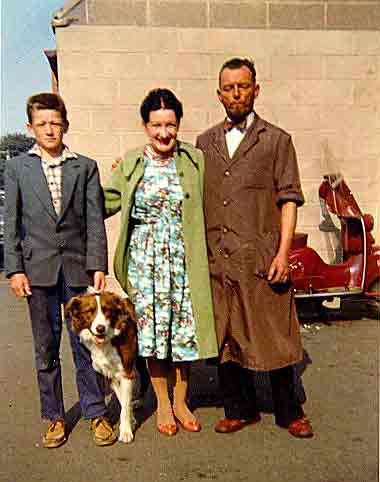
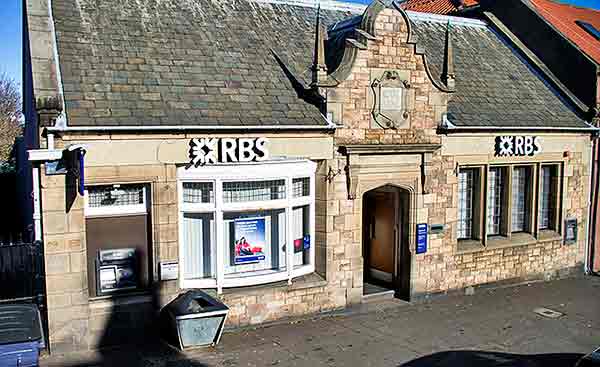
|
Recollections 98 Caroline I rvine ( née Brown) Ottawa, Ontario, Canada |
|
Thank you to Caroline Irvine who wrote: |
|
Prefabs " I remember Gilmerton . W e grew up there. We lived in the prefabs . O ur address was 66 Drum Crescent ." The Farmer " My brother worked for the farmer. We called him 'Stewarty'. We used to play in his fields and got in trouble from him. He came to our door and said he would get the police if we didn't stay out of the fields, so it was funny that my brother ended up working for him before he left school to get a few pennies." Shops "In the 19 60 s, I remember : - the grocer store called Mcauley ' s . - a bakery. I forget its name . - the store called the Beehive . - a store owned by Henniker . - a wee shop that had groceries and sweeties ; it was owned by the Taits, mother and daughter. - Cafe Miranda , where we got ice cream. The little man there used to stand on a box. He was so small that he needed it to see over the counter." - the post office at the bottom of the main street. - a hardware shop , across the road from the post office. - a fish and chip shop , up from the school and across from it, towards Hyvots . - St Cuthberts store . We used to shop there with our coupon books when I was little after the war. - the butcher , next door to St Cuthbert's I think I also remember the fish shop and the blacksmiths ." More Memories "I also remember : - the dentist, where I got gas for a tooth being pulled . Oh! Not nice. - Dr Guthrie 's school, and the Police Box in the middle of the village. - we even had sheep down the road from the Dr Guthrie ' s. " The Village "It was a nice little village with lots of places to play. We would even walk on Sundays down the main street and out towards the Dobies nurseries and pick brambles. We lived there till they pulled down the prefabs. I think I was maybe around 17 when they pulled them down ." Caroline Irvine (née Brown), Ottawa, Ontario, Canada: June 19, 2015 |
|
Recollections 99 Alistair Wilson Cessnock, New South Wales, Australia |
|
Thank you to Alistair Wilson who wrote: |
|
Emigration to Australia " I am 70-years-old and emigrated to Australia with my parents and sister in 1952." Gala Queen "My mother , Isabella ( Ella ) Hush, was crowned Gilmerton Gala Queen . I know that the date was 24 June , but I'm not sure of the year . She was born on 20th August 1919 and in the pictures she looks about 15 or 16 - yrs -old, so it would probably have been taken around 1934/35. Gala Queen
© Reproduced with acknowledgement to Alistair Wilson, Cessnock, NSW, Australia This photo is one of a collection of photos taken on that occasion. It was taken b A G Ingram." My Parents "My mother married Alexander Gibson Wilson in Gilmerton 1943. My father worked the coal mines during the day and helped my grandmother run the "Hoptoun Arms" hotel after my grandfather passed away. My mother died in 2002" Alistair Wilson, Cessnock, New South Wales, Australia: July 1, 2015 |
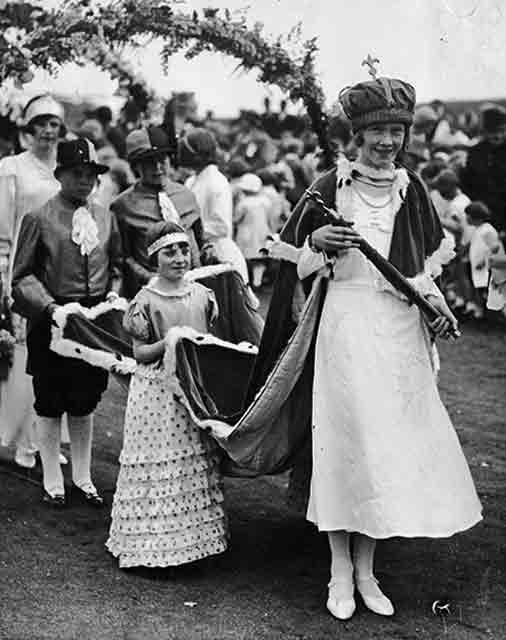
|
Recollections 100 June Phillips ( née Campbell) Peregian Beach, Sunshine Coast, Queensland, Australia |
|
Than k you to June Phillips (née Campbell) who wrote: |
|
Old Map "I picked up a very old map “The Environs Of Edinburgh” at a market stall today. It is from around 1838 and is an original, not a copy. I was amazed to see that the village I lived in from age 2 to 14 was in the map – Gilmerton. I decided to Google it and found out things I didn’t know about Gilmerton on TripAdvisor. But that was the tip of the iceberg as I then found your info and emails from so many people in Gilmerton. " June: Yes. Yours is the 100th message that I've received about Gilmerton! Early Life " I was born in Arthur Street , right in the middle of Edinburgh in 1949. After the war our family moved to the prefabs in Moredun Dykes Road (number 83 I think). " June: I've also received lots of comments about Arthur Street and other parts of Dumbiedykes, and comments and photos of Edinburgh prefabs. If you've not already found these pages on the web site, you might like to have a look at some of these pages: - Central Edinburgh Recollections (including Dumbiedykes) - Prefab House s (index to pages) Gilmerton Memories " I have a school photo very similar to the one on your page from Ravenscroft School. I remember most of the teachers mentioned and the shops and the places we used to roam as kids. My mother used to pick potatoes at Adams farm and we got very friendly with the Somerville family who lived in a little cottage on the main road at the farm. I was very friendly with Pam Collier who has a bit on the site and recognise a few of the other names too. My parents were Georgina (nee Anderson) and Duncan Campbell (born in Portobello). M y brother , Billly, was 3 years older than me. I too remember : - the school dinners . - going swimming with our school to Dr Guthrie’s as they had a pool. - Dean woods . - Middle strip ." Emigration " I married when I was 21 and came to Australia and have had a great life living all over Queensland, 2 years living in the Philippines and now live in Peregian Beach on the Sunshine Coast in Queensland Australia. I'm s till married to the boy from Glasgow that I married in 1970. Thank You " Thanks for your web site – it has brought back many memories and amazed me that I recognised so many names and places. " June Phillips ( née Campbell), Peregian Beach, Sunshine Coast, Queensland, Australia: 30 Aug 2015 |
|
Recollections 101 Ian Anderson Glasgow, Scotland |
|
Than k you to Ian Anderson who wrote: |
|
Dr Guthrie's School " I was fascinated to see in Recollections 93 above, a photo sent in by David Frost from Australia , of the pupils and teachers of the Dr Guthrie's school early in the 1900s. A sister of my great grandfather was a teacher there, and I have found out quite a lot about the school in the National Archives. Mary Cullen, my relative, must be one of the ladies in the photograph. " Ian Anderson, Glasgow, Scotland: December 17, 2015 |
|
Recollections 102 . Stevie Riley Glasgow, Scotland |
|
Thank you to Stevie Riley who wrote: |
|
Dr Guthrie's School " I lived at 9 Fernieside Crescent and was at Dr Guthrie's Boys' school, Gilmerton, until May 1979. Does anyone have any photos of the school in the 1970s? I'd like to hear from anyone who was at the school at the asme time as I was there. Stevie Riley, Glasgow, Scotland: 29 October 2016 |
|
Reply to Graeme If you'd like to send a reply to Stevie, please email me to let me know, then I'll pass to you the latest email address that I have for him, and you can try sending a message to him. Peter Stubbs, 1 December 2016 |
|
Recollections 103 . Stevie Riley Glasgow, Scotland |
|
Thank you to Stevie Riley for writing again. Stevie wrote: |
|
Around Fernieside "I lived in Fernieside from 1963 until 1982. I loved the place. - We used to play in the Caley Woods and down at Nicky's Burn. - I was never out of the Drum Woods. - I played at the Fernie Hill Inn where two old cars sat. They would be 'classics' now." Dr Guthrie's School "I'm sure that anybody who remembers me and my brother, Tam, would have seen us as 'the poor family' and, I'm sure, 'a bit trampy' . We ended up in Guthrie's, but I have a fantastic memory of the place. So if you need to know anything about the place, please mail me. I'd like to let people know that I ended up good. I now own one of the biggest school bus companies on the west coast of Scotland." Stevie Riley, Glasgow, Scotland: 29 October 2016 |
|
Recollections 104 . Dave Thomson |
|
Thank you to Dave Thomson who wrote: |
|
1950s "I grew up in the Gilmerton area from the 1950s onwards. Mobile Shops "On the subject of travelling shops the big grey one belonged to Jimmy Jones who I worked for part time in the evenings for years. I worked three shifts, totalling about ten hours for 19s 6d which was reasonable for the time. Jimmy was a good spud and a great employer. The only job I hated was chapping the debtors doors. The house lights went out when they heard me at the garden gate. The Blair Family "Talking of Willie Blair, I knew his son Sinclair better. He worked in the chip shop but also ran the boxing club in the hall opposite the Kirk (Fairfield Hall, I think). I believe he was a decent amateur boxer in his day, and I also recall his wife working in the sweetie side of the shop." Campbell The Butcher "My grannie and granddad stayed in Smilie's Cottages in Main St and I thought they were all owned by Campbell the butcher. The butcher's shop was the old school, with sawdust on the floors, The sons, Colin and Alex, were behind the counter and daughter Chrissie in the booth where you paid. I think Colin also drove a travelling butcher's van for a while. Old Mr Campbell kept pigeons and pet dog breeding kennels behind the shop and sorted me out with a good pair of doos when I was a lad, when he knew who my granddad was." Blacklocks The Greengrocer "I was reminded, also, of the Blacklocks, who had a green-grocers in a Nissan hut, up the lane at the side of the Kirk. There was the old mother and Johnnie and his brother Tam (?) who was disabled but worked just the same. I was sent up there every Saturday for a 'fourpit o' tatties' and onions, cabbage and neeps etc." Joe the Pole Scrap Merchant " Opposite my Grannie's house was a scrap-yard owned by Joe the Pole. Many happy hours were spent in there. " Greyhounds " The other passion with the miners was, of course, greyhounds. I walked Jackie Milne's three dogs every day after school from Gilmerton Dykes Drive up through the village and on down Gilmerton Road to Melville Castle gates, turned left to the A68 and back via Danderhall and Fernieside in all weathers. Eventually, I was invited to the qualifying trials at Wallyford. My mother asked afterwards if I enjoyed myself, to which I replied: ' I don’t think Mr Milne likes me, he bought those three dogs a pie supper each at Willie Blair's before they ran and never even offered me a poke of chips.!' Dave Thomson, Gorebridge, Midlothian, Scotland: 8 January 2017 |
|
Recollections 105 . Greg Robertson Paisley, Renfrewshire, Scotland |
|
Thank you to Greg Robertson who wrote: |
|
The Hutchison Family "I am currently trying to trace more information on my grandfather’s side of the family. They were the Hutchisons of Gilmerton.
- They
lived at
99
The Tofts
, Gilmerton.
There were 6 or 7 siblings. S o far, I haven’t been able to find out that much about some of them. Alexander Hutchison "I'm particularly interested in my grandfather's eldest brother, Alexander Hutchison (1895-1932). He was killed in an accident at Gilmerton Colliery in 1932. - I've found the odd reference to him online. - There is or was also a plaque to his memory in the old ERI. - H e was also involved in the village Play-Days. - He was president of Gilmerton Junior Friendly Society.
Greg wrote again, adding: Margaret Hutchison "Alexander Hutchison's sister, Margaret Hutchison (Meg) lived in the house in The Tofts until her death in 1984, so someone may know other or other members of the Hutchison family. I believe that Alexander did a lot within the local community. I wonder if the plaque to his memory is still within the Edinburgh Infirmary." My Grandfather "My grandfather was the youngest of the siblings. His mother died when he was 2, so he was sent to live with relatives in Paisley, which is where I am from." Greg Robertson, Paisley, Renfrewshire, Scotland: 29 January 2017 (2 emails) |
|
Reply to Greg? If you have any knowledge of or information about any members of the Hutchison family and would like to send a message to Greg Robertson, please email me to let me know, then I'll pass on Greg's email address to you. Thank you. Peter Stubbs, Edinburgh: 29 January 2017 |
|
Recollections 105 .
Update
Greg Robertson Paisley, Renfrewshire, Scotland |
|
Greg Robertson wrote again, letting me know about progress he had made in his family history research. Greg wrote: |
|
Nell Hutchison "I have found out a little more about my grandfather's sister, Nell that we previously knew almost nothing of. She was born in 1902 and died in 1918 of the 'flu epidemic following WW1. She died at home, Hightoft Street, Gilmerton. I have contacted Mortonhall to try and find out if and where she was buried or cremated." Greg Robertson, Paisley, Renfrewshire, Scotland: 31 January 2017 |