|
Air Raids and Air Raid Shelters and Bombs in Edinburgh |
|
Recollections |
||
|
1. |
Wells, Somerset England |
Air Raids during World War II - Evacuation and Return - Anderson Shelter - Bombs |
|
2. |
Calton, Edinburgh |
Mayfield Road - Steel Shutters |
|
3. |
Tollcross, Edinburgh |
Bombs Dropped - 1940 to 1942 |
|
4. |
Tollcross, Edinburgh |
Bombs |
|
5. |
Danny Callaghan |
East Claremont Street |
|
6. |
Kim Traynor |
East Claremont Street - List of Bombings |
|
7. |
Kim Traynor |
World War I - Zeppelin Bombs |
|
8. |
Ian Thomson |
Carrick Knowe - Kids' Playground |
|
9. |
Don Falconer |
Dalry - Bomb at Springwell Place |
|
10. |
Avril Finlayson
Smith |
Bombing Siren Suit Treacle Pies |
|
11. |
Jim Suddon |
East Claremont Street TA Hall Tynecastle Bombings The Forth Bridge |
|
12. |
Yvonne Gordon with reply from
Yvonne Gordon |
Anderson Shelters |
|
13. |
Jim Smart |
East Lothian - The First Air Raid |
|
14. |
Frank Ferri |
Leith Mini-Blitz, 1941 |
|
15. |
Alistair Adams |
Brown Brothers Engineering Works |
|
16. |
Alex Dow |
East Claremont Street |
|
17. |
Alex Dow |
Steam Catapults |
|
18. |
Bomb at Springwell Place |
|
|
19. |
Allan Dodds |
Bomb near The Meadows |
|
19. Reply 1 |
Bill Hall |
Bomb near The Meadows |
|
20. |
Margaret Cooper |
Air Raid Shelter Entertainment Blackout |
|
21. |
Bomb at Springwell Place |
|
|
22. |
Alex Vesco |
Bomb at Dalry |
|
23. |
Ian Thomson |
Bomb at Springwell Place Emigration to Australia |
|
24. |
George Gowans |
Bomb at Holyrood Palace |
|
24. Reply 1 |
Thomas Henderson
(Scotty) |
Bomb at Holyrood Palace |
|
25. |
June Wood |
Bomb at Holyrood Palace Message for Mary Budge |
|
26. |
Sandra Joyce |
Air Raid Patrol Wardens - Questions |
|
27. |
Jim Patience |
Air Raid Patrol Wardens - Reply |
|
28. |
Air Raid Shelter - Sick Children's Hospital |
|
|
29. |
Harry Meiklejohn |
Holyrood Palace Rosyth - 1939 Leith Library - 1940 |
|
30. |
George Clark |
Bomb at Loaning Crescent |
|
31. |
Anne Baumgartner-Brown |
Bomb at Dalry |
|
32. |
Margaret Williamson |
Air Raid Shelters - Sick Children's Hospital |
|
33. |
Robert Edminson |
Air Raid - 1939 |
|
34. |
Landmines in Leith |
|
|
35. |
Dalry Bomb |
|
|
36. |
Robert Lettuce |
West Pilton Circus |
|
Recollections 1. Brian V Fox Wells, Somerset England |
|
Thank you to Brian Fox, who attended Trinity Academy, Edinburgh from 1940 to 1946, for recalling life in Edinburgh during World War II Brian wrote: |
|
Air Raids during World War II Evacuation and Return "My sister and I were evacuated from Edinburgh in 1939 to a schoolhouse in the Lyne valley near Peebles. By Christmas, the same year, we had both returned to Edinburgh. Anderson Shelter "As the war progressed, the Germans bombed Clydeside in 1941. The raids took place over three nights and we had to spend hours and hours in our Anderson shelter. Our next door neighbour and son shared it with us. She was so nervous that she made the bench rattle. We in our foolishness thought it was all great fun, especially as we could skip school the next day. We could hear the bombers droning overhead and the loud noise from our ack ack guns. Suddenly there was loud swishing sound getting louder and louder. We all crouched down waiting for the explosion which never came. It turned out to be an unexploded shell which landed within inches of our neighbour's husband, showering him with earth. He was on ARP duties at the time. Needless to say he nearly died from fright. Bombs "On another occasion we were both wakened by our uncle in the middle of a raid with no warning. The house was surrounded by incendiary bombs, which by good fortune didn't hit any houses. The next morning we saw burnt holes in the road and pavements. Edinburgh was very fortunate insofar as it largely escaped the bombing endured by so many other cities. |
|
Brian V Fox, Wells, Somerset, England: January 10, 2008 |
|
Recollections 2. David Fiddimore Calton, Edinburgh |
|
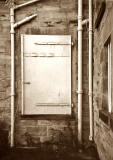
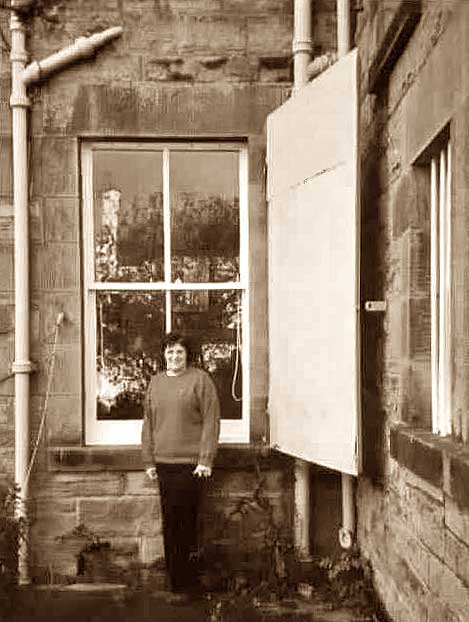
Mayfield Road Steel Shutters Thank you to David Fiddimore for providing these photos of a steel plate used, probably during World War I, to create an air raid shelter on the ground floor of a house on Mayfield Road, Edinburgh. Please click on the images below to enlarge them and to read David's comments about them: Acknowledgement - David Fiddimore, Calton, Edinburgh: November 20, 2009 |
|
Recollections 3. Kim Traynor Tollcross, Edinburgh |
|||
|
Thank you to Kim for providing this list of bombs that fell on Edinburgh: |
|||
|
BOMBS DROPPED ON EDINBURGH (18 people killed; more than 200 injured) |
|||
|
1940 |
|||
|
Jun 26 |
12.55 am |
Open
ground near Craigmillar Castle Road |
|
|
Jul 18 |
8.07 pm |
Leith: Victoria Dock,
junction of Commercial Street and Portland
Place railway line, George Street, LMS railway coal depot,
Newhaven branch line, Nicol Place |
|
|
Jul 22 |
5.59 am |
Leith: Albert Dock - one 1,000 lb bomb, Railway lines, Seafield Road - three 50 lb bombs, 48 incendiaries (8 killed; 38 injured) |
|
|
Jul 22-23 |
? |
Granton area |
|
|
Aug 4 |
1.30 am |
Portobello: Abercorn Park and 9 Abercorn Terrace,
Christian Path, 84
Argyle Place and Argyle
Crescent |
|
|
Sep 27 |
7.58 pm |
Grounds
of Palace of Holyrood House and Kinnear Road |
|
|
Sep 27 |
5.15 am |
Gorgie: Duff Street |
|
|
Sep 29 |
7.45 pm |
21-23 Crewe Place |
|
|
Oct 7 |
7.45 pm |
Warrender Park area:
16 Roseneath Place
and roadway, (11 injured) |
|
|
Nov 5 |
8.10 pm |
Corstorphine area: Pinkhill House, Zoo
aviary, |
|
|
1941 |
|||
|
Mar 14-15 |
midnight |
Abbeyhill area |
|
|
Apr 7 |
11.00 pm |
Leith: David Kilpatrick School and
railway embankment opp. Largo Place
***
Corstorphine area: Dalmeny railway line
and Braehead House,
Cramond Brig (3 killed; 131 injured) |
|
|
May 6 |
12.36 am |
Niddrie Rd, Milton Crescent, Jewel Cottages, - one 100 lb, three 50 lb bombs, 34 incendiaries (4 killed; 2 injured) |
|
|
1942 |
|||
|
Jul 6 |
11.20 pm |
Craigentinny
area: Craigentinny House,
35 Loaning Road, junction of Loaning
Crescent with Loaning Road, |
|
|
Reproduced with acknowledgement to Lothian Region Education Dept who I believe produced this list which was used in their schools in the 1980s *. * This table has been updated to include house numbers and further information, supplied by Kim Traynor: January 8, 2009. |
|||
|
Recollections 4. Kim Traynor Tollcross, Edinburgh |
|
Kim added: Bombs "When I was a teenager, one of the annoying aspects of my week was to have to carry a bag of churls home from the shops which weighed 28lbs. So, when I see the size of some of these bombs, I’m quite amazed. Why does a lone German bomber drop 500lb bombs on Craigentinny in 1942? Each of those would bring down a fair-sized hotel. I can’t see any link to dates for raids on Belfast, Glasgow or Rosyth that might suggest a bomb jettisoned by a returning raider. As there was no other activity that night, the plane must have been going it alone, which seems unusual. I wonder if the Craigentinny rail depot was the intended target, hence one of the bombs dropping on the golf course? Kim Traynor, Tollcross, Edinburgh: December 6, 2009 |
|
I asked Kim what the 'churls' were, that he referred to above. He replied: "Churls were small, washed lumps of coal sold in factory-sealed, thick-brown paper bags weighing 28lbs. I collected one bag weekly from a local general store in West Granton Road when I lived in Royston Mains Avenue in the mid-1960s. The bag was big for a small teenager, so I had to carry it over my shoulder." Kim Traynor, Tollcross, Edinburgh: December 11, 2009 |
|
Recollections 5. Danny Callaghan Falkirk, Stirlingshire, Scotland |
|
Perhaps not all the bombs that dropped during World War II are included in the table in 3 above. Recently, Danny Callaghan, now living in Falkirk, told me about photos that he had taken of buildings that had been built on Edinburgh bomb sites *** Danny said he believed that the target of these bombs was Brown's Engineering Works at Bonnington, and that the planes had lined up on the steeple at the end of East Claremont Street, then followed East Claremont Street in the direction of the engineering works. |
|
Danny wrote: East Claremont Street "I have taken some pictures of the building now on three bomb sites in East Claremont Street. *** 1. The east site, next to the former printing works, is flats build in 1960s called Claremont Court. 2. The middle site is the TA garage 3. The west site is modern flats built in keeping with the new town houses, but because they have lower ceilings they have an extra floor. Otherwise, they follow the building line." Danny Callaghan, Falkirk, Stirlingshire, Scotland: November 18, 2009 |
|
*** I'm not sure whether the bomb sites in East Claremont Street that Danny refers to were bomb sites from World War I or World War II. UPDATE In fact, the sites mentioned in East Claremont Street appear not to have been bomb sites. See 'Recollections 11' below |
|
Recollections 6. Kim Traynor Tollcross, Edinburgh |
|
Kim replied to Danny's comments in 5 above. Kim wrote: East Claremont Street "I recognise the locations that Danny refers to. The first is very familiar, as it stood right next to my secondary school and provided a secret route back into school for truants who’d been down at the snooker tables next to the old Ritz cinema. I wasn’t aware that these buildings had come about as a result of bombing." Kim Traynor, Tollcross, Edinburgh: December 6, 2009 |
|
Kim added: |
|
East Claremont Street "I understood the list in 3 above to be comprehensive. There were no incidents after the Craigmillar bombs. Yet, there is no mention of East Claremont Street." Kim Traynor, Tollcross, Edinburgh: December 6, 2009 In fact, these sites do not appear to have been bomb sites. Please also see 'Recollections 11' below. - Peter Stubbs |
|
List of Bombings "A new book is due to appear soon, entitled 'The Luftwaffe Over Scotland'. It purports to be the first comprehensive history of the subject of air raids on Scotland." Kim Traynor, Tollcross, Edinburgh: December 6, 2009 Please also see |
|
* Agreed. In fact, the sites mentioned in East Claremont Street appear not to have been bomb sites. See 'Recollections 11' below |
|
** I have now received an emailfrom See 'Recollections 11' below |
|
Reply to Recollections 6. Les Taylor Fraserburgh, Aberdeenshire, Scotland |
|
Thank you to Les Taylor who replies List of Bombings "I notice Kim Traynor (Recollections 6 above) has mentioned my new book 'Luftwaffe over Scotland' I would like to explain a wee bit about the book, particularly with regard to lists of bombed places, because I would hate to give the impression that this is some kind of exhaustive 'bible' of bombed locations in Scotland, because that's not what I set out to do. As you can imagine, a detailed listing of every bomb dropped would be so long that no publisher would touch it, as would also be a list of specific streets, houses, locations that were bombed. What I have done is compiled an index, in the appendices, of every location in Scotland known to have been bombed, with the date. I also provide the best assessment of casualty figures, together with what I hope is the first comprehensive listing of every German aircraft brought down over or around Scotland. What my book sets out to do is tackle the wider political, strategic and tactical aspects of the long bombing campaign against Scotland, explaining: - why the bombing took place (in terms of the famous 'Douhet Theory'), who precisely did the bombing (in terms of German units and their base locations) and - the strategy and tactics behind the operations, ranging from mass attacks on Clydebank and Greenock, to the more common 'hit and run' raids that of course included Edinburgh on several occasions. I also make the point in the introduction that the book is specifically not a collections of witness memories, since this is a subject already well covered, but more of a detailed technical reference work dealing not only with what happened, but also why." Les Taylor, Fraserburgh, Aberdeenshire, Scotland |
|
Message to Les Taylor If you would like to send a reply to Les Taylor, please email me, then I'll pass on your message to him. Thank you. Peter Stubbs, April 27, 2010 |
|
Recollections 7. Kim Traynor Tollcross, Edinburgh |
|
Kim wrote again, this time telling me about a web site with a map showing 27 locations of bombs dropped on Edinburgh during World War I on the night of April 2-3, 1916. |
|
Kim wrote: World War I Zeppelin Bombs "The Secret Scotland web site includes a map of the Zeppelin bombings of 1916. One can see, clearly, that the airship followed the lights of Dumbiedykes. Arthur’s Seat, even in the moonlight, must have appeared to the Zeppelin crew as a featureless, black pool below them. It must have been scary, ensuring they maintained a safe height. It looks like they followed the silvery streak of the Water of Leith, reflecting the moonlight, to find the centre of the town." Kim Traynor, Tollcross, Edinburgh: December 6, 2009 |
|
Recollections 8. Ian Thomson Lake Maquarie, New South Wales, Australia |
|
Thank you to Ian Thomson who wrote |
|
Bombs and the Zoo "I remember clearly, from our Anderson shelter, the bombs hitting the Corstorphine Zoo, with a number of animals killed. The older kids were rewarded for the capture of escaped animals. I seemed to think, maybe it was the Forth Bridge they were after." |
|
Carrick Knowe - Kids' Playground "Carrick Knowe Golf Course was used by the Home Guard during the war. It was also playground for us, as kids, then." |
|
Ian Thomson, Lake Maquarie, New South Wales, Australia: December 9, 2009 |
|
Recollections 9. Don Falconer New Plymouth, New Zealand |
|
|
Don Falconer wrote: |
|
|
Bomb at Dalry "At the age of five, I lived at 28 Springwell Place with my mum, two sisters and brother. I’m not sure of the date but I think it was on 16th September 1940, our building and the brewery next to it was hit in a bombing. ** My mum seemingly was acclaimed a heroine. We lived on the top flat. She gathered us kids together and found time to knock on the door of neighbours who were hard of hearing. They hadn’t heard a thing. We went out into the street and stood watching as the firemen tried to control the fire, then went to our granny’s house. She lived in the same street. We then moved on to the Northern General Hospital, until we were eventually re-housed at 6 Ferry Road Place, West Pilton. My mum had her photo in the Evening news or the Scotsman."
Any more Memories of the Bombing? "I would like to know if anyone else out there has any memories of this bombing ? as I have tried in vain. I am now living in New Plymouth, New Zealand, where I have lived with my family for 35 years. Friends are most welcome to get in touch with me." Don Falconer, New Plymouth, New Zealand: March 7, 2010 |
|
|
Reply to Don If you'd like to send a message to Don, please email me, then I'll pass your message on to him. Thank you. - Peter Stubbs: March 7, 2010 |
|
Recollections 10. Avril Finlayson Smith (née Young) Bendigo, Victoria, Australia |
|
Thank you to Avril Finlayson Smith (née Young) for leaving this message in the EdinPhoto guestbook. |
|
Avril wrote: Bombing "I read in some other reflections about the bombing in Crewe Place where I lived. My Dad was an ARP Warden so was quite involved in all of this." Siren Suit "I have many memories of having to go down to the Anderson Shelter. All too often, the memory that comes to mind most is being pulled into my siren suit. It was Okay at the start of the war, but it became a bit of a struggle as time went on. I, of course, grew but not the siren suit, which had to last me. My Dad made the siren suit, as he was a tailor - very handy !! Treacle Pies "I remember all those treacle pieces my Dad used to pass into the shelter"
Avril Finlayson Smith (née Young),
Bendigo, Victoria, Australia |
|
Reply to Avril If you'd like to send a reply to Avril, please EITHER: add a reply her under the message that she left in the guestbook on March 24, 2010 OR: email me, then I'll pass on your message to Avril. Thank you. Peter Stubbs: March 27, 2010 |
|
Recollections 11. Jim Suddon Morningside, Edinburgh |
|
Thank you to Jim Suddon who replied to the comments in Recollections 5 and 6 above. |
|
Jim wrote: East Claremont Street "Danny Callaghan wrote about three bomb sites in East Claremont Street. In fact, this was not the case. The sites that he mentions were: - the allotments at Melgund Terrace, I had one at that site. Flats replaced them in the late-1950s. - the allotment site at West Annandale Street where the T.A. built a transport garage in the very early-1950s - the ruins of MacDougalls printing and publishing building, just up from Broughton Primary School. This was burnt down. I think it was before the war. It stood as a ruin for years and lots of people thought it was the result of bombing but that was not the case." TA Hall "The T.A. Hall in East Claremont Street was home to the 'Dandy Ninth' Division of the Royal Scots. They were reputed to be the smartest troops in the British Army. I recall the parades with the Pipe Band and soldiers after the war. The roof of the building had a machine gun emplacement used during air raids against low flying aircraft." Tynecastle Bombing "My father used to tell me of a bombing raid, one night, which caused a fire at Tynecastle. It was a whisky bond at Duff Street that was hit and the blaze was so bright it was possible to read a newspaper at Bellevue. I always thought he was exaggerating but I read a book written by a former German pilot who was on that raid. Their target was the Forth Bridge and Rosyth but the bombs were dropped and some obviously fell short. They had no idea what they had hit, but they had caused an immense fire. The glow of the fire could still be seen as they returned to their base, as they crossed over the coast of Denmark. I suppose the distance between target and the bombed site at Tynecastle was not far in aircraft distance, and the site at the Bridge was also well defended." The Forth Bridge "I used to visit Queensferry with my mother during the war and the whole area was surrounded by barrage balloons. They seemed, to me, to be wonderful as they were silver like in the sunshine. I always hoped that I could obtain one. They prevented low level bombing raids as there was no way planes could get to the bridge or naval bases flying low level with as many balloons lifting the cables which were of course the real protection. The balloons were raised when air-raids were expected. Hence the 'Balloons up' saying." |
|
Jim Suddon, Morningside, Edinburgh: March 25, 2010 |
|
Recollections 12. Yvonne Gordon Burdiehouse, Edinburgh |
|
Yvonne Gordon wrote: |
|
Anderson Shelters "Do you know of any Anderson shelters that survive in Edinburgh gardens? And is it possible to visit them?" Yvonne Gordon, Burdiehouse, Edinburgh: June 10, 2010 |
|
Reply to Yvonne Gordon? I don't know of any surviving Anderson shelters in Edinburgh gardens, but there may well be some. If you know of any, can you please email me, then I'll pass on your message to Yvonne. Thank you. Peter Stubbs, Edinburgh: June 6, 2010 |
|
Reply 1. to Recollections 12. Yvonne Gordon Burdiehouse, Edinburgh |
|
Yvonne Gordon added: |
|
Anderson Shelters "My Mum seems to think there is an Anderson shelter somewhere in the Inch." Yvonne Gordon, Burdiehouse, Edinburgh: June 10, 2010 |
|
Recollections 13. Jim Smart Bournemouth, Dorset, England |
|
Thank you to Jim Smart who wrote: |
|
East Lothian The First Air Raid "I remember the first Air Raid of World War II. It was beautiful late Summer's day. The first we heard was the sound of rapid fire, followed by a German aircraft, further followed by a Spitfire, (or may be a Hurricane) Lysander spotter plane, and finally a bright Yellow Sunderland rescue plane. We were all rushing about picking up pieces of shrapnel (which were still warm) and completely oblivious to the danger of it all. The German aircraft was shot down and crashed in the area of Humby.* The German crew were given what seemed like a 'full military funeral' and the Swastika flag was draped over the coffin. The coffin(s) were then buried in Joppa cemetery. They were repatriated to the German families after the War" Jim Smart, Bournemouth, Dorset, England: September 5, 2010 |
|
* Humby is in East Lothian, to the east of Edinburgh, about 10 miles SE of Musselburgh. |
|
Recollections 14. Frank Ferri Newhaven, Edinburgh |
|
|
Thank you to Frank Ferri who wrote: |
|
|
"There is a commemorative plaque situated in foyer of Andrew Morton Hall, behind Leith Library. It records the Leith min- blitz by German aircraft in 1941." |
|
|
Leith Mini-Blitz - 1941 Frank sent me a photograph of the plaque. It reads:
Frank added: |
|
|
Land Mines "The Leith mini-blitz badly damaged: - what was then known as Leith Town Hall - Largo Pl - Ballantyne Road. I was only six years of age, but I remember the night very clearly. Two land mines fell on the railway embankment running parallel to Largo Place. At least two people were killed in Large Place." Frank Ferri, Newhaven, Edinburgh: November 24, 201 |
|
Recollections 15. Alistair Adams Giffnock, East Renfrewshire, Scotland |
|
Thank you to Alistair Adams who wrote: |
|
Brown Brothers Engineering Works "Danny Callaghan (5 above) suggests that Brown Brothers Engineering Works, Bonnington, was a target. My father worked there during the war. He was engaged in making steam catapults for aircraft carriers**, so a priority target, if the Germans had knowledge of it. Alistair Adams, Giffnock, East Renfrewshire, Scotland: December 26, 2011 |
|
** See also Recollectons 17 below |
|
Recollections 16. Alex Dow Fife, Scotland |
|
Thank you to Alex Dow who wrote: |
|
East Claremont Street No Bombs "Jim Suddon (Recollections 11 above) is basically correct. None of those three locations were bombed. The Melgund Street and the West Annandale Street Allotments were never built on in a serious way. - Melgund Street allotments may have had some minor residual/demolished buildings from when it was part of the Bellevue House Estate. - West Annandale Allotments may also have had some residual/demolished buildings from the same estate and, more specifically, from the original Edinburgh Zoo. Allotments The lack of buildings on these two allotment areas can be confirmed by working back through the different OS Series maps on the old-maps web site. An aerial photo from the 1930s in the Edinburgh Central LIbrary collection*** shows very extensive allotments throughout the general area. *** I found this photo to be interesting but cannot add it to the EdinPhoto we site for copyright reasons. However, if Edinburgh Central Library has added the photo to their Capital Collections web site, I may be able to add a link to the page on that site. I'll investigate further. Fire The 'ruined buildings' were, as Jim states, from the McDougall's Educational Establishment and Printing Works. These were destroyed by a fire which was believed to have started in a lift, on a Saturday afternoon. I remember standing in the lower end of Bellevue Road and watching the Fire Brigade, including AFS, fighting the fires. There was a fair crowd. That would be very unlikely if there had been a threat of bombing. However, the fire was about 1940. It was definitely not before WW2. I know that because I did not start to walk until about June 1939, and I can remember that we walked down Bellevue Road to see the fire." Alex Dow investigated further then wrote: "The booklet 'Aye Ready - A History of Edinburgh Fire Brigade' (page 36) says that the fire started on Saturday June 14, 1941 and that the cause was accidental." |
|
Alex Dow, Fife, Scotland: May 20+21 2011 (4 emails) |
|
Recollections 17. Alex Dow Fife, Scotland |
|
Thank you to Alex Dow for responding to Alastair Adams' comments in Recollections 15 above. Alex's comments began: |
|
Steam Catapults "If you take a look at this Navy History site, you'll see that Steam Catapults were basically a post-WW2 innovation, involving Brown Brothers etc." Alex Dow, Fife, Scotland: May 23, 2011 |
|
Full Reply Please click the link below to read Alex's full reply to Recollections 15: |
|
Recollections 18. Bill Hogg Fife, Scotland |
|
Bill Hogg wrote: |
|
Bomb at Springwell Place "I have only just seen the article written by Don Falconer (Recollections 9 above). I was three years of age when the bomb fell and was living at 19 Springwell Place, first floor. I recall my dad coming into the bedroom that I shared with my sister Margaret (aged 7), pulling back the curtains and exclaiming: 'My God! The street's on fire'. I remember the firemen coming and hosing down our tenement building to prevent the fire from spreading. We were subsequently evacuated to live with a family in Bonnyrigg, which I loved. We subsequently got back home about a week or so later. I would be happy go communicate with anyone who would like to share memories. Bill Hogg: November 13, 2011 |
|
Discussions with Bill If you'd like to communicate with Bill Hogg, please email me, then I'll pass on his email address to you. Thank you. Peter Stubbs, Edinburgh: November 13, 2011 |
|
Recollections 19. Allan Dodds Nottingham, Nottinghamshire, England |
|
Allan Dodds wrote |
|
Bomb near The Meadows "After reading Kim Traynor's account of bombs dropped on Edinburgh, I remember my mother telling me the story of how during the War she was in a cinema, somewhere around Marchmont, watching a movie where bombs were being dropped in the film. She remarked upon how realistic the experience had been. According to my father, that evening a British bomber had had a bomb stuck in its undercarriage and had managed to release it safely over the Meadows before landing. It was the sound and vibration created close to the cinema that had added realism to my mother's experience. Perhaps Kim can confirm this story. My parents often related it after the War as it made quite an impact on them - not literally, thank goodness!" Allan Dodds, Nottingham, Nottinghamshire, England: November 24, 2011 |
|
Recollections 19. Reply 1. Bill Hall Musselburgh, East Lothian, Scotland |
|
Thank you to Bill Hall for responding to Allan Dodd's comments about bombs dropped near The Meadows during World War II. Bill wrote: |
|
Bomb near The Meadows "My parents, Mary and Joseph Hall, were bombed out of their flat in Marchmont Crescent, near The Meadows in October 1940. They had to go to stay with her Grandparents in Albion Road for a while." Bill Hall, Musselburgh, East Lothian, Scotland: July 16, 2014 |
|
Recollections 20. Margaret Cooper Colindale, North London, England |
|
Margaret Cooper wrote |
|
Air Raid Shelter "Our air raid shelter in the back green of 7 Drumdryan Street, Tollcross, was made of concrete. It had a sloping exterior which made a good slide in winter when it snowed. As a kid i used to like it when the sirens went and my Mother would take me and my sister down to the shelter. There was a door then about ten steps down into the interior where there were wooden benches and wooden bunks." |
|
Entertainment "An old man named Willie Greig would bring his accordion and we'd have sing-a-longs. Mother would sneak upstairs and make cocoa. I hated cocoa in those days it was like the staff of life, and treacle sannies (ugh)." |
|
Blackout "My mother she also used to get into trouble a lot as the A,R,P. man would always spot a light from the window. She was never any good at putting up blackout paper." |
|
Margaret Cooper, Colindale, North
London, England: |
|
Recollections 21. Kathleen van Overzee Amsterdam, Netherlands |
|
Thank you to Kathleen van Overzee for replying to Don Falconer's recollections in 9 above. Kathleen wrote: |
|
Bomb at Springwell Place "My mum remembers that bombing in Springwell Place, Dalry. She lived in Fowler Terrace and they were wakened up in the middle of the night by neighbours who had gathered outside. She says that they went down to the embankment to get a better look. But I thought it hit a distillery and not a brewery. My mum's a bit old now and a lot of tall stories have circulated: - drunk rats - people with buckets running to collect the whisky! We believed that the original target was the railway line - again, I've no idea if that's true." Kathleen van Overzee, Amsterdam, Netherlands: January 26, 2012 |
|
Recollections 22. Alex Vesco Forres, Moray, Scotland |
|
Thank you to Alex Vesco for responding to the comment about the bomb in the Dalry district of Edinburgh. Alex wrote: |
|
Bomb at Dalry "The bomb hit a distillery warehouse in Duff Street. It was a three storey stone building. It stored casks that had been filled at the Caledonian Distillery at Haymarket. I believe the distillery brick chimney may still be standing. ** The warehouse wall on Downfield Place was still intact after the explosion as well as the lift shaft in the middle of the building. (This fell down of its own accord three days later.) The wall on Springwell was blown into the street and the blazing casks rose in a slope from back to front. The opposite tenements on Duff Street were on fire. I gather that no-one was hurt. I was a child living in Northcote Street then, and was hurried away from the scene which I still remember vividly. I was told, later, that the street gutters were running with blazing spirits. When the site was eventually cleared, it still smelled of whisky some years later when the sun shone and the soil warmed up. There were in fact a number or railway lines and shunting yards close by and it might well have been that they were the target. How the pilot could have seen them in the blackout is a mystery" Alex Vesco, Forres, Moray, Scotland: February 14 + 22, 2012 |
|
** Yes it is, and it is still standing, now surrounded by new housing. Peter Stubbs. March 10, 2012 |
|
Recollections 23. Ian Thomson Rockhampton, Queensland, Australia |
|
Thank you to Ian Thomson who wrote: |
|
Bomb at Springwell Place "I've just come across mention of the bombing at the bottom at the bottom end of Springwell place. I was born in June 1940, a bit later than when the bomb was dropped. We lived in 22 Springwell Place, 3rd flat facing the street. Even though I'm a bit younger than Bill Hogg I do remember him from when I was older. I went to Dalry school, then we shifted to Easter Drylaw when I had to go to Secondary School." Emigration to Australia "I was in the Royal Navy for ten years, then the Royal Australian Navy for six years. Then became a fireman and train driver, working for Queensland State Rail for 33 years." Ian Thomson, Rockhampton, Queensland, Australia: June 28, 2012 |
|
Recollections 24 George Gowans Kirkliston, Edinburgh |
George Gowans wrote: |
|
Holyrood Palace Bomb No mention on the List of Bombings "I came upon Kim Traynor's list in Recollections 3 above of bombs that dropped in Edinburg. I noticed that no details were made public about the bomb that fell at Holyrood Palace, so maybe this will spread a little light." Our Home at Abbeyhill "I was born and raised at 78 Abbeyhill, a tenement standing about 20 yards from the Palace grounds. At the rear of the tenement, there were open balcony's which overlooked the Palace grounds." Spitfire Fund "During the war, there was a fund called the Spitfire Fund. People all over Britain found ways to raise money to build more Spitfires. Our method was to hold 'back green concerts' where local people all did a turn. There was an admission fee, so we had a steady income every few weeks." The Night of the Bomb "On the night that the bomb was dropped, we had just finished a concert and were gathered in my Mother's house on the third floor counting the takings when there was an almighty bang and the building shook, then there was a rumbling sound. It sounded as if the building was collapsing, but it turned out to be our bucket in the coal cellar. It had been shaken and was falling from the top of the coal and rattling down." The Next Morning "In the morning, when we looked out from our balcony, about 100 yards away in the middle of the Palace lawn we saw a huge crater. It was thought that the bomb had been meant to hit the railway bridge in front of our building. This was the main line from Edinburgh to the south." See the Bomb Crater "My Uncle was, a miner due who had retired due to ill health. He lived in the flat above us, and had the bright idea. He thought that perhaps we could raise a bit more money for the fund by letting people see the crater, so he made a sign and set it up at the entry to our tenement with a bucket for donations. We thought perhaps we might make a pound or two, but the fund took off and ran for three days solid, and we gathered over £300, which in those days was quite a sum. My Uncle started on Day 1 saying: 'Come and see the bomb crater which frightened all the women in the stair' By Day 3, he was saying: 'The bomb almost killed 30 women' ." George Gowans, Kirkliston, Edinburgh: August 18, 2012 |
|
Recollections 24. Reply 1. Thomas Henderson (Scotty) Ottawa, Ontario, Canada |
|
Thank you to Thomas Henderson (Scotty) for replying to George Gowans' memories of the bomb at Holyrood Palace in his Recollections 24 above. Scotty wrote: |
|
Bomb near The Meadows "I remember well the night that the bomb dropped on Holyrood Palace. There were a few of us from around Lower View Craig Row, myself my cousin Bill now deceased and others. When Bill looked up, he saw the searchlights so we all took off for our homes. Mine being along the low road, I had to climb over the railings in front of the house. When the bomb hit, it shook the railings and I had to jump quick as the railings had nice big sharp points!! We found out the next day where it had landed!" Scotty: July 17, 2014 |
|
Recollections 25. June Wood (née Robertson) Arroyo Grande, California, USA |
|
Thank you to June Wood for posting a message in the EdinPhoto Guestbook after reading the comments from James Robertson in Recollections 24 above. June wrote: |
|
Holyrood Palace Bomb "When the bomb was dropped on Holyrood Palace, I believe that our windows were blown in. We were at the bottom of the Canongate, I saw the remarks in Recollections 24 above. from George Gowan about his uncle That, that was a very good story, and also funny!" Message for George Gowans "George: you must have know the Budge family as they also lived by the tunnel. Mary Budge now lives here in California,, about 200 miles from me. We have been in touch all these many years. I'll ask if she remembers your family."
June Wood, Arroyo Grande, California,
USA: |
|
Recollections 26. Sandra Joyce Toronto, Canada |
|
Sandra Joyce posted a question in the EdinPhoto guestbook, asking: |
|
Air Raid Patrol Wardens "1. Were there any bombings in Edinburgh during the spring of 1940? 2. When black-out paper started to be used: - How many ARP Wardens were there? - Was it one to a block? - What were their duties?"
Sandra Joyce, Toronto, Canada: |
|
Recollections 27. Jim Patience Alberta, Canada |
|
Jim Patience replied to Sandra Joyce's question above in the EdinPhoto guestbook.. Jim wrote: |
|
Jamaica Street "In Jamaica Street, the Air Raid Patrol Wardens wore long white coats. We were terrified of them. They used to call out: 'Number 34, 2nd Flat - Light showing, cover it up' Out went the light and we sat in the dark until the 'All Clear' sounded.
Jim Patience, Alberta, Canada: |
|
Question 28. Isla Aitken North Berwick, East Lothian, Scotland |
|
Isla Aitken wrote: |
|
Sick Kids' Hospital "I'm writing a book (a work of fiction) and there is one fact I am desperately trying to establish but I can't find any allusion to it! Can you help? I am trying to establish whether there was an air raid shelter at the Sick Kids Hospital in Sciennes. I see from the scan of air raid shelter maps on your site that there were shelters on Sciennes Road, but I'm hazy as to where they were or what sort of shelters they might have been. Would you be able to point me in the direction of someone who might know?" Isla Aitken, North Berwick, East Lothian, Scotland: March 1, 2013 |
|
Reply to I don't know the answer to the question that Isla asks. If you think you might be able to help her to answer the question, please email me, then I'll give you her email address so that you can contact her. Thank you. Peter Stubbs, Edinburgh: March 15, 2013 |
|
Recollections 29. Harry Meiklejohn Dublin, New Hampshire, USA |
|
Harry Meiklejohn, Dublin, New Hampshire, USA, wrote: |
|
Holyrood Palace "I was surprised to see reference in 'Recollections 24 and 25' above to bomb at Holyrood Palace. This was not reported at any time. Rosyth - 1939 The first air raid on the mainland of United Kindom during World War II occurred on October 16, 1939. Bombs were dropped on Rosyth Dockyard causing damage to navy ship(s) and casualties. The single German bomber. The single German bomber Heinkel or Dornier ) was shot down by three Spitfires of 603 Squadron and crashed near Haddington. I saw the planes flying fairly low over Eafield/ Craigentinny and then on East from my location in Restalrig Crescent. As I recall, this happened about 2 pm or 3 pm." Leith Library - 1940 "Another raid occurred in June 1940; a bomb or maybe landmine, as it was guessed at the time, fell on or near the Library in Leith doing heavy damage. This also was a daylight raid, probably reconnaissance. Harry Meiklejohn, Dublin, New Hampshire, USA: April 22, 2013 |
|
Recollections 30. George Clark Corstorphine, Edinburgh |
|
Thank you to Rosemary Clark, Corstorphine, Edinburgh, who wrote |
|
Loaning Crescent Bombing "I was born in 1938 at No 31 Loaning Crescent. An unexploded bomb landed in the front garden of No 33 ("Mrs. Laurie's garden"). We were evacuated to St Ninian's school hall for at least one night. My father worked in town, and heard the rumours that bombs had dropped on Loaning Crescent and when he tried to get back to the family he was held back by barriers at Kemp's Corner, so he had a few anxious hours until he located us. Although we had an Anderson shelter in the back-green, my Mother, Sister and I were in the house at the time, so I suppose we had a narrow escape! Rumours were that the bomber did not have a specific target in Craigentinny but was probably just unloading the bombs at random. I remember that, in later years, the bomb site at Loaning Road became our meeting point and playground. George Clark, Corstorphine, Edinburgh: May 22, 2013 |
|
Recollections 31. Anne Baumgartner-Brown Switzerland |
|
Thank you to Anne Baumgartner-Brown, who lived for many years at Downfield, Dalry, Edinburgh and attended Dalry Primary School for replying to Don Falconer's comments about the bomb at Dalry in Recollections 9 above. Anne wrote |
|
Bomb at Dalry Springwell Place "I've just read the comments from Don Falconer in New Zealand, in 'Recollections 9' above. He wrote about the bomb that was dropped in Springwell Place, all these years ago." Downfield Place "I'd just like to say that it wasn't a brewery that was hit, but the bonded store at the bottom of Downfield Place. This housed many oak casks of whisky, which, of course, exploded and the whisky was actually 'flowing' in the street. After spending a couple of days and nights with a relative in Caledonian Road, we were allowed back to our flat after the windows had been replaced, and life continued as ever." Whisky Fumes Firemen, Pigeons and Dog "Many of the firemen were overcome by the fumes and I remember hearing from my Mother that the pigeons later couldn't get off the ground, and that the neighbour's Airedale Terrier sat howling in the middle of the road the following day after drinking the whisky from the gutter!" Anne Baumgartner-Brown, Switzerland: June 23, 2013 |
|
Recollections 32. Margaret Williamson (née Hay) Moline, Illinois, USA |
|
Thank you to Margaret Williamson (née Hay) for replying to the question asked by Isla Aitken in her Recollections 28 above. Margaret wrote |
|
Air Raid Shelters "I'm writing to answer the question that Isla Aitken asked about Air Raid Shelters at on near the Sick Kids' Hospital, close to The Meadows. The only place with air raid shelters close to the hospital was near Tumbler's Hollow near The Meadows. That was a wee bit further up towards Bruntsfield. My Dad worked along by Sciennes, but I never heard him mention air raids. Perhaps somebody else will be able to help Isla out." Margaret Williamson (née Hay), Moline, Illinois, USA April 2, 2014 |
|
Recollections 33. Robert Edminson Falkirk, Stirlingshire, Scotland |
|
Thank you to Robert Edminson, who lived at Colinton from 1953 to 1961, for telling me: |
|
Air Raid - 1939 "There was a Luftwaffe Raid 16 Oct 1939. This was not on the Forth Bridge which many say it was. They were after HMS Southampton and some destroyers. My grandmother watched the raid from her lounge window. My father, who was at school then, was furious that he was stuck in an air raid shelter." Robert Edminson, Falkirk, Stirlingshire, Scotland: November 17, 2014 |
|
Recollections 34. Bill Hay |
|
Thank you to Bill Hay who wrote: |
|
Landmines in Leith "My family were almost almost ‘bombed out’ one night when three landmines were dropped on Leith, badly damaging nearby tenements. I've now photographed the three sites as they are today. The sites were: 1. On the corner of Largo Place. New tenements have been built there now. 2. George Street, Leith. New tenements have also been built there now. 3. Very fortunately two of the landmines fell into soft ground, a railway embankment and a small garden area in the grounds of David Kilpatrick' school. The George Street mine hit the road which I understand resulted in loss of life. These three locations are in a straight line suggesting the one aircraft was responsible Our flat suffered with windows being blown in and lots of interior damage. I clearly remember a shard of glass embedded in the side of a piece of furniture. On another daylight raid I actually saw the flash of the bomb exploding when it hit the road at the foot of North Junction Street. The tenement here was also demolished and a new building now occupies the site." Bill Hay: 13 July, 2016 |
|
Recollections 35. Francis Keighren |
|
Thank you to Francis Keighren who wrote: |
|
Dalry "A bomb fell on the distillery and on the house opposite, No. 3 Northcote Street. The back green was blown up and the persons living there were killed." Francis Keighren: 29 May 2017 |
|
Recollections 36. Robert Lettuce Leith, Edinburgh |
|
Robert Lettuce wrote: |
|
West Pilton Circus 1. "Is there anyone ,old enough to remember the water reservoir in the middle of West Pilton Circus?" 2 "Did a bomb explode where Craigmuir was built in the 1950s?" Robert Lettuce, Leith, Edinburgh: 5 April 2018 |
|
Reply to Robert If you are able to answer any of the questions that Robert asks, and would like to send a message to him. please email me to let me know, then I'll pass on his email address to you. Thank you. Peter Stubbs, Edinburgh: 12 April 2018 |
|
See also: Leith during World War II - Mini-Blitz |
|