Questions and Recollections Houses in Leith |
|
Question |
||
|
Question |
Frank Ferri |
Window Frames and Down Pipes |
|
Reply |
David King |
Window Frames and Down Pipes |
|
Reply |
Frank Ferri |
Exterior House Paint Interior House Paint |
|
Reply |
Peter Stubbs |
Exterior House Paint Interior House Paint |
|
Question |
||
|
Question |
Frances Murray |
Sloan Street# - Temporary Housing |
|
Reply |
Mari Johnson |
Sloan Street |
|
Reply |
John Dickson |
Iona Street |
|
Recollections |
||
|
3. |
Mora Cowan |
Duke Street |
|
4. |
Jean |
Houses around the Links - I've found no Recollections |
|
Reply
Peter Stubbs |
Houses around the Links |
|
|
5. |
Jean |
Houses around The Links - Council Houses - Pirniefield - Tenement Houses |
|
6. |
Bob
Sinclair |
Houses around The Links - Pirniefield |
|
7. |
Irene Gray |
Anderson Place - Our Home - Sleeping School Foundry Work At Play Memories |
|
8. |
Ronnie
Peters ('Rocky') |
James Place |
Question
1.
|
Question 1. Frank Ferri Newhaven, Edinburgh |
|
Frank Ferri asked: |
|
Window Frames and Down Pipes "Does anyone know when and why window frames, doors and external drainage down pipes were always painted green or brown, instead of the present white? I think the Victorian logic was to blend in with the green and brown that represented nature's plant-life in the outside world. I could be wrong" Frank Ferri, Newhaven, Edinburgh: May 1, 2008 |
|
If you know the answer to this question, please email me, then I'll pass your comments on to Frank. Thank you. - Peter Stubbs: May 4, 2008 |
|
Question 1. Reply 1. David King Trinity, Edinburgh |
|
David King for replied to Frank Ferri's question above: |
|
Window Frames and Down Pipes "I don’t think the reason for green and brown being used for exterior paintwork was for any other reason than practicality. Until recent years, these were the only colours that were reasonably stable when exposed to ultra-violet light. Red and blue were notorious for fading quickly, and white discoloured to a dirty cream. So these colours were kept for indoors, where they would not be affected by sunlight, particularly in the days when most households had heavy curtains, and window blinds that could be pulled down on a sunny day." Frank Ferri, Trinity, Edinburgh: June 25, 2011 |
|
Question 1. Reply 2. Frank Ferri Newhaven, Edinburgh |
|
Frank Ferri (who asked the original question at the top of this page) replied to David King's comments above: |
|
Exterior House Paint "Sorry Dave King, I can’t concur. I was referring to old Victorian tenements and properties of the Art Nouveau era, 1890 to 1910, and even those of the Art Deco period. Victorians were very interested in organics, which was prolifically expressed in their art and architectural décor, and many used plants such as aspidistras to decorate their homes and this influenced the external painting of their properties, green and brown for basic plant life in the outdoors. In my time (born 1935) this colour scheme was traditionally carried on for many years, probably up to the late-1960s. The negative effects of ultraviolet light on paint is possibly true, but since ultraviolet light wasn’t discovered until 1801, I doubt your average DIY man in the late-1800s was aware of this effect on paint. I doubt this information (long before the internet) would have been available to your average lay person. * If Dave's rationale is correct, then why have we ignored the effects of ultraviolet light today, since at least 90% of properties now use white on the exterior of properties?" ** Interior House Paint "My recall of interior paintwork, as a child, was of varnished wood. Victorian interiors never used white. There were thick flock papers, or heavy varnish paper with dark coloured flowers and fruits. I remember in the late-1950s when people started to cover up door panels with hardboard and the popular colour was mushroom. I remember my father coating our doors with varnish and whilst still wet, he would go over it with a hair comb with some of the teeth removed and simulate a wood grain, likewise for skirting. White was never an interior option. *** Many working class houses only had a square of linoleum on the floor and the surrounding wooden border was varnished and polished. An old advert for Mansion polish comes to mind showing a couple of rats holding a tin of the polish, and a gleaming floor surround. Why rats were used in the advert, I can't recall !" Frank Ferri, Trinity, Edinburgh: June 26, 2011 |
|
* See Reply 3 below. ** See Reply 3 below. *** See Reply 3 below. |
|
Question 1. Reply 3. Peter Stubbs Edinburgh |
|
Here are my responses to Frank Ferri's Reply 2 above: |
|
Exterior House Paint * Perhaps the DIY man in the late-1800s just knew that some colours of paint faded, so avoided them. He would not need to know whether this was due to ultraviolet light or any other cause. ** Perhaps paint has improved in recent years and white paint is now less likely to become discoloured, or perhaps it's just fashion that has caused more people to choose white recently. Interior House Paint *** In Victorian times, and for some time after that, there would have been gas lamps and coal fires indoors, so if white paint had been used then, it might have stained badly after a short period. Peter Stubbs, Edinburgh, June 26, 2011 |
Question
2.
|
Question 2. Frances Murray Broomhouse, Edinburgh |
|
Frances Murray asked: |
|
Sloan Street Temporary Housing "My dad, Hamish McGlynn, b 1928, was brought up in Sloan Street. I remember him describing temporary housing being put up in the concrete play park, possibly during the war years. I cannot seem to find any information about this and wonder if any of your contributors can help." Frances Murray, Broomhouse, Edinburgh: May 4, 2011 |
|
If you know the answer to this question, please email me, then I'll pass your comments on to Frances. Thank you. - Peter Stubbs: May 4, 2011 |
|
Question 2. Reply 1. Mari Johnson Jamestown, Foothills of California, USA |
|
Mari Johnson wrote: |
|
Sloan Street "Sloan Street was designed with what was a small park in the middle, but I don't remember there being any temporary housing in the middle." Mari Johnson, Jamestown, Foothills of California, USA: May 7+12, 2011 |
|
Question 2. Reply 2. John Dickson Broughton, Edinburgh |
|
John Dickson wrote: |
|
Iona Street "Frances Murray was looking for old photos of wooden huts in Sloan Street. This old newspaper cutting shows wooden huts in Iona street, the caption reads: 'Wooden Hutments occupied as dwelling-houses are being demolished by Edinburgh Corporation'. The picture shows the wooden houses and also the style of tenement which is being erected in their place." John Dickson, Broughton, Edinburgh: June 27, 2011 |
|
I've now passed on John Dickie's message to Frances Murray. Peter Stubbs, Edinburgh: June 27, 2011 |
|
Recollection 3. Moira Cowan (née Smith) Edinburgh |
|
Moira Cowan wrote: |
|
Duke Street "I was born in Duke Street, Leith, and then moved to Lasswade Road. I remember the stair in Duke Street. It scared me to death. It still had the gas lighting with a long dark lobby. The house built out to Gilmerton was a much better place to live." Moira Cowan (née Smith), Edinburgh: Reply posted in EdinPhoto guestbook, June 21, 2011 |
|
Recollections 4. Jean Leith, Edinburgh |
|
Jean, who also sent recollections about Links School at Leith, sent me her memories of some of the houses at Leith. Jean wrote: |
|
Houses around The Links I've found no Recollections "I've not been able to find anything about the houses around Leith Links on the web site. I remember: - the houses at the foot of Restalrig Road - 'The Colonies' -not that we ever called them that. - to the west of these houses, the man whose father built them had a yard. I think he was called Mr Fiddes, but I wouldn't swear to it. - to the east was Pirniefield. That's where the new council houses were built. - to the North of the Links, there were some pretty grim streets. Have they been wiped out from recollection too? They've certainly nearly all been demolished and rebuilt. Maybe, nobody wants to remember what life was like in these houses. I can understand that! - the other side of the Links there were fine council houses, newish tenements and villas, all mixed up together. Has nobody from these areas been in touch?" Jean, Leith, Edinburgh: 28 August, 2013 |
|
Reply to Recollections 4. Peter Stubbs Edinburgh |
|
Hi Jean: |
|
Houses around The Links "You are the first person to have commented on the housing around Leith Links. You wrote: 'Maybe, nobody wants to remember what life was like in these houses. I can understand that.!' but I've received lots of messages about some of the other areas of the city with poor, overcrowded housing, such as: - Dumbiedykes. People there have had very fond memories of these areas, and have spoken of the community spirit that existed there." Peter Stubbs, Edinburgh: 28 August, 2013 |
|
Recollections 5. Jean Leith, Edinburgh |
|
Thank you to Jean for writing again. Jean wrote: "It's great that somebody replied so quickly to my comments in Recollections 1 above." Jean has now sent more recollections of Houses around Leith Links, and also the recollections below of attending Links Primary School at Leith: |
|
Houses around The Links Council Houses "The Council houses (off Blackie Road) were definitely not fine, not bad either, just okay. I couldn't believe how low the ceilings were when one of the girls invited me in." A good tenement house, even with only a few rooms, was infinitely better. But it was a good idea to slip the council houses into the smallish gap site, so that everyone could mix, instead of making a huge ghetto as was common at the time." Pirniefield "Pirniefield was a much bigger scheme, but again nothing like the 'multis' that came later. It too fitted okay into the neighbourhood of the grander houses and the rows of wee bungalows around it. Tenement Houses "By the way, we called tenement houses, 'houses'. The 'flats' were the storey they were on. So I lived on the first flat, third house on the left. It made things much clearer. A house is a house is a house." Jean, Leith, Edinburgh: 29 August, 2013 |
|
Recollections 6. Bob Sinclair Queensland, Australia |
|
Thank you to Bob Sinclair for replying to Jean's Recollections 4 above. Bob wrote: |
|
Houses around The Links Pirniefield "All that my wife can remember about the houses at Pirniefield is that in some of the people in the terrace had a relatively high opinion of themselves." Bob Sinclair, Queensland, Australia: August 29, 2013 |
|
Recollections 7.
Irene Gray Falkirk, Stirlingshire, Scotland |
|
Thank you to Irene Gray who found the EdinPhoto web site and wrote: |
|
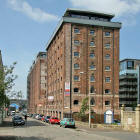
Anderson Place "I loved seeing the pictures of the whisky bond in Anderson Place in Leith. Our Home "My mother and I along, with my older brother, lived with my grandparents in a room and kitchen at 1 Anderson Place. We at least had our own inside toilet. We were at the front, right on the corner, on the first floor. The stair leading up to our house on the first floor was very dark and I hated going in the stair entrance. I used to rush upstairs to where it was lighter." Sleeping "My aunt and uncle lived on the top floor with their 4 children. They were all 'topped and tailed' in a big double-bed in the living room in the bed recess. We had two large windows in the big bedroom which held my mum, brother and me and we looked right over the whisky bond across the road." School "We could also see right the way down Bonnington Road where, along with my four cousins, we went to the primary school, a lovely solid building with separate playgrounds for the girls and boys. I can remember marching up the large sweeping staircase at the beginning of each morning to the accompaniment of a teacher on the piano. We were rehoused when I was 11 years old to a new housing estate at Portobello called Magdalene. (It's still there.) I and my cousin bussed in to Leith every day for about 6 months to finish our primary school education at Bonnington Road. Foundry Work "My mother worked in the biscuit factory (Scribbons?) at the end of our street, and then she joined my grandfather working in the Bon'cast Foundry up Bonnington Road. I can remember my mother taking me into the foundry to the canteen for my lunch. I've never been anywhere so noisy or hot. It must have been horrendous working there. My mother had pleurisy, many a time, with the heat and with having to wait for 2 buses back to Portobello. At Play "We used to play in the street all day with skipping ropes and playing hide and seek. Tenements were great for that game. If we got hungry, we shouted up to our mother - or in my case, my grannie - and she would throw down a piece with jam on it, in a paper bag, to keep us going 'till tea time. Memories "We never thought we were deprived or poor. Everyone else was the same, and my Mother worked every hour going to bring me up. I can still remember some of my Christmas presents to this day. How she managed it I don't know. I am now 68 years old with five lovely grandchildren - my mother being long gone - but I remember my days in Leith fondly."
Irene Gray (née Williams),
Falkirk, Stirlingshire, Scotland:, |
|
Recollections 8. Ronnie Peters ('Rocky') Thakham, Bangkuntian, Thailand |
|
Thank you to Ronnie Peters who wrote: |
|
James Place "We moved in 1964 to No.8 James Place, Leith. It was renamed Links Gardens circa 1965. We spent many good years there. Our neighbors: - on one side were the Smiths - on the other side, the Annarelis, who had the ice cream shops and vans. It was a great place to live! Ronnie Peters ('Rocky'), Thakham, Bangkuntian, Thailand: September 28, 2014 |