|
History and Recollections of 35 Inverleith Terrace Formerly 'Edzell Lodge' now 'Braeburn' |
||
|
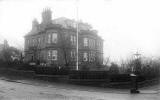
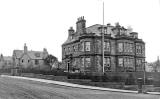
Inverleith Terrace is about a mile to the north of the centre of Edinburgh. It runs along the southern edge of the Royal Botanic Gardens. No 35 is the house at the western end of the street, at the junction with Arboretum Avenue and the SE corner of Inverleith Park. Early 1900s |
||
|
1. |
Penny Kidd |
Background - Letter Found - 1960s |
|
2. |
Penny Kidd |
History - The Letter - James Lindsay - Picture Gallery - Religion - Family - Wedding Reception - Children's Home - Students' Hostel - Private Home - Residential Home |
|
3. |
Alistair McKenna |
- Edzell Lodge, 1913 - Edinburgh's Oldest Resident |
|
4. |
Ian
Young |
- Day Nursery: 1960-62 |
|
5. |
Ian
Young |
- Nursery: 1960-62 |
|
6. |
Stewart Melrose |
- Children's Home: 1961 |
|
7. |
Tim Miln |
- Children's Home: 1960-63 |
|
8. |
- James Lindsay |
|
|
9. |
- Edzell Lodge Nursery |
|
|
10. |
Penny Kidd |
- The Lindsays of Edzell Lodge |
|
11. |
Penny Kidd |
- The Lindsays of Edzell Lodge |
|
Recollections 1. and Background Penny Kidd New Zealand |
|
Letter Found I was surprised to see two photos of 35 Inverlieth Terrace, taken in the early 1900s and to hear about a letter titled 'A Century at 35 Inverleith Terrace'. Images of these were sent to me by Penny Kidd, New Zealand. Penny is the 2nd great grand-niece of James Lindsay who built the house. She tells me: "These photos were produced as postcards and were sent to my grandfather from Annie Lindsay with notes on the back. Her letters have not survived but the postcards have." Penny Kidd, New Zealand: February 14, 2008 Please keep scrolling down to see the photos. |
|
1960s This is the house where I lived for about 5 years after arriving in Edinburgh from Yorkshire to study for the actuarial exams in 1963. The house was owned then by The Standard Life Assurance Company who had converted it into a students' hostel around 1962. |
|
Recollections 2. and History Penny Kidd New Zealand |
||||||
|
The Letter The title of the letter found in 35 Inverleith Terrace is: 'A Century at 35 Inverleith Terrace'' The letter was found in a cupboard in the house, but the author is not known. I 've reproduced the letter below and added paragraph headings. |
||||||
|
James Lindsay "Number 35 Inverleith Terrace was built at the end of the 19th century by James Lindsay who was the son of the founder of William Lindsay, a cooper in Edinburgh. He named the house Edzell Lodge after the name of the lands of Clan Lindsay. James Lindsay employed Sir Robert Lorimer *** as his architect but in order to ensure that there was a high standard of workmanship from the builder he also employed his own clerk of works during the construction.
Lindsay **** himself was an extremely hard working man who managed two cooperages in Edinburgh, one at Beaver Hall and one at Glenogle Road. He would start work at 5.30 in the morning, after having walked from the lodge along Rocheid Path to Glenogle Road. He was, however, also aware of progress and installed one of the earliest telephone connections in Edinburgh between Edzell Lodge and Glenogle Road cooperage."
|
||||||
|
Picture Gallery "Despite his long hours and hard work, James was a very gifted man, not only business-wise, but he was artistic, musical and well read. He was very keen on art as a hobby and he used the hall, the stair and some of the rooms as a picture gallery to house his personal collection of pictures, which was quite well known. MacTaggart was a great friend of his." |
||||||
|
Religion "James was a deeply religious member of the Wee Free Church on the Mound and since it had no organ he used to sit under the pulpit and sing solo the first verse of hymns and psalms. His library was good and included original editions of Robert Louis Stevenson's books and those of J. M. Barrie." |
||||||
|
Family "James and his wife Ann had a family of two sons and six daughters. At the beginning of the century the lodge was therefore housing some 14 people. James, though not good looking, had a lot of charm and was very entertaining. Anne was a beauty - a real matriarch - only her family mattered to her.After James died she never at any time had to live in Edzell Lodge by herself. She always had some of the family with her. One or other of her daughters. One son was still managing the cooperage business but was living at 36 Inverleith Place on the other side of the Botanical Gardens. She was a woman of strong character and views, which might not have suited the more ecumenical approach of life today. She was once heard to say that when she died she did not mind who bought the house as long as it was not a Roman Catholic." |
||||||
|
Wedding Reception "One of the highlights of the house's existence occurred in 1923 (actually February 1924 - Penny) when it was used for the wedding reception of James's granddaughter Nita at which there were 500 guests including the Scottish and Irish International Rugby Teams." |
||||||
|
Private Home, then Children's Home "When Anne died in 1934 the house was bought by Mr Thomas McGregor but after the 1939-45 war it was sold again to become a children's home." |
||||||
|
Students' Hostel " Early in the 1960's it passed to the Standard Life Insurance Company who used it as hostel accommodation for their trainee actuaries.Many of the trainees had been recruited from the Highlands and Islands and when they arrived in Edinburgh they found difficulty in getting suitable accommodation that was both convenient for their work and for studying for their exams." (The company was in fact Standard Life Assurance Company. Many of the students came from throughout England, as well as Scotland. - Peter Stubbs.) |
||||||
|
Private Home "In the mid 1970's the lodge again changed hands being bought as a private residence by Mr Brian Footman who was a Stockbridge veterinary surgeon." |
||||||
|
Residential Home "In 1970 (Perhaps this should read 1979 or 1980 - Peter Stubbs.) the Representative Church Council of the Episcopal Church in Scotland were looking for a property to replace their existing house “Braeburn” in Blacket Place which was being used by them as a home for the elderly.They decided to purchase Edzell Lodge for conversion. It was not however until October 1981 that work was complete and the residents at Blacket Place together with other additional residents were able to move into the new Braeburn Home. It now houses 22/24 persons; more than half as many again as at the beginning of the century. (The increase in numbers is not really surprising. A large extension was built onto No 35 when it became a residential home. - Peter Stubbs) |
||||||
|
With acknowledgement to Penny Kidd, New Zealand: February 12, 2008. |
||||||
|
James Lindsay Further Comments Please see also 'Recollections 8' below for further comments about James Lindsay. (They differ to some extent from the comments above.) |
|
Recollections 3. Alistair McKenna Musselburgh, East Lothian, Scotland |
|
Alistair McKenna wrote: |
|
Edzell Lodge, 1913 "I read, with fascination and delight, the history of Edzell Lodge. Why? It gives me the template i need to research the history further. Edzell, Lodge, locally known as 'The Barrels' to the folk of Stockbridge, was my Grandmother's first place of employment. My Grandmother Mrs Annie Eliss Turnbull, née Walker, born September 1898, was found employment here by her mother in 1913 as a scullery maid, aged 15. There are many upstairs / downstairs tales to be told including the visit of Rudyard Kipling to the lodge." |
|
Edinburgh's Oldest Resident I'll need to quiz my grandmother whilst its still fresh in her mind. As Edinburgh's oldest resident, 110 this year, she now lives in Leith in sheltered housing. She has led a full and varied life. I think she was still at Edzell Lodge for the wedding of Nita, and was given a silver tea service as a wedding present from one of the daughters of Annie Lindsay, circa 1928. I'm sure she mentioned caring for an elderly gentleman, and a funeral which may have been the Father, James. My gran moved on and worked at a large house in Selkirk, then to St Edward's House, Corstorphine Road to work for the Munros of Munrospun. She also worked for Lord and Lady Traquair." |
|
Alistair McKenna, Musselburgh, East Lothian, Scotland: February 24, 2008 |
|
Recollections 4. Ian Young Hawick, Borders, Scotland |
|
Ian Young wrote: |
|
Day Nursery: 1960-62 "I can remember going to a day nursery at Edzell Lodge, 35 Inverleith Terrace between 1960-1962. There was a climbing frame (a jungle gym) in the garden. We used to climb to the top of it and watch the one o’clock gun being fired." |
|
Ian Young, Hawick, Scottish Borders: September 16, 2009 |
|
Recollections 5. Ian Young Hawick, Borders, Scotland |
|
Ian Young added: |
|
Nursery: 1960-62 "My mother , who is now aged 84, thinks the nursery was run by 'Social Services' for kids that were being adopted or fostered, and they opened it up to fee-payers to make some money. The nursery only occupied a part of the ground floor. My mother also thinks there might be some connection with Edinburgh Accies rugby players doing some charitable work or fundraising there." |
|
Ian Young, Hawick, Scottish Borders: September 18, 2009 |
|
Recollections 6. Stewart Melrose Arbroath, Angus, Scotland |
|
Stewart wrote |
|
Children's Home: 1961 "I remember being at Edzell Lodge, at 35 Inverleith Terrace, when it was a children's home. I was six years old. That would have been in 1961. The memories stick with me. About 1962/63, the children's home moved to Newbattle Terrace, Morningside." Stewart Melrose, Arbroath, Angus, Scotland: April 20 + 21, 2010 |
|
Edzell Lodge, Morningside I lived at 35 Inverleith Terrace for about my first five years in Edinburgh, beginning in 1963 at the age of 18. The house was then a hostel for Actuarial Students employed by The Standard Life Assurance Company. While living at Inverlieth Terrace, I did some voluntary work around Edinburgh for International Voluntary Service. One of the places we used to visit with IVS was the children's home at Newbattle Terrace, Morningside. Peter Stubbs, Edinburgh: April 20, 2010 |
|
Recollections 7. Tim Miln St John's, Newfoundland & Labrador, Canada |
|
Thank you to Tim Miln who wrote: |
|
Children's Home: 1960-3 "I was five years old, in 1960, when I first moved into Edzell Lodge children's home. I was involved in a road accident near Flora Stevenson Primary School at the age of seven, in 1962/63, and was in hospital for six months. When I came out of hospital, Edzell Lodge had moved to 11 Newbattle Terrace, Morningside. I lived there with my brothers, Duncan, Michael and Peter. Some names I remember include: - Stewart & Ann Melrose - David Horn - Hugh McCutcheon - Eric Wilson - Margaret Simpson - Gwen Adams." |
|
Children's Home: 1960-3 "I now live in Canada but over the years when ever I went back to Edinburgh I would always drive past both of these houses to see what I could remember. I particularly liked walking through the Royal Botanical Gardens and Inverleith Park." |
|
Tim Miln, St John's, Newfoundland & Labrador, Canada: September 30, 2010 |
|
Recollections 8. Kay Potts |
|
Thank you to Kay Potts who wrote: |
|
Children's Home: 1960-3 "I've just been re-reading the information regarding Edzell Lodge, James Lindsay and the cooperage. I have some corrections to the information that Penny gave you: - 'William Lindsay and Son, Cooperage' was started by my 3x great grandfather William Lindsay in 1829. - He was born 10 October 1808 in Channelkirk and died 29 June 1888 in East Preston Street Edinburgh. - He and his wife Agnes had 12 children. - The cooperage started off making wooden laundry tubs. - In 1851 he employed 4 men and 3 boys. - In 1861 he employed 6 men and had a shop.
-
In 1871 he employed 28 men and 3 boys. Kay Potts; September 16, 2011 |
|
Recollections 9. Lana MacDougall Trinity, Edinburgh |
|
Thank you to Lana MacDougall who wrote: |
|
Nursery "My main interest is in the references made, among the recollections, to a nursery which operated in Edzell Lodge when it was a children's home. When the children's home moved to Newbattle Terrace in 1962, the Nursery moved too but not with the home. The decision was made that Edzell Lodge Nursery should continue to operate in the area as several of the children who attended the nursery lived in the local area. These were referred to as 'fee-paying children' by one of the contributors." |
|
St James' Church Hall Goldenacre "Parents and staff formed a committee and set about looking for new premises. In this they were successful and were soon up and running again in St James' Church Hall at Goldenacre where they still are today. In fact, this being 2012 Edzell Nursery, as it is now known, is having an open day next month to celebrate 50 years of being at St James Church. I worked at the nursery for many years and am now on the Board of Directors. We have always been aware of our origins and are proud to have such an interesting history." |
|
Lana MacDougall, Trinity, Edinburgh April 22, 2012 |
|
Recollections 10. Penny Kidd New Zealand |
|
|
Thank you to Penny Kidd who for replying after reading this in Penny Kidd's Recollections 2 above:
Copy of Message in Recollections 2
**** I've found a
message on
RootsWeb from Penny Kidd, New Zealand, dated March 30, 2002. Penny
is g.g.g.grand-daughter of James Lindsay who founded the cooperage in
Glenogle Road.
Penny says that the Lindsay family came from Edzell Castle.
Lana MacDougall, Trinity, Edinburgh April
22, 2012 Penny Kidd added: |
|
|
The Lindsays of Edzell Lodge Family
"William Lindsay
(1808-88)
was my great (x3)
grand-father. 1st generation after William - William had 2 sons - Alexander (1835-65), my great (x2) grandfather
- James
(1847-1903), my great (x2) great-uncle 2nd generation after William - Alexander had a son:
- James
(1864-1910), my great grandfather Home "Edzell Castle was the Seat of the Lindsay Clan. I've not yet worked out how the James Lindsay of Edzell Lodge, 35 Inverleith Terrace, might have been linked to other Lindsays."
Penny Kidd, New Zealand: Updated 28 October + 14 November 2016. |