|
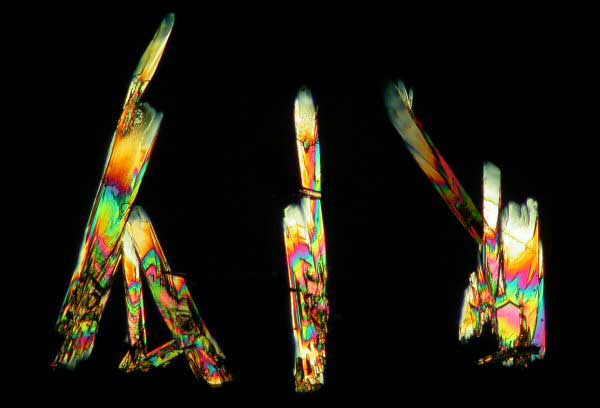
Marvellous Medicine an exhibition of photomicography by Derek Christie Leith School of Art 25 North Junction Street, Leith - near Leith Library Aspirin Crystals, 2005
© Derek Christie, Edinburgh 20 January to 10 February 2006 Every day except Sundays: 10am to 4pm. ADMISSION FREE Private View 19 January 2006 from 7.30 pm - 9.30 pm |
|
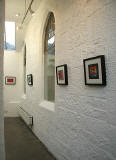
The Exhibition There are about 30 framed photographs in the exhibition. They are described as "marvellous crystalline and amorphous landscapes" The crystalline landscapes have been created by dissolving Asprin and other medicines in water, then allowing a drop to crystallise, then photographing it under the microscope through polarised light. Many other medicines featured in the exhibition, including Optrex, Tyrozets, Iodene, Panadol and Prarcetamol. |
|
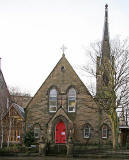
The Church The Leith School of Art describes itself as "a small, vibrant community, committed to the teaching and practice of art and design". Its premises as a converted church, originally built for the Norwegian Lutherans, at a time when Leith's trade with the Baltic Countries resulted in a large population of Scandinavian sailors settling in the area. It is the oldest Norwegian sailors' church outside Norway. The church was designed by a Danish architect in 1868. |